This week’s selected media, January 25, 2026: In the Mood for Love, Cool It
This week I finished:

In the Mood for Love, directed by Wong Kar-Wai: It’s hard not to first mention this movie’s style in the qipaos, hair, make-up, ties, and music. Each dress and hairdo must have taken hours to get right each time, looked sewn-in. The word I keep coming back to for the style is: perfect. What a beautiful movie.
But the movie covers more than style.
Who hasn’t had their heart broken?
Who hasn’t been cheated on?
Who hasn’t had to live with choices we couldn’t take back but had to keep living with them?
Despite the gravity and emotion of the characters’ situation, it felt impersonal to me through most of the movie. That is, until the end, when it became universal.
Incredible acting. It contained a scene toward the end that expanded my view of what acting could mean. Maggie Cheung simply sits and contemplates, her character’s heart broken and breaking more, her life falling apart, no lifeline to grasp. Yet she has to continue.
Every scene was tight, claustrophobic. Every move potentially observed by others, fodder for gossip. The movie was about manners and relationships.
I haven’t entirely made sense of the meaning of Angkor Wat, Buddhism, and the war reaching Cambodia. It expanded the focus from two people in a particular situation to more broadly human.
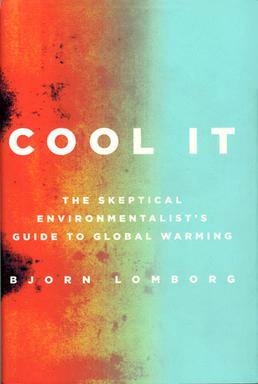
Cool It: The Skeptical Environmentalist’s Guide to Global Warming, by Bjorn Lomborg: Scientists attack, but they miss his point as much as he misses the situation and as much as conservatives betray their values for liking his results while missing that he promotes government intervention and doesn’t like free markets.
He isn’t a denier, nor is he in bed with industry or mean-spirited, though he seems to focus on side issues, like the number of deaths from cold. If people around the Mediterranean die from cold, it’s not from inability for humans to handle temperatures above freezing. It’s not a climate issue. He also neglects nearly all results of polluting and depleting except resulting from greenhouse gas emissions: extinctions, overpopulation, pollution poisoning people, immigration, etc.
Let’s see if I can state his big picture and specify what I think he misses.
He considers the costs of meeting climate pledges, which he sees as requiring spending lots of money. He sees that money better spent on helping people in other ways, like reducing malaria and mitigating problems. He sees the solutions as ineffective, lowering temperature rises by fractions of degrees by 2100. So he proposes not spending money on climate pledges and spending it instead on whatever projects help people most while using some for research into technologies that may solve climate problems later.
I don’t remember him proposing ways to reduce the amount of greenhouse gases entering the biosphere. I think he anticipates future technology will do it.
He’s proposing to continue what we’ve been doing. Technological development is increasing pollution and depletion, not decreasing it. All signs show that as long as we don’t change the values driving our culture today, more technology will accelerate culture. We’ll get more pollution and depletion and faster.
He also expects that mediation will work and will be shared. As resources and access to safety dwindle, or as cities have to be moved, he expects people with low rank in society to be helped as much as those with high rank. He doesn’t consider that they may help themselves without leaving enough time or other resources to help others. For example, I could see rich people moving out of coastal cities but not leaving resources for poor people to, who may end up stuck in cities that no longer function.
If we follow his advice, we’ll never decrease our levels of pollution or depletion. He doesn’t think so because he dreams that more technology, research, and development will do what others have dreamed for over half a century. They were wrong and he hasn’t learned from their history.
He’s saying, let’s not stop polluting or depleting now, we’ll work on more pressing problems or ones we can help more people with, and we’ll end up stopping it later with technology that will 100 percent work as long as we fund research. He can’t conceive that funding R&D can’t end up solving the problem he won’t face today.
Conservatives like his message, probably because it says climate change isn’t as bad as people say, but they do so to their discredit. He promotes proposed solutions that require global cooperation or even global government, increasing government size and reach, and significant deviation from free markets.
Read my weekly newsletter

On initiative, leadership, the environment, and burpees