
This week I finished:

Cool Food: Erasing Your Carbon Footprint One Bite at a Time, by Robert Downey Jr. and Thomas Kostigen: I listened to this book for a book club. I found it painful to listen to. It’s nice to eat foods that pollute less so I won’t argue with it, but it distracts from the problem: our culture lost values that kept humanity safe, secure, healthy, and living long lives in favor of one that tricks us into believing those things require polluting and depleting.
Digging in, it misses that there are two carbon cycles and only looks at the distracting one. Know the 2 carbon cycles and don’t confuse them. And, Only specify fixing climate and carbon if you want to wreck everything else (forests, biodiversity, rivers, etc) because that happens when you do.
The authors don’t sound like they’re doing what they propose. Maybe they eat some seaweed now and then, but I heard no hands-on practical experience. I doubt 5 percent of what they eat they bought from farmers markets or prepared themselves. It offers mostly ineffective proposals that seem weird, complicated, and not likely to make a difference, like choosing toothpaste based on if it contains seaweed.
They nearly ignore shipping, refrigeration, packaging, and cooking. You need never eat anything frozen or canned and stored for years if you stick with local and seasonal. Yes, everyone knows farmers markets aren’t everywhere: that’s the problem. All markets used to be farmers markets. If we created a world where the local environment can’t support the population, that overpopulation is the problem. Shipping food there exacerbates the problem.
They talk about places they fly to like bragging or as if it’s desirable. The lifestyles they promote swamp any effect from food choices. The book’s notoriety and recommendations result from Downey’s fame. This book fuels (pun intended) the opposition: they are elites who don’t live what the preach, promote inconvenient “solutions” that don’t work, yet sound like they’re the good guys.
No wonder so many people have preconceptions about my solutions. I’m not proposing small changes that are weird but big restorations of lost values that we know from history work. However big they are, they’re actually practical.
I found this book painful to listen to. It’s preaching science without hands-on practical experience.
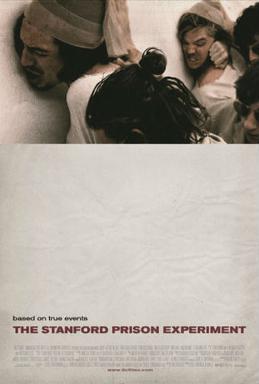
The Stanford Prison Experiment (2015 film), directed by Kyle Patrick Alvarez: Since reading Philip Zimbardo’s The Lucifer Effect, I’ve been reading and learning about the decades of research following the Holocaust of how ordinary people end up committing atrocities.
The Stanford Prison Experiment didn’t lead to atrocities, lasting only six days (of a planned two weeks), but it did lead to cruelty beyond anyone’s expectations. It built on the Milgram experiments from a decade before plus Arendt’s Eichmann in Jerusalem and was followed by more research and piecing together trends from history.
This movie dramatized the experiment. It captures the tight spaces and shows the characters develop. I found the video below one of the more informative documentaries.
I recommend both. Still, neither captures the inner workings of the mock guards and prisoners or the importance of one factor beyond the dresses, sunglasses, and anonymization and dehumanization. Even with all of them, the kids still acted like it was a simulation.
When it really kicked in was when the prisoners came to believe they couldn’t escape. That condition is not the only factor, but I contend that it towers over the rest. The guards controlled a necessary resource with no alternative. The necessary resource was the prisoners’ ability to leave—that is, their freedom. Those conditions create a dominance hierarchy and a dominance hierarchy leads to two cultures forming, one for people at the top (I deserve it, I’m helping them, I’ll give them more of the resource later just not yet, if I lose control I face great personal risk), another for people at the bottom (they created this situation, they’re cruel, I’m helpless, justice will prevail sometime maybe in the afterlife).
The movie and documentary show an interview with the John Wayne guard (one played by an actor) that shows how he didn’t see his behavior as cruel. He was experimenting, testing limits, wondering why no one stopped him.
A big lesson from this experiment is that if you think of any atrocity people were corrupted into doing, if you were in their circumstances, you would almost certainly do what they did. Case in point: you’re living unsustainably, contributing to suffering on a scale that dwarfs slavery and the Holocaust, and you’ve created all the beliefs you need to feel like the John Wayne guard, or nearly anyone who committed an atrocity. We’d love to think otherwise, but disbelieving decades of consistent findings only holds us back from solving the problems.