145: Rob Greenfield, part 1: Abundance without stuff (transcript)

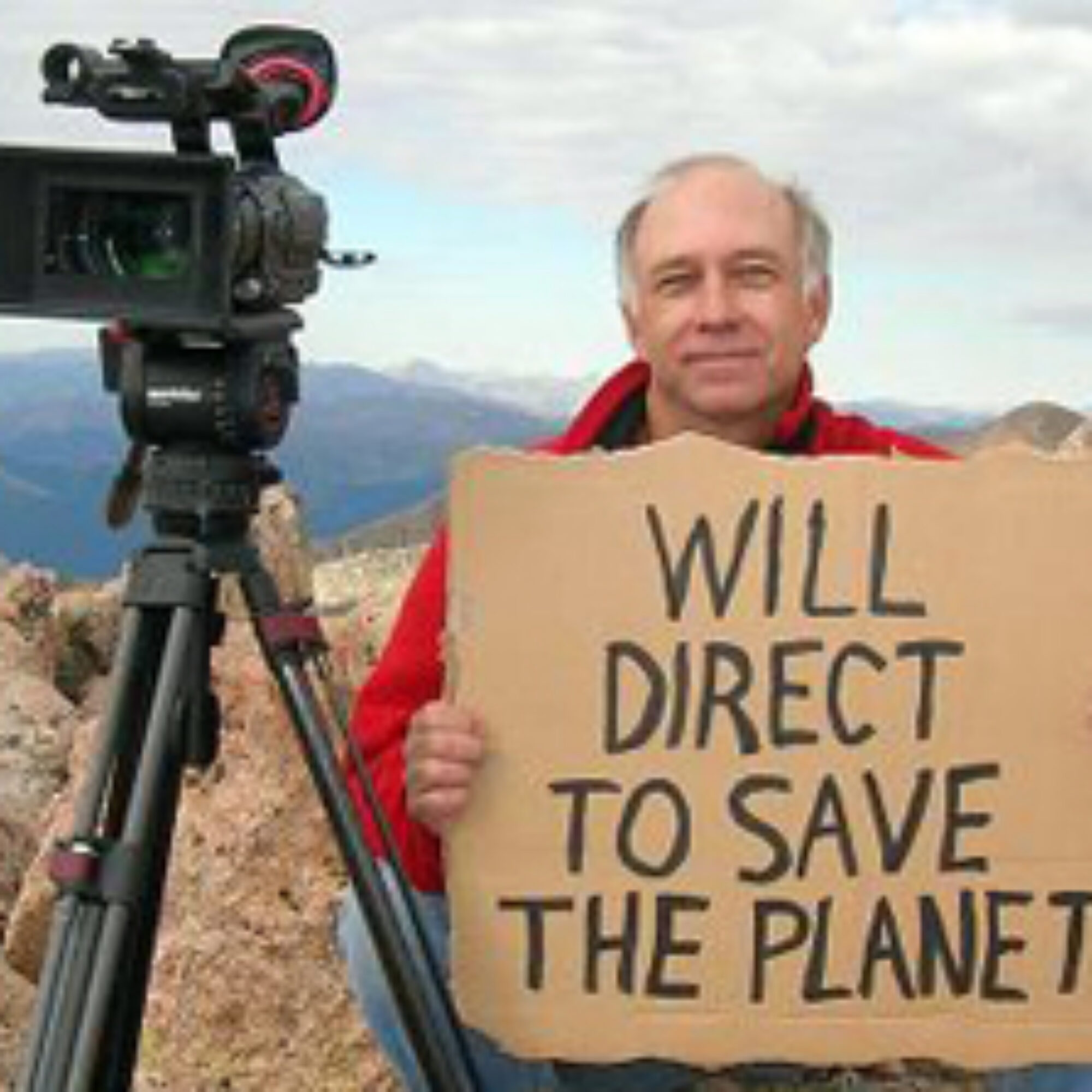
  My conversation with Rob is about joy, responsibility, community and values that you undoubtedly share. Rob Greenfield used to live like an average American. He saw the environmental problems we all see on the headlines but we all dismiss but then he decided he could no longer abdicate the responsibility of how he affected others or our world. I consider him a role model. Nearly everyone I talked to describes what I do as a big deal like I'm extreme. I'll grant that I'm far from the mainstream because when I checked online I produce about 10 percent the pollution of the average American. But it's not that big of a deal. The more that you do, the more that you'll find typical American…

0 Comments

144: Nikole Beckwith, part 1: Education and leadership (transcript)

Nikole Beckwith is a celebrated director of playwright and more in Hollywood, on Broadway. Her movie Stockholm, Pennsylvania premiered at Sundance in which she directed Academy Award nominees Saoirse Ronan as well as Cynthia Nixon of Sex and The City fame who had just done well running for governor of New York, and of course that one movie is just the tip of the iceberg. I approached Nikole not because of all that but because she graduated from Sudbury Valley School. It's a different school than any that you've heard of. And as an educator I am fascinated by its success and more importantly how it overturns my view of childhood and education and humanity and not just childhood in general but my childhood personally.…

0 Comments

143: Dune Ives, part 2: How Did Plastic Pollution Become Normal? (transcript)

  Martin Luther King talked about a negative peace where a problem exists but people don't face it or deal with it. In a positive peace where people solve the problem which requires facing it. He used nonviolent civil disobedience to force people to face problems that affected others but that as voters and citizens they could do something about. People didn't like facing these problems but you can't get change otherwise. Nonviolent civil disobedience it works with human laws but doesn't apply so well with our environmental problems. So how do we face these problems? How do we get people who have already fully aware of how much they're polluting, fully aware of how many greenhouse gases they're emitting way beyond what risks undermining…

0 Comments

142: To Sam Harris, whom I hope to meet backstage Friday at the Beacon Theater (transcript)

In the interfaith Sam Harris says, "We have a choice. We have two options as human beings. We have a choice between conversation and war. That's it. Conversation and violence." I like Sam's podcast a lot. I listen to most episodes. I've read several of his books. I support his podcast with cash. I will see him in person this week for the first time at the Beacon Theater in Manhattan with Nobel laureate Daniel Kahneman. It looks like I'll get backstage passes, I'm not sure, so I may meet him. What are my goals with this recording that isn't obviously about leadership and the environment is to prompt the chance of meeting him in person. You'll see why over the course of this recording.…

0 Comments

148: Dawn Riley, part 2: Minding her beeswax (transcription)

  Right off the bat she's talking about Olympians, America's Cup winners, a cross fit games World Champion. The places Dawn brought me where elite because this summer I met her just before a fundraiser on Wall Street. And yet she's totally down to earth, scrappy as she puts it. She makes pickles for world class athletes. She already reduces waste, she tours composting facilities and this is while she's training world class athletes as well as being one herself. So here, I have someone like her probably busier than you are and responsible for people's hopes and dreams takes on environmental challenges many people consider distracting. Spoiler alert: she makes it really fun. *** Joshua: Welcome to the Leadership and the Environment podcast. This…

0 Comments

141: Dune Ives, part 1: Let’s Talk Ocean Plastic (transcript)

If you've heard about avoiding straws or if you've avoided straws yourself, Dune Ives and the Lonely Whale, the organization she's the executive director of have influenced you. If you ask yourself "Why straws?" or "What the point was?", that's what you wanted for people actually to talk about things on a human scale as opposed to things that are so big that people can't really figure out how to talk about them or to act on them. If you've taken the next step from straws Lonely Whale has influenced you all the more. As you'll hear when she co-founded Lonely Whale she didn't know the demand was out there and she found some untapped demand. She just started something and finally one change led…

0 Comments

140: Joanne Wilson: Gotham Gal (transcript)

  If you work on entrepreneurship in New York City you know Joanne Wilson. She's big in the New York entrepreneur world as well as in art and travel and food. She also leads a rich rewarding life. Just read any of her blog posts, listen to any of her podcast episodes. I know a lot of investors, angel investors, venture capitalists who live stressful lives. Joanne doesn't. You can hear the happiness, the fun, the emotionally ward that she describes her life with which I think results from her focus on people, on relationships and community. As you'll hear the first thing she does after she invests is to support them which I think is a critical part of leadership. Environmental work overwhelmingly focuses…

0 Comments

139: Chris Voss, part 1: FBI Hostage negotiation through honesty and fun (transcript)

I recommend listening to Chris's opening quote again after this episode. There's a reason his book became the number one negotiation book. I'm tempted to start off by saying how much of a badass he is but I'll get to that in a second. My guest today showed me a huge blind spot. This podcast is about leadership first. It's about experiential learning and developing as a leader experientially. In my teaching I talk a lot about the flaws in relying on leadership and textbooks to learn social and emotional skills which are fundamental to negotiation as well as leadership. Yet a book that I recommend a lot is Getting to Yes which is a book about theory. Chris was the FBI's lead hostage negotiator.…

0 Comments

138: A National Civilian Service Academy (transcript)

Today I'm going to talk about a dramatic proposal I see as a clear winner for the United States and for that matter the world. But let's start with the United States aspect first. It's a big idea, it's a bold idea but everyone benefits from it. Its challenges aren't if it would work or not but [unintelligible] support in implementation. But once started I see it as sustaining itself as a national jewel. First some context. I've talked about my return from Shanghai a few years ago to a crumbling New Yorrk Airport, creaky trains getting me from the airport back to the city and crumbling train stations. At the airport the ceiling was falling down. They weren't even fixing it. They just put…

0 Comments

137: Why Famous Guests (transcript)

So far this podcast has featured some pretty world-renowned people. Several number one bestselling authors, TED Talk speakers with collectively about 100 million views, a Pulitzer Prize winning New Yorker writer, a Super Bowl winner, a Presidential Medal of Freedom honoree, a C-suite officer from a Fortune Five company and [unintelligible] the British Empire, a Victoria's Secret producer, professors from our most elite educational institutions plus West Point and so on. And just looking at the webpage, looking at some of the names, I'm sure you recognize some of them - Seth Godin, Dan Pink, Beth Comstock, Marshall Goldsmith, Frances Hesselbein, Elizabeth Kolbert, Ken Blanchard, Jonathan Haidt, Vincent Stanley, David Allen, Dorie Clarke, Jordan Harbinger, Doug Rushkoff, Dave Asprey. So these are some really big…

0 Comments

136: Nataly Kogan, part 2: Happiness Comes From Skills You Can Learn (transcript)

Natalie teaches that happiness comes from skills which you can learn which I agree. Environmental action is also skills. Many people think that starting small isn't worth it. But watch Natalie's videos and read her book about improving your happiness skills because any skill that you can learn helps you learn other skills. Maybe her experience developing happiness related skills enabled her to switch to implement her bottle reduction by 99 percent so quickly, in the process improving her family morale. So listening to her you tell me if you think she's going to apply what she learned more because I think you'll hear how she made things a lot more meaningful and enjoyable which is available for anyone. *** Joshua: Welcome to the Leadership…

0 Comments

135: Why We Want a World Without Growth (transcript)

People seem to have a hard time imagining a world without growth, specifically economic growth or population growth. There's also personal growth but I'm talking about materially measurable growth so population growth and economic growth. People seem to believe that economic growth is necessary. I've looked and I have not found any reasonable proof. If you know of any, please let me know. People say you need inflation to keep motivating people but I haven't found any foundation for it besides what looks like unfounded idealism. On the contrary, I found societies that have lived for tens to hundreds of thousands of years stably which would seem to disprove that you need growth. Nobody thinks that over 1000 people were stuck on an island that…

0 Comments

134: Tim Kopra, part 1: Seeing Earth from Space (transcript)

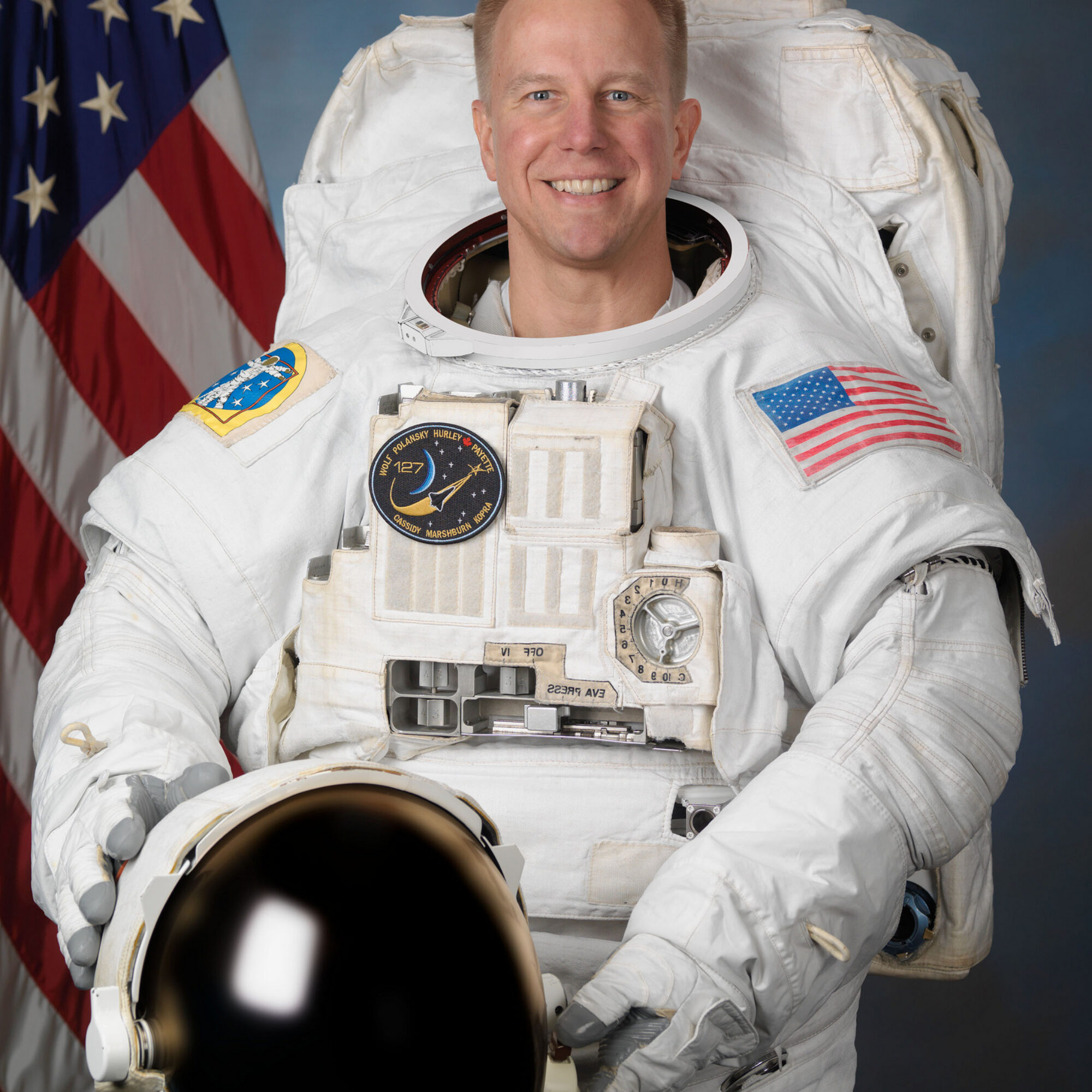
Walking in space twice has got to be one of the most amazing experiences humans can have. If you're like me, you will want to hear what it's like. I loved hearing about Earth, seeing Earth from space, the feeling of launch, all of that uncertainty, all of those thrills. You'll have to listen to hear the rest. Having walked in space twice however huge is just part of Tim's experiences. He learned leadership at West Point, CGSC which is like the Army's graduate school, Columbia Business School and London Business School. What gets you to space isn't just fitness. It's everybody involved from the government everyone on down knowing that you will succeed no matter what, that you can work with everyone. It's about…

0 Comments

133: At Least Try (transcript)

I want to tell two stories that helped guide my environmental behavior, rather one story, a personal one, and one illustration. The first story is back when I played Ultimate Frisbee in college. A guy threw me a pass and it was out of my reach. So I watched the disco by because I couldn't make a play for it, I couldn't catch it. At the end of the point I'm coming off a field and one of my teammates, Juno, comes up and says, "Why did you let that one go by? Why didn't you try for it?" I said, "It was out of my reach." And he looks at me and goes, "At least try." Ever since then I've always felt "at least…

0 Comments

132: Lorna Davis, part 1: C-suites and B-corps (transcript)

This is a long episode but if you care about business, business school students wish they had access to global corporate leaders at the frontier of change like this episode. Lorna and I are in person, we are talking about multinationals she's led across the globe. We also talk about vegetables and we talk about major leaders reduced to tears reckoning what they could do but have put off for too long. Lorna has influenced big global business helping shift Danone USA to become a B Corp working directly with the CEO. That's a billion-dollar company making a fundamental shift to its corporate structure. The parent company made twenty-five billion dollars last year with over hundred thousand employees. So if you don't know what a…

0 Comments

131: Dawn Riley, part 1: After winning the Americas Cup, revitalizing sailing (transcript)

I wish you could see the context of this conversation at Dawn Riley's sailing center. Dawn Riley has sailed in three Americas cups. She's won around the world races, she's won the America's Cup, she's led other teams. We're at the sailing center that she runs to restart the elite level of American sailing. A couple of hours before this conversation she sent me out to see Olympic medalists competing on the Long Island Sound. Shortly after that conversation, they all came in for a barbecue. So there's medalists, there's gold medals there's, cross fit games winners and more. Actually, you're going to hear these world class athletes, their trainers, the organizers and so on talking the background over the course of this conversation because…

0 Comments

130: John Lee Dumas, part 3: One year picking up beach garbage (transcript)

This is the third episode with John Lee Dumas. If you've listened to the first two you know the podcast format, you know the introduction, the music and all that stuff. I am going to skip all that and go right into completely unedited my third conversation with John Lee Dumas. I want to highlight, I met him before our first podcast in person but after that you're hearing almost the full relationship between me and John. Acting on your environmental values and sharing them opens you up, you share. I think it's pretty clear we're becoming friends. He hasn't been over at my place yet but it sounds like it's going to happen pretty soon. Come to think of it that's another part of…

0 Comments

129: Dave Gardner, part 2: “Came to relieve the burden, stayed for the joy” (transcript)

David and I could have talked about growth and how many people think growth is sustainable and non-growth isn't which seems based on a system hurtling toward collapse whereas a steady-state economy and population can be sustainable. Human populations have lived for hundreds of thousands of years, hundreds of thousands of years without growth whereas our growth just since Industrial pollution it doesn't look like it's going to last 1000 of that time but instead we just talked about the fun of writing more and getting outside. This is what living sustainably is about - spending more time in nature, enjoying what you have. As you heard he lives in Colorado. There's lots of hills there and even with people who have done a lot…

0 Comments

128: Sally Singer: Fashion and the Environment (transcript)

Today's guest is Sally Singer, creative director at vogue.com. My conversation with her is so fascinating. This is the first one. I've split one episode into two parts partly because this is such a new world for me but I believe incredibly valuable for leadership. So the first episode this one is on vogue.com. It's on storytelling and journalism in general. She's had a storied career throughout journalism including the New York Times and Vogue now. It's about fashion. It's about style. It's about her meeting Chelsea Manning for the first time as a free woman. It's also her professional and personal development, her goals and achievement to reach these levels of the fashion world, of the journalism world. You get to hear her passion…

0 Comments

127: Douglas Rushkoff, part 1: Team Human (transcript)

You've heard the idea that with social media, Google and most free services online you're the product. The idea was probably thought provoking when you heard it. For most people it's an ending point. But what if you considered it a starting point for your thoughts. Where does it lead? What does it tell you about yourself, society, the internet, markets, humanity? Because the Internet began as a medium to bring people together. Yet over and over its innovations were the greatest promise to bring people together instead separate us. Google and Facebook being the biggest examples. Now they're the greatest advertising media ever. And they're increasingly getting in your business and personal life as much as they can. How did that happen? Why does…

0 Comments

126: Col. Everett Spain, part 2: West Point’s Head of Behavioral Sciences and Leadership (transcript)

When thinking about the environment would you think that the army would be quick to change or late to change? In my second conversation with Colonel Everett Spain he talks about using only one plastic bottle where he would have used something like 40. He also talks about how he had already reduced his garbage from leading a garrison in Germany. He also reduced his family's use. And this is long term change. I recommend in particular listening for his emotional change. Would you say listening to him that he considers his life better or worse for this change? You'll also get to hear about West Point's mascot races and how that promoted cleanliness. You'll also hear about 50 minutes in the leadership technique that's…

0 Comments

125: Ann-Marie Heidingsfelder, part 2: Balancing priorities (transcript)

I learned a lot from this conversation. And partly that's a euphemism for it being challenging for me since my measure of a challenge working was different from hers. You'll probably hear me struggle to listen and feature her without disagreeing too much. Part of why I invited her and why I value her friendship is our different values and therefore balancing them differently. Personally, I felt like she was writing off behavior changes that wouldn't have been so hard for her to do and she would have enjoyed. But listening now I don't think that I listen as much as I could have. I could have learned more about a different perspective that many people share. So listen and I'd love to hear back…

0 Comments

124: Guilt Free (transcript)

Junior year in college I met a guy who ended up being one of my most longstanding friends. He still is. The year was 1991. I had just returned from a year in Paris taking a year off from school. He'd returned from serving as a marine in the first Gulf War. At Columbia, time off meant losing your guaranteed housing. So we lived relatively far from campus. But it meant we spent a lot of time meeting each other and our other suite mates. Actually, years later we started a company together serving educators. We had a pilot gone with 19 New York City public schools enabling teachers and educators to share materials. It was a sort of Wikipedia for educators. It looked promising…

0 Comments

123: Dave Gardner: Busting the Growth Myth (transcript)

David Gardner left a well-paying mainstream job to create and star in a documentary called GrowthBusters. That's a play on Ghostbusters. He saw the problems with growth to local communities, the national economy, the global economy, the environment and many other places. He also saw the nearly unquestioned belief that growth is good, especially GDP growth and population growth. And once you question this belief, then like a sweater unraveling you start seeing the problems that growth causes. He acted beyond the movie. He ran for city office based on limiting growth. I've never been able to communicate the problems with growth to someone who disagreed so I'm not going to argue here. But if you have wondered about this connection, David's documentary, his own…

0 Comments

122: Rosa Parks and Acting on Your Environmental Values (transcript)

For those who don't know one of the origins of this podcast was a series of talks that I gave at NYU. I gave the talks because at the time I recognized that something missing from environmental action was what I would think of as effective leadership, not telling other people what to do or spreading facts and figures of doom and gloom but leadership in the style of Mandela, Gandhi, Martin Luther King, Václav Havel. I gave the talks because I could. I had access to space at NYU and a great location and I had students and so forth to come and I asked them for advice. It was kind of product development. I described the talks now euphemistically as great learning experiences…

0 Comments

End of content

No more pages to load