
Dr. Anna Lembke
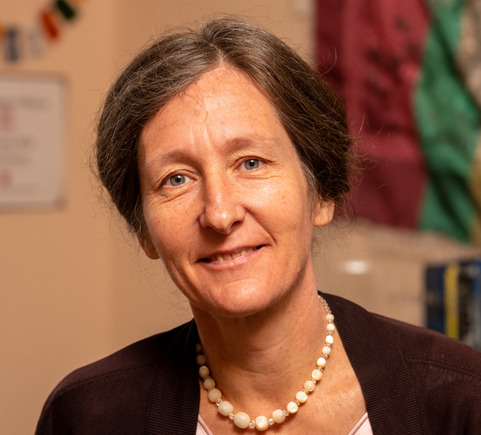
Anna Lembke is professor of psychiatry at Stanford University School of Medicine and chief of the Stanford Addiction Medicine Dual Diagnosis Clinic. A clinician scholar, she has published more than a hundred peer-reviewed papers, book chapters, and commentaries. She sits on the board of several state and national addiction-focused organizations, has testified before various committees in the United States House of Representatives and Senate, keeps an active speaking calendar, and maintains a thriving clinical practice.
In 2016, she published Drug Dealer, MD – How Doctors Were Duped, Patients Got Hooked, and Why It’s So Hard to Stop (Johns Hopkins University Press, 2016), which was highlighted in the New York Times as one of the top five books to read to understand the opioid epidemic (Zuger, 2018). Dr. Lembke recently appeared on the Netflix documentary The Social Dilemma, an unvarnished look at the impact of social media on our lives.
Dopamine Nation: Finding Balance in the Age of Indulgence (Dutton/Penguin Random House, August 2021), an instant New York Times Bestseller, explores how to moderate compulsive overconsumption in a dopamine-overloaded world.
757: Dr. Anna Lembke, part 1: Dopamine Nation
Regular listeners know I see our relationships with many activities that are enabled by pollution as behavioral addictions like gambling or playing video games. Thus, I bring experts in addiction.
Anna’s book Dopamine Nation is one of the most accessible I’ve read. She covers the scale of addiction, how much it’s increasing, how it works, her personal history with her own addiction, and the stories of several of her patients.
After she describes her background, we start by talking about the shame that accompanies addiction and makes it hard to share about, including our personal experiences of it. We cover how much our culture and economy have embraced addiction. It’s profitable, after all.
She describes in lay terms how addiction works, how it disrupts homeostasis and the results, for example tolerance. She talks about the paradox that as we create more material abundance, we see more anxiety, depression, and other problems. We find addictive things lead us to feel we’re treating our problems, but more often add to them.
She asked me about avoiding packaged food, doof, and other sustainability experiments. I read she asked out of genuine curiosity, recognizing I’m not just doing it for myself. I think she wants to practice sustainability more and is looking to learn how.
We talk about our culture. She identifies commercially-driven epidemics for profit. You can tell I enjoyed this conversation.