
Rodrigo Cámara Leret
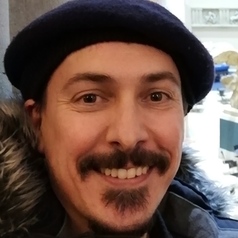
Rodrigo is a researcher of indigenous knowledge, its drivers and emerging macroscopic patterns at the University of Zurich.
He is leading a radical new ecological project led by an indigenous Colombian community at The University of Wales Trinity Saint David as part of the first UNESCO BRIDGES initiative.
This ambitious three-year project aims to restore an area of the Sierra Nevada de Santa Marta mountain range in Colombia to its once flourishing state using only traditional knowledge and forms of understanding unknown to academic science. It will be carried out in partnership with scientists based in Europe observing, reporting, and learning from these proven techniques. This is an opportunity to learn in new ways, offering a route out of disaster.
Colombia’s indigenous Kogi people will work with an ecologist and ethnobotanist to jointly regenerate degraded pieces of land, in particular dried water sources that are a result of modern exploitation. The vision is to provide a template for ecological transformation that could be replicated across the world. UNESCO BRIDGES is designed to bring together different forms of knowledge to provide sustainable solutions in this time of crisis.
The ancestors of the Kogi, the Tairona, survived the Spanish destruction of the Maya and Aztecs, retreating into the mountain. They live as farmers and regard themselves as the guardians of the earth. They see the mountain as a microcosm of the planet. The Kogi have traced the myriad connections which run like threads through their land which must remain harmonious.
He was born in Spain and raised in Madrid, Cairo, and Rio de Janeiro. He holds and MSc in Biodiversity from the University of Leiden and a PhD in Biology from the Universidad Autonoma de Madrid. He has been a Postdoctoral fellow at Aarhus University in Denmark and an Early Career Research Fellow at the Royal Botanic Gardens Kew in the UK. Rodrigo joined Prof. Jordi Bascompte’s lab as a Postdoctoral researcher in 2019 and as an Oberassistent (Senior Researcher) since 2020.