
Steven Pressfield
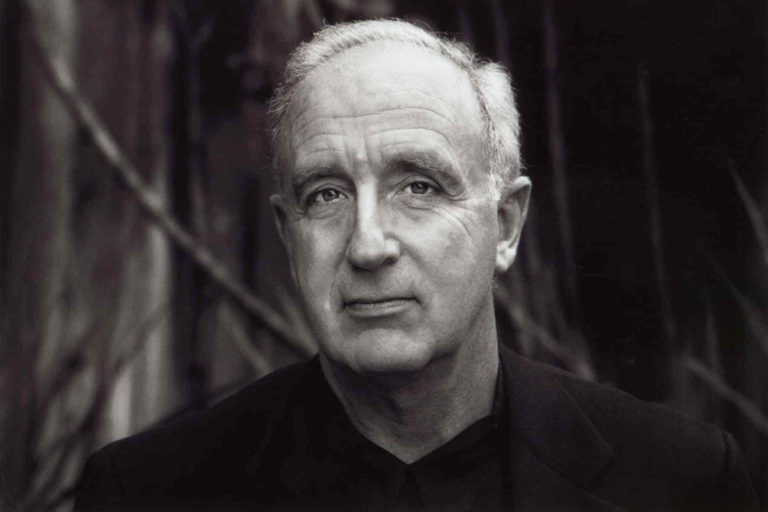
From Wikipedia:
Steven Pressfield was an advertising copywriter, schoolteacher, tractor-trailer driver, bartender, oilfield roustabout, attendant in a mental hospital, fruit-picker in Washington state, and screenwriter. His struggles to make a living as an author, including the period when he was homeless and living out of the back of his car, are detailed in his book The War of Art.
Pressfield’s first book, The Legend of Bagger Vance, was published in 1995, and was made into a 2000 film of the same name directed by Robert Redford and starring Will Smith, Charlize Theron, and Matt Damon.
His second novel, Gates of Fire (1998), is about the Spartans and the battle at Thermopylae. It is taught at the U.S. Military Academy, the United States Naval Academy, and the Marine Corps Basic School at Quantico.
In 2012, Pressfield launched the publishing house Black Irish Books with his agent Shawn Coyne.
His passion emerges when you read his own words. From his About page:
For one season I lived in [a] house [with] no power, no water, no doors, no windows. Rent was $15 a month … All during this time I was writing.
Why do I tell you this?
Because this site is about you learning from my mistakes. It’s about you avoiding the dead ends I drove myself into before I found myself as a writer.
Because the “war of art” is not about genius, it’s about work. We can’t control the level of talent we’ve been given. We have no control over the nature of our gift. What we can control is our self-motivation, our self-discipline, our self-validation, and our self-reinforcement. We can control how hard and how smart we work.
-
- Gates of Fire: 1M copies sold worldwide.
- Legend of Bagger Vance: 450K copies.
- Tides of War: 125K.
- The War of Art:Â 500K.
From my (fictional) 96-year-old literary agent, Marty Fabrikant, as quoted in The Knowledge:
“I’ve seen a million writers with talent. It means nothing. You need guts, you need stick-to-it-iveness. It’s work, you gotta work, do the freakin’ work. That’s why you’re gonna make it, son. You work. No one can take that away from you.”
The work is everything
“And I’ll tell you something else. Appreciate these days. These days when you’re broke and struggling, they’re the best days of your life. You’re gonna break through, my boy, and when you do, you’ll look back on this time and think this is when I was really an artist, when everything was pure and I had nothing but the dream and the work. Enjoy it now. Pay attention. These are the good days. Be grateful for them.”
852: Steven Pressfield, conversation 2: His new book, The Arcadian (and A Man at Arms)
It turns out Steven’s readers split into two camps with little overlap. I figure most listeners belong to the War of Art camp. If you haven’t read the book and want to live a better life, I recommend it, in the top few percent of recommendations. It’s powerful, engaging, memorable, and short.
The other camp reads his fiction books. His latest is The Arcadian, which stands alone but connects with his last book A Man at Arms. I read both and now belong to both camps, proudly. One goal of this conversation is to entice listeners to join both Pressfield camps too.
This podcast is about leadership applied to sustainability, not just personal leadership and art. Just because I like his books doesn’t mean his fiction is relevant to this podcast. I found one part delivered a powerful gut punch that I found relevant to our lives.
Blog readers will have seen my post about that part after reading The Arcadian Wounded Warriors, by Steven Pressfield, and Ourselves. That part describes what happens to people when we are induced to violate our values. Steven and I talked about that section. He described it as the core of the book.
The situation warriors face and must deal with is more concentrated than we do, but their ways of handling it are similar to how we do, despite our violations being more diffuse. We would help ourselves handle our lives by facing that we are violating our values, even if, like the warriors, society rewards us for it. Only by facing it can we resolve it. In our case, we can change our culture to stop corrupting us.
We can learn a lot from Steven. Not many people sell millions of books. Many followers is a top sign of leadership.
357: Steven Pressfield: The war of art and nature
Steven Pressfield’s War of Art is a perennial bestseller. If you haven’t read it, I recommend reading it, even if you delay listening to this podcast. Well, listen to this episode since it will prepare you.
Before I read it, I could not have imagined someone writing it. I can’t think of another book like it. It’s helped countless people start acting on passions.
Steven shares how the book emerged—things you won’t get from just reading it. After we finished recording, he told me how he shared new things in this episode and he’s appeared on many podcasts.
I also commented on how the resistance he described to the individual on the verge of creating translates almost perfectly to two places, the individual acting on his or her environmental values as well as us in our communities, as a nation, as a species. Listen to hear his comments on that observation, and why his response made me feel so honored, flattered, and motivated to follow up.
He’s friendly. We spoke a bit after stopping recording. I asked him about an op-ed piece I’m working on that I feel expresses myself well and will serve the world but many people will object to. It feels great to hear from someone who has inspired so many to weather those risks to be true to yourself. Resistance looms large nonetheless.
Anyway, I don’t recommend that many books, but I recommend War of Art.