
This week I finished:
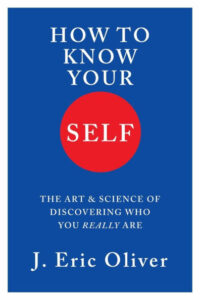
How To Know Your Self: The Art and Science of Discovering Who You Really Are, by soon-to-be podcast guest J. Eric Oliver: I’m scheduled to record an episode with Oliver. He is a professor at the University of Chicago. He teaches in the political science department, but has also taught a course for undergraduates that is apparently popular on knowing yourself.
As I understand, this book is based on that course. People had asked him for years if he could recommend a book on knowing yourself. He could recommend hundreds, but not a single one, so he wrote it.
The book overlaps with my leadership classes and my book Leadership Step by Step, though mine is more experiential. His covers a lot more of how humans became humans: evolution, language, social interactions. He’s done many ten-day silent meditation retreats too and has daily practices, which he suggests are some of the most valuable things you can do.
I look forward to our conversation coming soon. His book could be used in any time, but I’m curious his thoughts about meaning and purpose today, in the wake of generations of credible threats to civilization. He doesn’t cover meaning, purpose, or civic duty much. I consider them important for living well in any time, but today, finding them seems easy when there are a small number of top priorities to avoid apocalyptic calamity.
Then again, most people don’t see solutions. It took me decades of hands-on practical experience to find them. People who don’t know about something can’t work on it.

The Great Divorce, by C.S. Lewis: Podcast guest Eric Metaxas has a book club that meets in person that is reading this book, so I finished it. Plus I recently finished The Abolition of Man. This book, a novel, is more accessible.
It’s been a long time since I read The Divine Comedy, or the parts assigned in college, but this book is like it. It recounts a person’s journey visiting hell, or purgatory, then heaven. Those in hell aren’t being punished with fire and torture. They’re trapped by being stuck by their shortsightedness, selfishness, or other fixations that keep them from connecting with Jesus.
Hell is that separation. People bring it on themselves. Heaven is the connection available to all. As he writes, heaven is people saying to Jesus, “Thy will be done.” Hell is Jesus saying to them, “Thy will be done.”
The book was published in 1945. With war raging in Europe, Lewis could have written about Nazis and fascists going to hell, but he wrote about ordinary people fixated on themselves.