
This week I finished:
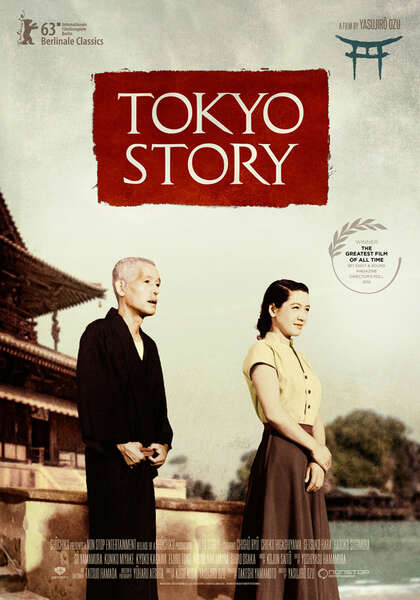
Tokyo Story, directed by Yasujiro Ozu: Someone in my meditation group recommended this movie after I spoke about how much Yi Yi and A Brighter Summer Day affected me. I didn’t know what to expect. I’d never heard of the director or even the movie. I’m sure I’d seen the title since so many best-movie-ever lists include it.
Many reviewers write how it is about a family but so universal that it’s about all families. It seemed to me to be so universal as to be about life in general. Yes, it’s about an old couple, their children, their children’s families, and their grandchildren.
It’s also about times changing faster than people are prepared for, therefore about war and peace (it being Japan just before 1953).
It’s about our emotions and relationships, what we want from each other, what we offer, what we hold back.
It’s about taking responsibility or not, about moving on, leaving behind, and catching up, or not.
Being unapologetically Japanese, who knows how much viewers from other cultures missed, but then again, who knows what we see or translate to our cultures. If we don’t see what a Japanese person does, we can still connect it to what we live. We all were born of parents. No matter how we know them or not, we know they exist and we respond. We all live in homes and communicate with neighbors. We see, hear, and sense the environments around us. These things affect our lives.
It foretold modernization that at the time seemed problematic but had barely begun. Maybe Ozu saw it. I suspect he did because he featured factors such as technological advances that seemed to offer abundance but distracted and detracted from basic human values. Trains were lauded for bringing people great distances in short times but were the root of separation, isolation, and no longer knowing neighbors or family. Early forms of what we know as video games began with pachinko machines that entertained with jolts of reward devoid of meaning, mainly for boys and young men. Factories with high smokestacks polluted, never to stop, ever, at least so far. Motored vehicles noise-polluted. They caused cities to grow to beyond what could be called communities, likewise neighborhoods within them.
No matter the growth of this superorganism of human cultures, people keep trying to connect. We do at times, but it seems that modernity restricts our potential connection to short and superficial, leaving us lonely.
One achievement that to me makes an expressive creation art is when it says something I always knew to be true but never saw expressed before. Tokyo Story more than delivers. It leads us to sense all around us what we miss or take for granted. It shows us what’s happening. Other movies dramatize ordinary parts of life to beyond life proportions: crime, sex, murder, politics. This movie doesn’t dramatize. It shows life, which is rich and needs no dramatization.
I recommend this movie.
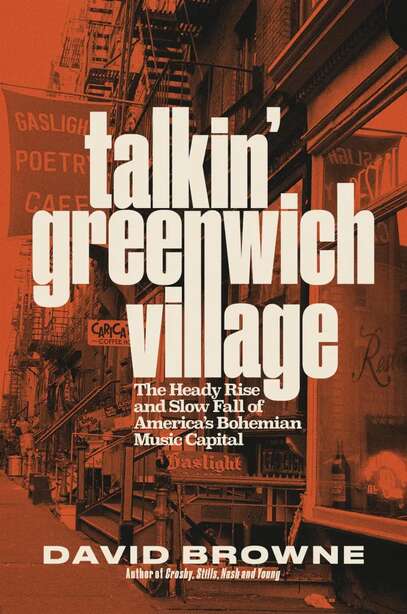
Talkin’ Greenwich Village: The Heady Rise and Slow Fall of America’s Bohemian Music Capital, by David Brown: I saw this book at the library so borrowed it. Having lived in Greenwich Village over a quarter century, I was interested in one of its big historical draws: its music scene.
There are two parts to the book. The first is its comprehensive recounting of the cycles of growth and decline of mostly folk but also jazz, rock, punk, pop, and various forms of live music.
It focuses on the people and venues. The big people are Dave Van Ronk and Bob Dylan. The venues include many from before Cafe Society and Gerdes Folk City to ones that still exist, like the Blue Note, Village Vanguard, and Bitter End.
It also describes some opponents, like the city trying to regulate deviance, NYU’s colonialist expansion, and the market driving costs up.
The second part of the book comes explicitly at the beginning, after which you have to read between the lines, and that’s the author’s love for the scene. A review I read of the book said that it was comprehensive of who knew whom and where they performed but silent on the meaning and effect of Greenwich Village’s music culture on the world. I agree with that criticism, but didn’t mind because it wasn’t the point of the book. I saw a story of love and passion from the author, who arrived in 1978 and still participates.
It feels somewhat sad to consider that once-vibrant scene that featured Thelonious Monk, Charlie Parker, Simon and Garfunkle, Suzanne Vega, Lenny Bruce, George Carlin, and countless others now has many CVS drug stores and other places devoid of self-expression. Walking MacDougal Street, it’s clear something more was there, but not what. This book filled me in on a big part of its richness.