
This week I finished:
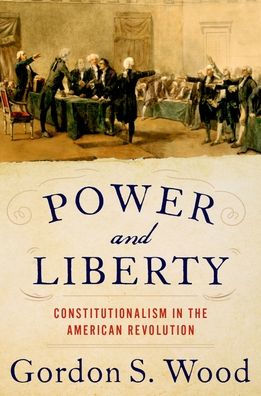
Power and Liberty: Constitutionalism in the American Revolution, by Gordon Wood: I’ve been reading, watching, and listening to Akhil Reed Amar’s work. He praises Gordon Wood so I borrowed this book from the library and watched a bunch of videos of his talks.
This book covers the history around the Declaration of Independence and Constitution. It covers the events prompting the colonists developing new views on liberty versus monarchical rule, developing principles like separation of powers and the people being sovereign, voting for representatives, checks and balances, and other developments, some new in history.
This book led me to realize how easy it’s been to consider declaring independence and writing a constitution obvious steps. The parallel processes of creating thirteen state constitutions took a long time and many different directions. Wood writes a lot about the evolution of the role of judges and the judicial branch I didn’t know about.
The writing is simple and easy. After finishing this book, I returned to the first couple chapters. I realized how much the book taught me. It started with Thomas Paine’s Common Sense, which has become important to me with my new book. I already quoted Wood from this book in my new book.
I recommend it.
I Don’t Know That I Would Even Call It Meth Anymore, in the Atlantic, by podcast guest Sam Quinones: This article is several years old, from November 2021, but I just found it and the article below. This one is subtitled “A new, cheaper form of meth is wreaking havoc on America.”
America’s Approach to Addiction Has Gone Off the Rails, in the Atlantic by podcast guest Sam Quinones. This article is also a couple years old, from June 2023. This one is subtitled “In a time of fentanyl and meth, we need to use law enforcement differently—and more often.”

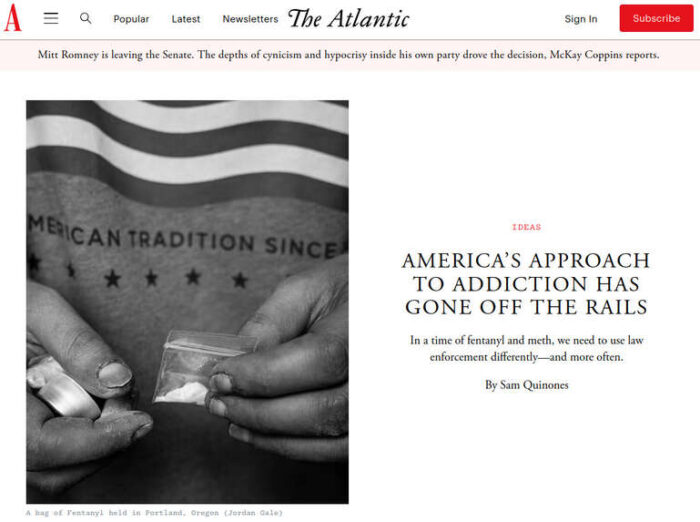
These two articles are a punch in the gut of how huge the supply of fentanyl and meth have grown, making their markets supply driven. As with litter and calories, no amount of policing or legislation can stop the effects of too-much supply. As best I can tell, only lowering the supply can end the downstream effects, such as those I see in my neighborhood every day.
I see two causes. The first is the market’s drive toward innovation and efficiency. Suppliers have found how to create the drugs without relying on plants. In this regard, they are following the trend of the Industrial Revolution to bring energy and materials from outside the biosphere into it and use them to replace what grew in real time from sunlight. In particular, these drugs are now created from chemicals that come from fossil fuels.
The second is government allowing unfettered fossil fuel extraction despite that its mere extraction inevitably results in the destruction of life, liberty, and property, even if it provides some people temporary benefits, like powering planes or making plastic they can sell.
It’s tempting to think we can get the results we want and not the ones we don’t when we extract fossil fuels and make markets more efficient but we get all the effects. Those effects include pollution, depletion, and the ability to create and distribute increasingly addictive products.
The original intent of the US Constitution was to prevent people from depriving others of life, liberty, and property. The government is not following its original intent.
Blood Brothers: Malcolm X & Muhammad Ali, directed by Marcus A. Clarke:

I was curious about the relationship between Malcolm X and Muhammad Ali. I knew Malcolm influenced Ali, but didn’t realize how close they were, nor how tragic their split when Malcolm left Elijah Muhammad’s sphere, nor how much regret Ali lived with after Malcolm was killed.
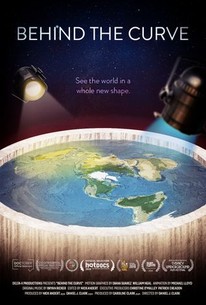
Behind the Curve, directed by Daniel J. Clark: I’m not sure what prompted me to look up flat earth beliefs, but I found this movie on them. I was curious so I watched it.
It became clear how much belief in the earth being flat depends on community. I think a lot of people who don’t believe in the earth being flat think because everyone around them agrees with them that they’re right even though they don’t know the evidence why. That is, they’re agreeing with their community as much as flat-earthers do.
In my NYU leadership classes, I would ask students if they believed the earth was round or flat. They all said round, sometimes wondering if I was kooky for asking. Then I’d point out that photographs could easily be faked and ask what evidence they had that the earth was round that wasn’t someone just telling them.
Out of hundreds of students, only a couple could name a way they could tell. I don’t think they realized how much they behaved as the flat-earthers. There is clear evidence of the earth being round, but nearly none could describe how to determine, whether or not they intended to try.
Today, many people call solar, wind, and sometimes nuclear energy “clean,” “green,” or “renewable,” only on the word of others. Likewise they talk of an energy “transition” on the word of others. The evidence I’m aware of shows they are not clean, green, or renewable, nor are we lowering the use of fossil fuels. We aren’t “transitioning,” we’re just producing more energy in new ways.
Acknowledging that they aren’t clean, green, or renewable and that only stopping extraction of fossil fuels and uranium meets the original intent of the Constitution, its writers, and its ratifiers would help us solve our problems, not just say we are when the evidence shows we aren’t, in the style of flat-earthers.