
Frances Hesselbein
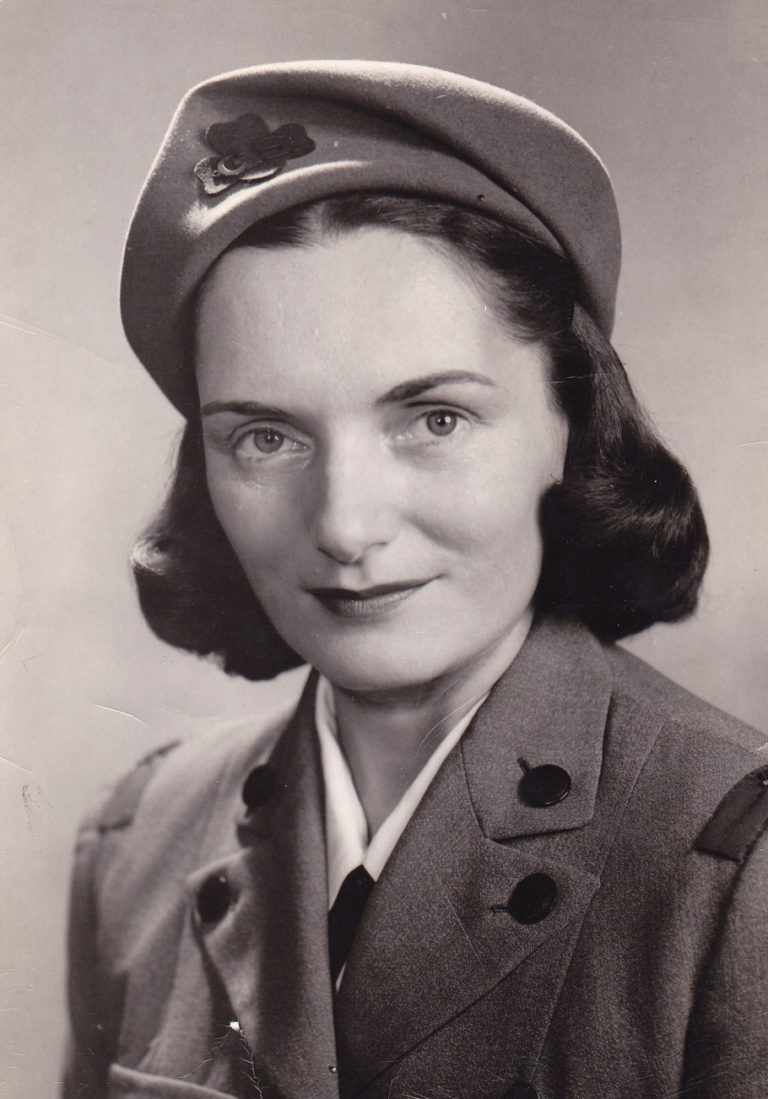
Page 1 of my book begins “I had met Frances Hesselbein when she spoke to my leadership class in business school,” more than a decade ago.
(You can read the rest of the story at the book’s page and clicking “Look inside”).
She and her style of servant leadership have influenced my practice significantly, especially from seeing her in action in person, also from the company she keeps, such as Marshall Goldsmith, General Lloyd Austin III, Jim Collins, and more.
In the past few years we’ve become friends, which I hope shows up in my book. Two of my first thoughts about Frances and leadership are:
- To serve is to live, her fundamental phrase about how she leads and lives. The more I interact with her, the more depth the phrase takes.
- She communicates in a few words what other leaders struggle to understand and communicate for years. She has more experience at every level of organizational and personal leadership than you and she’s reflected enough to express what she’s learned, apparently effortlessly.
I can’t describe how much I’ve learned from her. I hope you catch some of that wisdom from her.
Through her I posted my first Leader to Leader journal article.
Through her I helped lead leadership workshops at West Point.
One thing missing from the audio recording is her full expression in her non-verbal communication, especially her eyes. She’s incredibly charming. In person you can see that she leads with more tools than just words.
Here is her official bio:
One of the most highly respected experts in the field of contemporary leadership development, Frances Hesselbein is the namesake for The Frances Hesselbein Leadership Forum in the Graduate School of Public and International Affairs (GSPIA) at the University of Pittsburgh, and the Editor-in-Chief of the award-winning quarterly journal, Leader to Leader.
The Frances Hesselbein Leadership Forum is a continuation of the organization founded as The Peter F. Drucker Foundation for Nonprofit Management.
Mrs. Hesselbein was awarded the Presidential Medal of Freedom, the United States of America’s highest civilian honor, by President Clinton in 1998 for her leadership as CEO of Girl Scouts of the U.S.A. from 1976—1990, as well as her service as “a pioneer for women, volunteerism, diversity and opportunity.” Her contributions were also recognized by the first President Bush, who appointed her to two Presidential Commissions on National and Community Service.
From 2009—2011, Mrs. Hesselbein served as the Class of 1951 Chair for the Study of Leadership at the United States Military Academy at West Point, in the Department of Behavioral Sciences and Leadership. She was the first woman, and the first non-graduate to serve in this chair. Also in 2009, the University of Pittsburgh introduced The Hesselbein Global Academy for Student Leadership and Civic Engagement. The Academy’s aim is to produce experienced and ethical leaders who will address critical national and international issues and advance positive social and economic initiatives throughout the world.
Mrs. Hesselbein serves on many nonprofit and private sector corporate boards, including Mutual of America Life Insurance Company, the Bright China Social Fund, California Institute of Advanced Management, and Teachers College, Columbia University Presidents Advisory Council. She served as the Chairman of the National Board of Directors for Volunteers of America from 2002—2006. In December 2013 Volunteers of America honored Mrs. Hesselbein with the Maud Ballington Booth Legacy Award for a lifetime of pioneering social change.
For her exceptional work and her continued commitment to developing leaders of all ages, as demonstrated in her work with the Hesselbein Institute, Mrs. Hesselbein has been awarded Lifetime Achievement Awards from ATHENA International, Best Practice Institute, the Girl
Scout Council of Greater New York, and the International Leadership Association. Mrs. Hesselbein has been inducted into the Enterprising Women Hall of Fame and is a Distinguished Daughter of Pennsylvania. Fortune Magazine named Hesselbein one of the World’s 50 Greatest Leaders in 2015.
Mrs. Hesselbein was named a Senior Leader at the United States Military Academy’s 2008 National Conference on Ethics in America. In 2007, Mrs. Hesselbein was awarded the John F. Kennedy Memorial Fellowship by Fulbright New Zealand and was the first recipient of the Dwight D. Eisenhower National Security Award in 2003.
Mrs. Hesselbein is the recipient of twenty-one honorary doctoral degrees. She is the coeditor of twenty-seven books in twenty-nine languages. Mrs. Hesselbein has traveled to sixty-eight countries representing the United States. She is the author of Hesselbein on Leadership, My Life in Leadership and More Hesselbein on Leadership; and most recently, the enhanced edition of Peter Drucker’s The Five Most Important Questions: Enduring Wisdom for Today’s Leaders.
031: Frances Hesselbein, Conversation 1: Where you can make the greatest difference
Having worked with many people and generations, Frances sees great hope in millennials. She points to research that they are like the so-called Greatest Generation, who fought World War II and then helped rebuild the world. Moreover, we see them as having done it because “it was the right thing to do,” not fame or fortune.
The environment could use such perspective and results. I hope she’s right.
I recommend listening to how she has made her life about taking on challenges, which bring her emotional reward. She takes them on deliberately. I believe she expects that work serving others will create emotional reward and meaning.
I didn’t hear her talk about pursuing comfort and convenience. I think she knows that taking easy, traditional routes don’t create long-term reward.
The result? I doubt you’ll find a happier person, nor a more respectable and accomplished circle of friends and colleagues.
I share her main environmental leadership message: that working for others improves your life. Serving others makes you feel good. This perspective contrasts with the predominant feelings I see of “I want to act but if others don’t it won’t matter” and guilt.
She describes creating meaning through serving others, not hoping for it.
I’m particularly taken by her characterization of how the men in her life served: “It was just what we did.” I don’t hear that voice today on the environment, but I’m working to create it.
Something you don’t hear in the recording that I happened to see in her notes after we finished. She wrote a fourth ‘R’ here:
Reduce, reuse, recycle, responsibility
She didn’t refer to environmental challenges. She called them opportunities.