
Seth Shelden
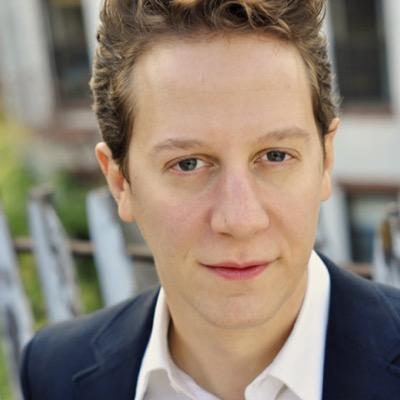
Seth is the United Nations Liaison for the 2017 Nobel Peace Prize laureate, the International Campaign to Abolish Nuclear Weapons (ICAN), earning the prize for work on the Treaty on the Prohibition of Nuclear Weapons, adopted at the United Nations in July 2017.
Seth is a partner at the law firm of Farkas & Neurman, assisting a diverse array of companies and individuals in acquiring, protecting, enforcing, licensing, securitizing, and using copyrights, trademarks, domain names, and trade secrets. Before Farkas & Neurman, Seth spent about seven years at the law firm of Skadden, Arps, Slate, Meagher & Flom LLP, in their Intellectual Property and Technology Group, where his concentrations included intellectual property licensing; intellectual property aspects of corporate transactions; trademark, copyright, and right of publicity clearance, acquisition, protection, and enforcement; and copyright, trademark, domain name, patent, and trade secret disputes, administrative proceedings, and litigations.
Seth has held visiting professorships at the Cardozo School of Law (where he was also an Adjunct Professor), the University of Latvia (where he served as a Fulbright Scholar), and Toyo University (where he served as a Fulbright Specialist). Currently he is an Adjunct Professor at the City University of New York (CUNY) School of Law, where he focuses principally on intellectual property law.
In addition to serving on the Board of Directors for the Lawyers Committee on Nuclear Policy, Seth received his J.D. from the University of California, Berkeley, School of Law and his B.A., with Honors and Distinction, from the University of North Carolina at Chapel Hill.
267: Seth Shelden, part 2: Inside the United Nations
Before we spoke, Seth implied he didn’t do as much on his challenge as I expected so I expected a short conversation.
I think it’s important for listeners to hear that even people who win Nobel Prizes taking on global thermonuclear war have a hard time taking on new habits, even ones they want, like reducing their waste.
I’m not claiming changing habits with environmental consequences are easy, though I believe nearly everyone will find doing so, when acting on internal values, rewarding. I think they’ll be glad they did. But few will find starting trivial.
So if you’ve identified a value you haven’t acted on but want to—environmental or otherwise—I hope you forgive yourself if starting is hard. Or if keeping it up is hard. You’re still in league with greats. Experience tells me you’ll prefer trying to not trying, however hard it seems. Same with trying again if it doesn’t stick. Sometimes you have to try the same thing again, others to learn, revise, and try in a new way.
Seth and I ended up having a wonderful conversation about different ways of motivating people, so it was rich and full. I hope you’ll enjoy this inside view of how people working on global problems and local, grassroots efforts do things.
I thanked him in the recording, but I’ll call out what I consider leadership—to allow himself to sound vulnerable to others, to share what others might call weakness or failure. He also preferred accountability, which effective leaders like. Accountability gets the job done.
On a personal note, last time I cooked him my famous no-packaging vegetable stew, this time I shared some mulberries I foraged, which were more delicious. I don’t think I can beat nature’s raw ingredients.
On a technical note, it turns out that his microphone was rubbing against something, but I didn’t realize until after recording. I hope the microphone sound doesn’t distract too much.
196: Seth Shelden, part 1: Nuclear Weapons, the Environment, and the Nobel Prize
When I studied physics and spent time in universities, I met a lot of Nobel laureates. Physics is Nobel heavy so Columbia physics connected me to 3. Other science departments led me to another 1 or 2. The business school led me to another.
Seth Shelden and ICAN—the International Campaign to Abolish Nuclear Weapons—won the 2017 Nobel Peace Prize “for its work to draw attention to the catastrophic humanitarian consequences of any use of nuclear weapons and for its ground-breaking efforts to achieve a treaty-based prohibition of such weapons”
Their goal is a UN treaty like the one to ban land mines for nuclear weapons. After forming in 2007, 2 years before tomorrow, July 7, they achieved, with the help of many others, The Treaty on the Prohibition of Nuclear Weapons (TPNW) is adopted at the United Nations by a vote of 122-1. The Treaty, which prohibits nuclear weapons and other nuclear explosive devices, will become law when ratified by 50 states.
I wanted to bring someone on who is working on something many want but people don’t see how. I hope you’ll listen carefully. I picked up something I hadn’t expected—a new frame for how to view nuclear weapons. It’s not about the physics or engineering. I figure I know a fair amount about game theory and negotiation. While global thermonuclear war is beyond just a complex chess game, my frame still saw it that way.
I disagreed with people who said nuclear weapons, through mutually assured destruction, created peace since World War II, but Seth suggested a different perspective than negotiation or brinkmanship.
He doesn’t look at the situation like two superpowers or even a moderate number of nuclear states. I’ll let him describe it, but his view suggests different strategies than I would have come up with and makes important different players.
Let’s hear a new (to me at least) view on abolishing nuclear weapons.