
Michael Lenox
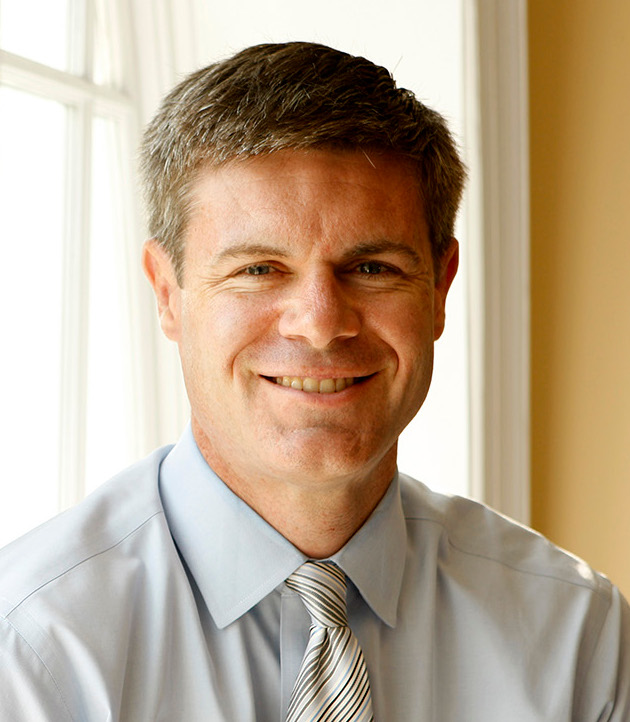
Professor Lenox is the Tayloe Murphy Professor of Business at the University of Virginia’s Darden School of Business where he teaches the core MBA strategy course. He also serves as the school’s Senior Associate Dean and Chief Strategy Office.
From 2008 to 2016, he served as Associate Dean of Innovation Programs and Academic Director of Darden’s Batten Institute for Entrepreneurship and Innovation. He helped found and served as the inaugural president of the multiple-university Alliance for Research on Corporate Sustainability.
Prior to joining Darden in 2008, Professor Lenox was a professor at Duke University’s Fuqua School of Business where he served as the area coordinator for Fuqua’s Strategy Area and the faculty director and founder of Duke’s Corporate Sustainability Initiative. He received his Ph.D. in Technology Management and Policy from the Massachusetts Institute of Technology and the degrees of Bachelor and Master of Science in Systems Engineering from the University of Virginia. Professor Lenox has served as an assistant professor at New York University’s Stern School of Business and as a visiting professor at Stanford University, Harvard University, Oxford University, and IMD.
Professor Lenox’s research has appeared in over twenty-five refereed academic publications and has been cited in a number of media outlets including the New York Times, the Financial Times, and the Economist. In 2009, he was recognized as a Faculty Pioneer by the Aspen Institute and as the top strategy professor under 40 by the Strategic Management Society. In 2011, he was named one of the top 40 business professors under 40 by Poets & Quants. Professor Lenox’s primary expertise is in the domain of technology strategy and policy.
He is broadly interested in the role of innovation and entrepreneurship for economic growth and firm competitive success. In particular, he explores the business strategy and public policy drivers of the direction of innovative activity. Professor Lenox also has a long-standing interest in the interface between business strategy and public policy as it relates to the natural environment. Recent work explores firm strategies and non-traditional public policies that have the potential to drive “green” innovation and entrepreneurship.
532: Michael Lenox, part 3: How to Decarbonize the Global Economy by 2050
At last, a conversation with a knowledgeable economist!
Longtime listeners remember Michael here after his last book. He just published a new one, The Decarbonization Imperative: Transforming the Global Economy by 2050. His book and our conversation cover why should we go to net zero by 2050, is it possible, and, if so, how?
We agree on the mission of dramatically cutting emissions and most strategies to achieve it. We disagree on the relative importance of some strategies and measures. Listen to hear our respective views, healthy agreement, and healthy disagreement.
062: Michael Lenox, part 2: Business and systemic change
Michael’s book tour was taking him to China, up and down the U.S. east coast, and across the country, but he kept at his commitment. Tell me if you don’t hear him smiling in talking about it.
He said it was easy, but many people considering the same action put it off.
His book covers systemic change, focusing on the role of business. I find that his personal action brings in a missing piece of what you can do here and now.
Partly acting here and now achieves something, but individual actions don’t achieve that much, as he points out and we all know.
More importantly, acting here and now leads to acting on bigger, more effective things. People who don’t start little things never reach big, effective things. People who do, do.
Maybe most of all, acting on your values on whatever scale improves your life. When the action take no time or other resources and make you smile, why not?
047: Michael Lenox, conversation 1: Can Business Save the Earth?
At last I spoke to someone with a systems perspective!
I enjoyed the conversation with a fellow academic who cares beyond the classroom.
Michael spoke about how many areas we could work in, not to say it’s too much but that you can find a place to contribute.
Many people wish there was a silver bullet. As far as I know there isn’t one. His about-to-launch book, Can Business Save the Earth, treats action on the environment systemically, a perspective I consider essential for environmental leadership.
What may seem initially overwhelming doesn’t end up that way when you see the big picture, which is what his book covers, and when you find a place to act.
Plus, his personal challenge is one a lot of people think about doing but don’t, so if you’ve thought of changing your diet, I recommend listening to Michael’s challenge.