Podcast


738: Jacqueline Bicanic, part 2: Sustainability doesn’t cost time and energy, it gives it

People complain they don't have time, money, or energy to live more sustainably, I think because marketers see the demand so come up with things to sell people to address the demand. Since neither buyer nor seller understand how nature or systems work, the offerings don't help sustainability. Meanwhile, high demand and low supply means high prices, so people associate costing time, money, and energy with sustainability when they should associate it with their gullibility and ignorance. Jacquie didn't complain about costs, but she did say she was too busy. She was even busy working on sustainability. I suggested in our first conversation that cause and effect might be the opposite of what she expected. That is, I suggested that her busy-ness wasn't keeping her…

0 Comments

737: Michael Gerrard: Considering a stewardship amendment with a foremost environmental lawyer

I follow podcast guest Maya Van Rossum on her work on constitutional amendments protecting a clean environment. You may have heard of the legal victory in Montana, Held versus Montana, earlier this year (yay!), Montana being one of the three states with such an amendment. Maya appeared on a panel, Securing Climate Justice Through Green Amendments: The Held v. Montana Victory, that discussed that case. The more I learn, the more I realize that however impossible it may sound, we can't solve our environmental problems for good without amending the Constitution. On the panel with her was Michael Gerrard, professor at Columbia Law School, one of America's foremost environmental laws. In today's conversation we talk about the possibilities about a constitutional amendment banning unsustainability. Mark…

0 Comments

736: Mattan Griffel, part 1: Online opioid addiction treatment that (actually) works

Regular listeners know I focus on understanding addiction. I see people in my neighborhood and in headlines nearly daily addicted to heroin, fentanyl, meth, and crack. Since our culture promotes craving and dependence as what many would call "good business," I see people on those drugs not as outliers or anomalies from culture. I see them as slightly more acute versions of mainstream America. I see addiction to doof as serious as addiction to illegal drugs. Increasingly medical professionals are recognizing what they would call ultra-processed foods as addictive. Plenty of other polluting things---fast fashion, cell phones, etc---are addictions our culture promotes. The product sells itself! What could be better for the GDP. Mattan cofounded Ophelia, which treats opiate addiction online. He shares the deaths…

0 Comments

735: Casey Mahoney, part 1: A Jazz Musician Lowering His Impact to 3 Tons CO2/Year in L.A.

Casey is a longtime friend. One day a few months ago he mentioned in a call he was choosing to lower his carbon footprint to a few tons of CO2 per year. I hadn't been trying to lead or persuade him, so I started asking him why, what prompted him, was it hard in Los Angeles where people drive everywhere and some people say they need air conditioning, and so on. Knowing me and my actions prompted him, but there was more to it. He faced challenges from his family and profession, but found parts easy too. He started biking to jazz gigs by electric bike. What jazz musician bikes to perform?!? . . . with his equipment in a bike trailer?!? I had to…

0 Comments

734: Alon Tal, part 1: Israel, Hamas, and overpopulation from a former Knesset member

Last month I read Hamas-Israel story from an angle few will touch, but is critical: overpopulation, which I wrote about in my post Overpopulation in Israel and Gaza. The population in Israel and Palestine have both more than quintupled since 1950. There are plenty of sources of problems there, but not many places can handle that kind of growth, especially when mostly desert. The article led me to read Alon's book The Land Is Full: Addressing Overpopulation in Israel. You can't understand the situation there without including population---including human violence and environmental degradation. Alon isn't only a professor. He also served in the Knesset, Israel's parliament. He's one of the few politicians to talk about overpopulation. In Israel it's impossible to miss, though many people…

0 Comments

733: Jacqueline Bicanic, part 1: Listener as Guest: Australian University Student, Very Active in Sustainability

Jacquie emailed me that this podcast is inspiring her. She wrote that she'd "always had a spark of interest in sustainability, but I mostly followed the herd mentality and went about my life not really making a conscious effort & just thinking about ways I could reduce my impacts. In the last couple of years, it’s like jet fuel has been added to that spark and it’s changed the trajectory of my career aspirations, and had a significant impact on my life as a whole. . . It’s comforting to know that there are people all around the world who feel similarly to me, and it’s been inspiring to hear other peoples’ stories. I find this especially helpful on the days where I feel helpless/hopeless…

0 Comments

732: Siddharth Kara, part 1: Cobalt Red: How the Blood of the Congo Powers Our Lives

Living unsustainably means you need resources beyond your immediate environment. It requires you take from others. When done on a cultural level, it's known as imperialism. When we take their land too, it's colonialism. When we take their labor, it's slavery. All of these things are happening in the Congo. If you think solar and wind are sustainable or avoid human suffering, read Siddharth's book Cobalt Red. If you listened to my last conversation with Adam Hochschild on his book King Leopold's Ghost, you know about the west's cruelty in the Congo. It hasn't ended. Adam put me in touch with Siddharth. The book will change your views on what we call clean, green, and renewable. Siddharth doesn't outright say it, but it seems every…

0 Comments

731: Debate and Understanding on Population Projections with Wolfgang Lutz and Chris Bystroff

I hosted two professionals who model population growth with different views, some complementary, some conflicting: Wolfgang Lutz and Chris Bystroff. I learned from both and recommend listening to their episodes first. I've also recorded episodes with many guests and solo episodes on population: 475: We Can Dance Around Environmental Problems All We Want. We Eventually Reach Overpopulation and Overconsumption 294: Population: How Much Is Too Much? 251: Let's make overpopulation only a finance issue 250: Why talk about birthrate and population so much? 248: Countdown, a book I recommend by Alan Weisman I invited Wolfgang and Chris to talk about their different views and see if they could learn from each other and we could learn from them. That's this episode. I clarified I wasn't…

0 Comments

730: Tony Hansen, part 1 : McKinsey’s Director of Natural Capital and Nature

Most of the partners I know at the top tier consulting firms have worked there since business school. Tony has a different background, as he describes at the beginning. Because the Firm influences people at high levels of business and government, therefore potentially able to help change culture, I'm very interested in working with them. They are as prone to inertia as any other group, so I'm curious how much they can change others. After all, it's hard to help someone stop a habit while you keep doing it. I consider the Spodek Method the most effective way to help people who want to lead others lead others---a mindset shift followed by a continual improvement. It opens the door to systemic change, which begins with…

0 Comments

729: How to Develop a Sustainability Leadership Culture in Your Organization: a Panel I moderated

If no one is changing culture in your world, it's your opportunity to fill the leadership vacuum, no matter where you are in your organization or communities. Many companies are making strides toward goals for greening their businesses but need to find ways to maintain the momentum now that they have tackled the easiest challenges. Others are about to embark on their sustainability journeys and seek a roadmap and best practices. Increasing regulations, particularly in Europe and the U.S., and demands from investors are pressing businesses to define, monitor and publish their net zero targets and green their practices and products. The IPCC reports that there is a closing window in which global citizens can mobilize to reduce carbon emissions and hope to achieve the…

0 Comments

728: Chefs Irene and Margaret Li, part1: Winning Awards Saving Perfectly Good Food

I first read about Margaret and Irene and their book Perfectly Good Food: A Totally Achievable Zero Waste Approach to Home Cooking in an article on doof in the New Yorker. Then the next week the magazine devoted an article just on them and their approach to avoiding wasting food by eating it all. You might say to me---someone who avoids packaged food, in his fifth year on one load of trash, who eats citrus peels, who almost never throws away something edible---their perfect for you. But avoiding waste alone wasn't what made me invite them here. What made me invite them here was their attitude: They're fun! They make enjoying every last bit of food fun. I invited them here because I'm working on changing culture…

0 Comments

727: Fun, liberation, freedom: How people talk after seriously acting on sustainability

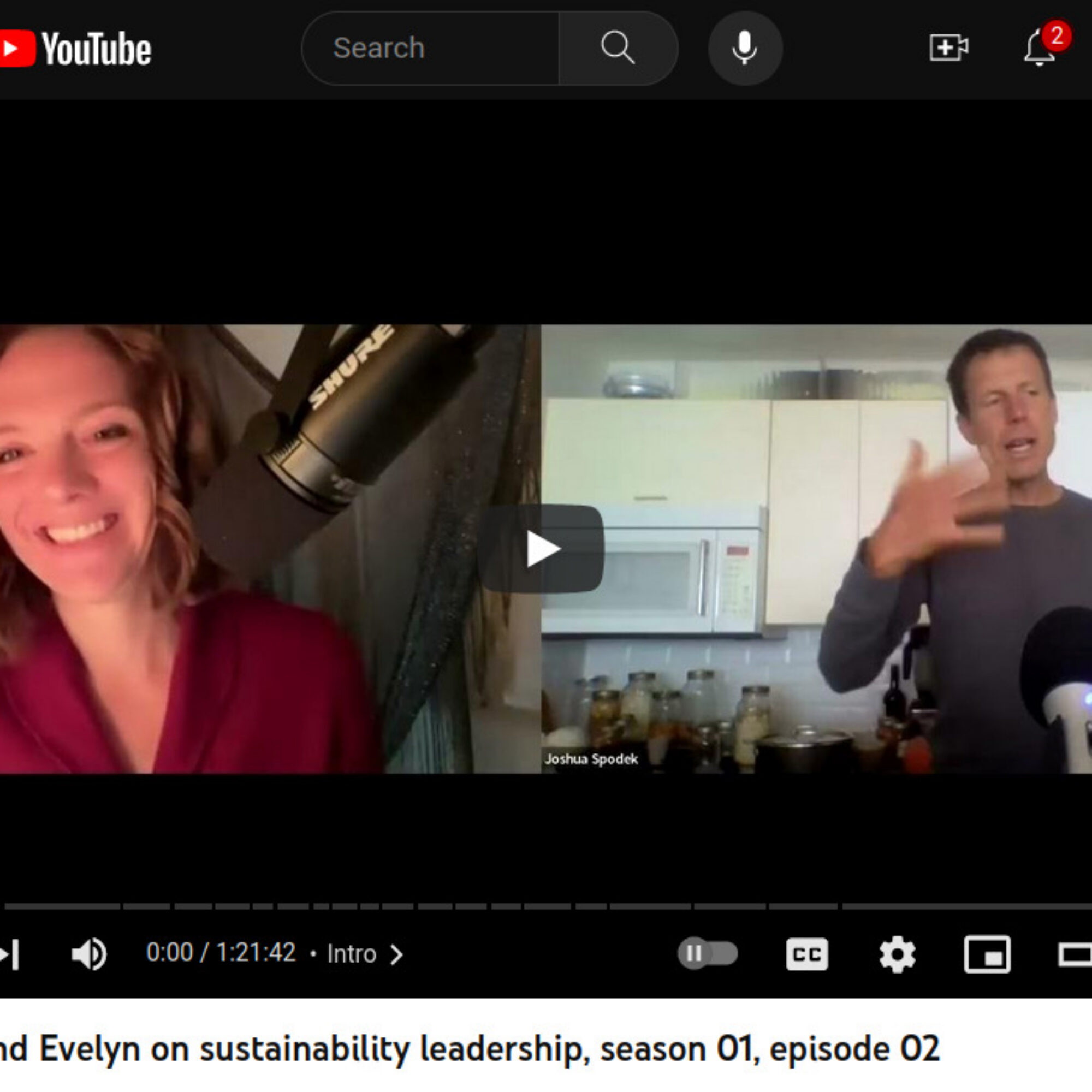
Evelyn joined the first workshop I led in the Spodek Method: practicing it, leading others through it, and how to create a movement. She then became the teaching assistant for the next two workshops. The liberation, fun, and intimacy of sharing one's fears, anxieties, and other vulnerabilities from acting more sustainably in a corrupt culture that makes it hard, all the more so in teaching others to reveal these things and still to act, led us to get to know each other. We decided the world could benefit from hearing how people who have acted to live significantly more sustainably sound: fun, playful, but still challenging. We decided to livestream our conversations for people to join and ask questions. Setting up the technology is taking…

0 Comments

726: Amy Westervelt, part 1: Showing What’s Actually Happening Behind the Scenes

Amy hosts and produces a lot of podcasts, but Drilled is the big one I've listened to a lot. I listen partly to learn what happens behind the scenes and in the past in the fossil fuel industry. She's also covered how these companies influence the public in what until about World War II was called propaganda but the advertising industry changed to public relations. As a podcaster myself, I wanted to know how she came to win all those awards, start all those podcasts, and found the company that produces them. If you think you've struggled and failed, you'll love her story since she struggled and failed on the way to success. I recommend listening to her podcasts. First listen to our conversation to…

0 Comments

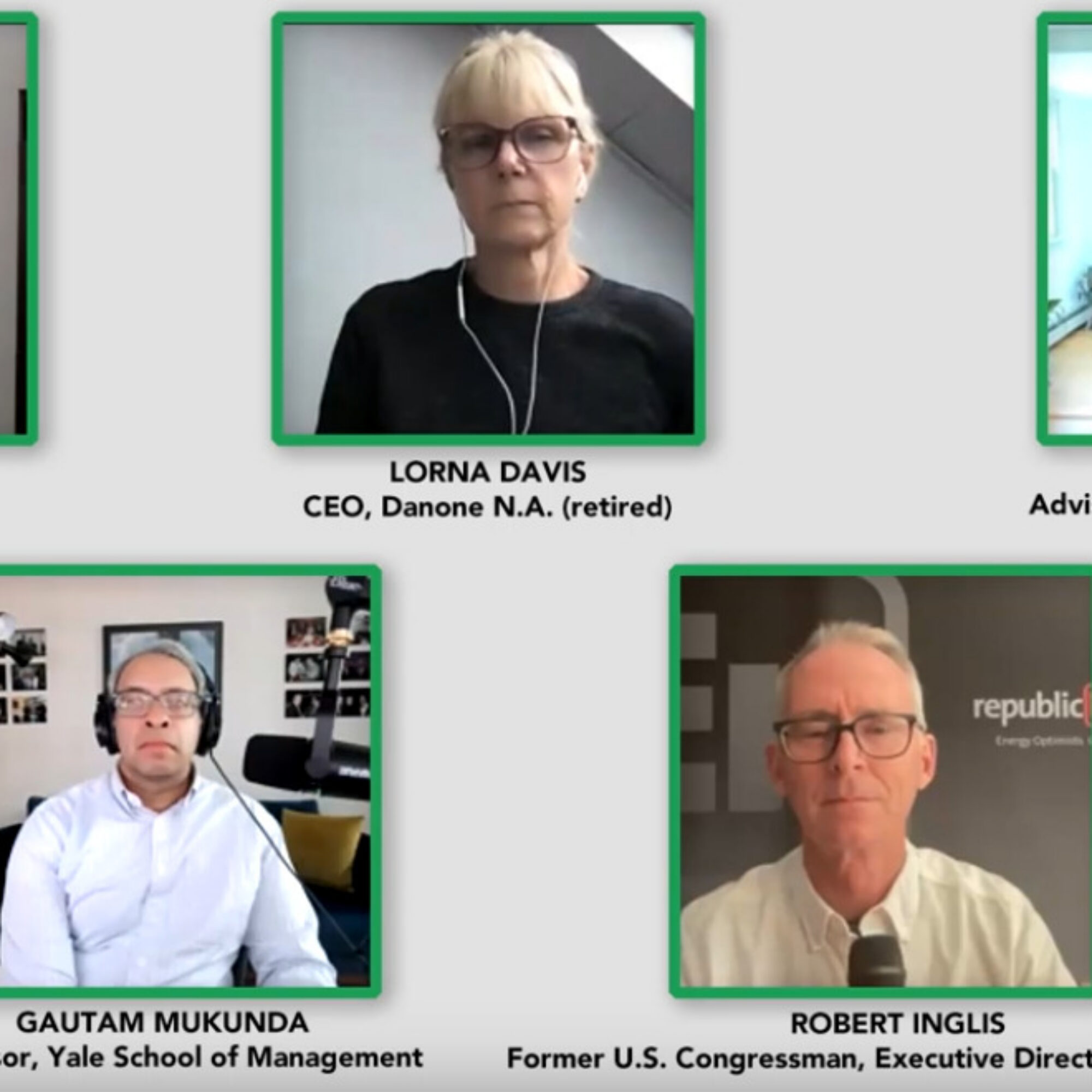
725: Gautam Mukunda, part 3: The Spodek Method Doesn’t Always Create a Huge Mindset Shift

Gautam and I had a lovely conversation about environmental things. He's become a good friend (we talk outside our recordings). Still, listen to determine for yourself, but I'd say this conversation exhibited a minor mindset shift if any. After we talked about Gautam's experience, we spoke mostly about abstract environmental issues, not personal ones. He spoke about some difference in his views and feelings brought on by his commitment, but mostly he talked about the beauty of nature flying-distance away. I want to help people find the beauty or any value they like of nature where they are, or realize that it's possible, or worth fighting to restore if we've paved too much of it over. So it's a different conversation than usual---both friendlier between…

0 Comments

724: Dr. Michael Greger, part 2: How Not to Age

I follow Doctor Greger's newsletter and watch his videos every week. I unsubscribe from nearly everything else. In this episode we get a sneak preview of his next book, How Not to Age. Since he mostly covers diet, I wanted to check how much the book covered. Since my biggest problem with aging is my torn meniscus, I looked it up first, and the book covered torn menisci. Since my diet overlaps so much with his recommendations, I shared my diet and exercise. We talked about his book, his web presence, and what I love: behind-the-scenes stuff. I also shared my doof concept with him and he started using the term too. He's on a book tour, so we kept it short, but if nutrition…

0 Comments

723: David Blight, part 2: A Constitutional Amendment on Stewardship Based on the Thirteenth and John Locke

I've spoken to several guests about the idea of a constitutional stewardship amendment in the style of the Thirteenth Amendment, complementary to a Green Amendment. Amendments tend to pass in waves so I could see them helping build a movement together. David knows as much about the history of the need for the Thirteenth Amendment, its evolution, and its passing. In this conversation I share some of what I learned since our first conversation. I read him as supportive of something new and promising. I'm biased since I wanted to hear what will motivate me. Listen for yourself to a conversation that may be an early part of a historical movement. As I've said before, an amendment wouldn't solve our environmental problems and it can…

0 Comments

722: Michael Forsythe: When McKinsey Comes to Town

When I started business school at Columbia, I hadn't heard of McKinsey. The Firm recruited heavily there, so I found out about them, but little, since they were so secretive. I learned more from my classmates, that the business world held them in high regard. People wanted to work there. I interviewed and learned I got high reviews there, but I had entered business school to improve as an entrepreneur and stayed on my path. Several friends worked there and at its peers Boston Consulting Group and Bain, as well as other consulting firms like Deloitte. I heard about Michael's book while I was reading books on colonialism, especially Heart of Darkness and King Leopold's Ghost. Leopold crafted a public persona of a benevolent philanthropist…

0 Comments

721: Jim Burke, part 1: The Most Beautiful Street in New York City?

After reading about 34th Avenue in Queens and watching the video linked below, I had to ride to see it. Over a mile of a once congested street was transformed into safer, quieter places people enjoyed, especially kids. There are three schools along the route. The kids can come out and play. I met Jim there, felt inspired to do something similar near me, and invited him to the podcast. He talks about what made it possible, what's happened since it started, resistance, celebration, and more. After we recorded, we walked around my neighborhood and he showed what streets would work best to start the program with. I'm already starting to act. Before we overbuilt streets for cars, people did fine without cars. Once built,…

0 Comments

720: Maya Van Rossum, part 2: You Don’t Have a Right to a Clean Environment. You Have to Work for It.

Do you think government should protect people's life, liberty, and property? What if it turned out it didn't, if it said other people could destroy your life, liberty, and property, and would help them do it? That's what pollution does. A lack of a clean environment means that someone polluted it and hurt you, your children, your loved ones. You don't have a right to a clean environment if you are an American, or likely anyone. Instead, others have the right to destroy your life, liberty, and property. Three states have amendments where you can sue for it, but it's hard and the nation doesn't overall. What would you do if you lost your right to free speech? Would you not work like hell to…

0 Comments

719: David Blight, part 1: From Abolitionism to Sustainability

Regular listeners and blog readers know my developing abolitionism as a role model for a sustainability movement. I've hosted several top scholars on the history of abolitionism in England and America, as well as the relevant constitutional law. Today's guest is a top historian and I found our conversation fascinating. He knows the history like an encyclopedia and can analyze it to answer my questions immediately. We talk about anti-slavery politics, abolitionism, Frederick Douglass's interpretation of the Constitution over time and in comparison to William Lloyd Garrison's and slave owners', and more. The big question we pursue is can we use the Constitution to make our nation sustainable? If so, how? You'll hear I'm narrowing in on answers. David and I will speak again. This…

0 Comments

718: Albert Garcia-Romeu, part 2: Psychedelics and Appreciating Nature Where You Are

I couldn't help asking question about the field of psychedelics research beyond our last conversation. He's a professional at the top of the field and well-connected. I started by asking him about comedy and psychedelics, after reading a funny piece in The Onion about it. He responded seriously, after all, there's a lot of humor in psychedelics. Then he shared about the growing communities of professionals and non-professionals. We both talked about trends in tourism, psychedelics, and sustainability. A lot of people are flying around and doing other things that lower Earth's ability to sustain life in the name of helping. They're achieving the opposite of what the marketers sold them on. Others are homogenizing and assimilating cultures in the name of promoting and protecting…

0 Comments

717: Pamela Paul: Writing on Controversial Subjects With Confidence

I met Pamela Paul after she mentioned previous guest John Sargent in a piece, There's More Than One Way to Ban a Book. I found her column covered issues others shy away from. I was curious what motivated her. We talked about what motivates her to write, how she chooses her columns, and how she writes. I was looking for encouragement to take on difficult topics with confidence, since I'm doing it in my book. I'm concerned my book could be maybe not banned but attacked for taking on topics people tell me to shy away from. She gives an inside view of an industry and vaunted institution. She also encouraged me a lot. If you're interested in exploring your boundaries, I expect her words…

0 Comments

716: Arnold Leitner, part 2: How much energy and power do you need to be happy?

How do we affect others and how does it relate to what brings meaning to life? I'm surprised it took this long for one of my conversations to cover the meaning of life, but I'm not surprised it came with a fellow physicist. Being able to talk quantitatively about nature comfortably, from lots of practice, lets us understand patterns of what's happening. Arnold can also talk with integrity for living by the values he talks about. We see the challenges similarly, though I focus on changing culture and he focuses more on technology. Talking about culture and meaning comes later in this conversation. First we talk in numbers about the patterns he sees in power use, then we expand to reducing battery needs overall, though…

0 Comments

715: My mom, Marie Spodek, part 3: Starting a food coop and making ends meet as a single mom in a food desert with three kids

I've written about how people act like food coops don't work for people without resources like time and money or who have kids. It took me a long time to realize they didn't see food coops being started because the people starting them didn't have time or money and had kids. When my parents couldn't make ends meet, then after they divorced and struggled more to make ends meet, forming cooperative groups was their way out of poverty. Luckily nobody told them they couldn't do it! Likewise with the people behind Drew Gardens in the Bronx, Harlem Grown, my credit union, or countless other results of community organizing. I wrote about it in If you think food coops cost more or complain that some people…

0 Comments

714: Adam Hochschild, part 3: King Leopold’s Ghost

Adam's book Bury the Chains inspired me to see British abolitionism as a role model movement for sustainability. The writing was simple and clear. The subject inspirational and relevant. We talked about it in our first episodes, which I recommend. At last I read his most renowned book, King Leopold's Ghost, which we talk about in this episode. I came to it after reading Heart of Darkness, which it complements. Regular readers know how much I've found imperialism, colonialism, and slavery. King Leopold's Ghost covers the case of Belgium's king pulling it off while cultivating a philanthropic reputation. It's shocking and more relevant than ever, given the continuing imperialism, colonialism, and slavery in Africa today, now for our cell phones and electric vehicles. They aren't clean,…

0 Comments

End of content

No more pages to load