
Over and over, people refer to societies that were colonized as indigenous. For example, I see nearly all Native American groups referred to as indigenous.
Here’s a dictionary definition of indigenous, which covers the meaning here.
indigenous adjective in·dig·e·nous
1 a : produced, growing, living, or occurring natively or naturally in a particular region or environment
b usually Indigenous : of, relating to, or descended from the earliest known inhabitants of a place and especially of a place that was colonized
Here’s another: “Being a member of the original inhabitants of a particular place.”
Consider Manhattan, where I live. Humans have lived here for five or ten thousand years. Europeans arrived ten percent of that time ago.
If someone calls the people who lived on Manhattan when Europeans arrived indigenous, they can only mean a few things. They could mean that they think that the people on the island a few hundred years ago descended from the first people who found the island.
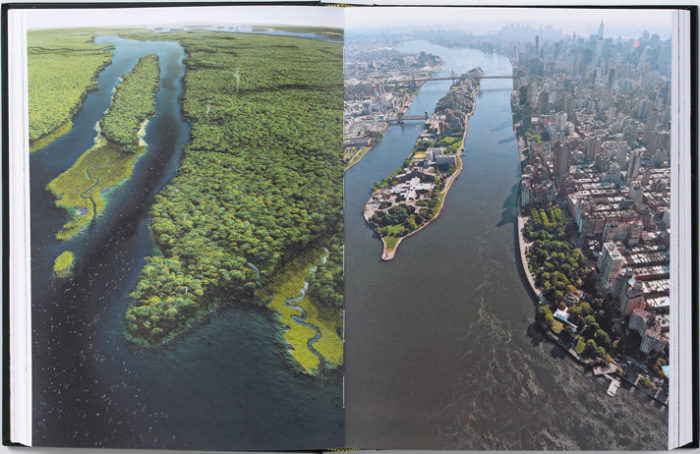
Do they believe that no other groups displaced the original inhabitants? If so, do they have evidence that one line of people lived in one place for nearly ten thousand years? That’s quite a claim. It would require serious evidence. I don’t see how they could back it up.
Maybe they believe that if any people were displaced, the people displacing them were similar enough to count as one people. Again, that’s quite a claim. How could they show that if a group invaded or otherwise displaced another, that they are similar?
To consider them similar just because they would fall under today’s name “Native American” seems to imply a homogeneity where there may have been diversity. Why presume that different Native American groups who displace others are any less diverse than, say, French displacing English?
Say that at some point over thousands of years, a group displaced another, the displaced group not consenting. Would that not be an act of aggression, even imperialist aggression? Or are Native Americans only peaceful and cooperative, never impacting others without their consent?
I’ve heard many people describe the people that Europeans colonized as indigenous, but I’ve never heard someone calling them indigenous give evidence that the people displaced were indigenous, only that they were there when Europeans arrived.
It’s possible that no Native Americans were indigenous anywhere in North America or South America when Europeans arrived. For groups to live with limited resources for thousands of years without them displacing each other seems far fetched to me, though I’m not an expert.
If Native American groups displaced others without their consent, they may have done so violently. How do we know the people we describe as indigenous today didn’t descend from violent invaders themselves? It seems to me that people are granting innocence to people just for not being European.
Some people were indigenous to each part of Europe. They were displaced, colonized, or otherwise taken over by others. Why not view them as colonized or assimilated? I shouldn’t only talk of European colonizers. Waves of people left Africa and displaced people and homonins. Empires emerged from around the Nile, Mesopotamia, the Indus Valley, the Yellow and Yangtze River valleys, and many other places that created imperialist cultures.
Does anyone have evidence that the people displaced by any of these cultures were the first ones there? I’d love to learn of it to settle these questions.
Beyond North America, I’m sure some groups can be identified as indigenous, maybe on small islands like Hawaii, but I don’t know.
Curiously, as I type these words at the library, someone nearby that I don’t know has a sticker on his computer that says “End speciesism.” I haven’t studied speciesism that much. I don’t even know if it’s a coherent topic, but if we go beyond species, to call humans indigenous means not considering any of the animals that humans displaced worthy of being called indigenous. Otherwise, they would be indigenous and the humans would be colonizers. If so, and if people want to grant personhood or legal rights to animals or other parts of nature, they may be contradicting themselves. If people displaced life that they consider persons, then those people aren’t indigenous.