
Abdal Hakim Murad
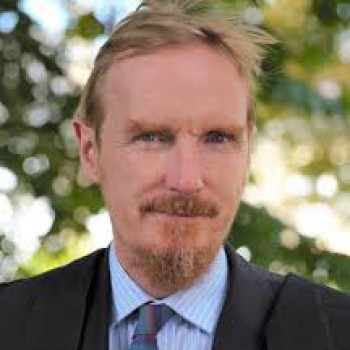
Abdal Hakim Murad (born Timothy Winter) is an English academic, theologian and Islamic scholar who is a leading proponent of Islamic neo-traditionalism. His work includes publications on Islamic theology, modernity, and Anglo-Muslim relations, and he has translated several Islamic texts.
He founded and is Dean of the Cambridge Muslim College, Aziz Foundation Professor of Islamic Studies at both Cambridge Muslim College and Ebrahim College, Director of Studies (Theology and Religious Studies) at Wolfson College and the Shaykh Zayed Lecturer of Islamic Studies in the Faculty of Divinity at University of Cambridge.
In 2010 he was voted Britain’s most influential Muslim thinker by Jordan’s Royal Islamic Strategic Studies Centre. He has translated a number of books from the Arabic, including several sections of Imam al-Ghazali’s Ihya Ulum al-Din.
A Sunni Muslim, he regularly leads Juma prayers at the Cambridge central mosque, and has spoken in major mosques in Australia, Singapore, Malaysia, Spain, and the United States. Recordings of his talks are available on the Cambridge Khutbas website. His articles have appeared in The Independent, the London Evening Standard, the Daily Telegraph, The Times, the Catholic Herald, Islamica, Zaman, the Times Literary Supplement, and Prospect. He is also a regular contributor to BBC Radio 4’s Thought for the Day.
549: Abdal Hakim Murad, part 2: High and low tech in the new green mosque in Cambridge, UK
Many people and mainstream society seem to view technology as the solution to our environmental problems—and the more and the newer the better. Abdal Hakim and I agree technology isn’t the glowing solution many believe. It can play a role, but as part of a mix, including low-tech and non-tech components.
This topic led to the new green mosque in Cambridge that he helped make happen, how to mix technologies and harmonize with its location. It won awards and created networks and support from the community.
He shared the role of sacred spaces in life, less available now, as well as natural spaces. Nobody dislikes trees, but there are fewer around than ever for many people.
He also shares his commitment on reducing meat with a widespread social and Muslim perspective.
522: Abdal Hakim Murad, part 1: Britain’s most influential Muslim thinker
A reader followed up on my conversations with religious figures and authorities from branches of Christianity and Judaism. He wrote
You have presented religious people with The Book. That’s good, and I hope you will find space for a muslim person/scholar and relate it to your concern about the sustainability and climate. I can recommend one person. He is, I believe the leader of Cambridge Muslim College, UK. Abdal Hakim Murad (actually British who converted to islam). He is highly and well respected and also provide guidance on the contemporary society to the community of muslims in UK and also in Europe.
While I know about Islam, I don’t know many Muslims, so loved the suggestion and connected with Abdal Hakim.
Beyond his leadership role in Cambridge, England, his personal story and accomplishments intrigued me. The conversation was for me enlightening, especially his insider view of communities that, to the extent I’ve learned of them, I got a one-sided, American view. He shared of erudite sophistication. We spoke about cultures intersecting and intermingling.
He also share of Islam’s long history in Europe, patiently given my knowing little, so if you’d like to learn more and don’t know much, I think you’ll appreciate our conversation.
Religion and the environment
Our conversation also reinforced my impression that religious people connect with sustainability and stewardship with emotions mine are closer to: beauty and joy, for example, more than obligation and chore, which I hear from environmentalists. He recounts examples of Islam and sustainability, practiced naturally, not just following a recent trend.