
Alan Weisman
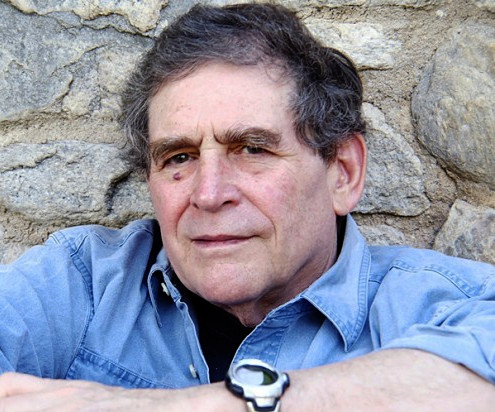
Alan Weisman has worked on seven continents and in more than 50 countries. He is the author of six books; his most recent, Countdown: Our Last, Best Hope for a Future on Earth?, is now in 13 foreign language editions.
Countdown (Little, Brown and Co., 2013) was awarded the 2014 Los Angeles Times Book Prize, the 2013 Paris Book Festival Prize for nonfiction, the 2014 Nautilus Gold Book Award, the Population Institute’s 2014 Global Media Award for best book, and was a finalist for the Orion Book Award and the Books for a Better Life Award. Booklist called Countdown “a riveting read . . . a major book . . . rigorous and provoking.”
Alan’s previous book, The World Without Us (Thomas Dunne Books, 2007), was a New York Times and international bestseller, a finalist for the National Book Critics Circle Award, the Orion Book Award, the Rachel Carson Prize, the J. Anthony Lukas Book Prize, and winner of the National Library of China’s Wenjin Book Prize. It was named the top nonfiction book of 2007 by TIME, Entertainment Weekly, and Canada’s National Post, and has been translated into 34 languages.
Alan is a co-founder of Homelands Productions. His radio pieces have been heard on NPR, Public Radio International, and American Public Media. His writing has appeared in Harper’s, The New York Times Magazine, Atlantic Monthly, Vanity Fair, Los Angeles Times Magazine, Orion, Audubon, Mother Jones, Discover, Conde Nast Traveler, Resurgence, and in several anthologies (including The Best American Science Writing 2006, The Best Buddhist Writing 2009, A Passion for This Earth, and Moral Ground).
He is also the author of An Echo In My Blood (Harcourt Brace, 1999); Gaviotas: A Village to Reinvent the World (Chelsea Green Publishing, 1998); La Frontera: The United States Border With Mexico (Harcourt Brace Jovanovich, 1986); and We, Immortals (Pocket Books, 1979).
Alan has been a Fulbright Senior Scholar in Colombia, writer-in-residence at the Altos de Chavón Escuela de Arte y Diseño in the Dominican Republic, the John Farrar Fellow in Nonfiction at the Bread Loaf Writers’ Conference, a contributing editor to the Los Angeles Times Magazine, and a professor of writing, journalism, and Latin American studies at Prescott College and the University of Arizona.
Among his radio awards shared with his Homelands colleagues are a Robert F. Kennedy Citation, the Harry Chapin/World Hunger Year award, and Brazil’s Prèmio Nacional de Jornalismo Radiofônico. He has also received a Four Corners Award for Best Nonfiction Book (for La Frontera), a Los Angeles Press Club Award for Best Feature Story, and a Best of the West Award in Journalism. His book, Gaviotas: A Village to Reinvent the World, won the 1998 Social Inventions Award from the London-based Global Ideas Bank.
Alan and his wife, sculptor Beckie Kravetz, live in western Massachusetts.
293: Alan Weisman: My Greatest Source of Environmental Hope
Alan Weisman’s book Countdown changed my strategy to the environment. It ranks among the top most influential works I’ve read, watched, or come across, up there with Limits to Growth.
Why? Because when you look at environmental issues enough, and it shouldn’t take too long these days, population always rises to the top as one of the top issues. Many people today hear about projections that the population will level off around 10 billion. Actually, the ones I see project that the population will keep growing exponentially then, just slower than now.
If you only look at one issue—only climate, only deforestation, or only extinctions—they seem possibly solvable, but they’re all linked. Solving several at once—say meeting power needs while the economy falls apart and food becomes scarce—looks impossible.
Also, since nothing deliberate limits population growth, we’re lucky if it levels off. We aren’t choosing where to level it off and 10 billion looks three to five times what the Earth can sustain. Cultural changes could promote more growth. Many populations are promoting maximum growth today—very powerful religions and autocratic rulers for example.
I don’t want to rely on luck for our species’ survival. Besides, my research into what Earth can sustain says that we’re over the limit. If we’re heading toward a cliff, simply maintaining our speed and not accelerating doesn’t stop us. We have to decelerate.
Despite the convergence of all these issues, for years I held back from talking about population. People don’t like others meddling in their personal lives. I don’t want the government in my bedroom. People overwhelmingly associate population talk with China’s one child policy, eugenics, and Nazis. I did too. I didn’t see how I could improve a situation by suggesting to avoid misery later through misery now.
Still, I knew some cultures—island nations that lived centuries or longer, for example, or the bushmen in southern Africa whose archeological record went back hundreds of thousands of years—kept their populations level, so they must have developed some mechanism.
In some past episode of this podcast, with Jared Angaza, for example, I pondered aloud how to find out how they did it, though it may have come up when I was a guest on his podcast. I could only wonder what worked but couldn’t promote what I didn’t know.
Countdown changed all that. Alan found and reported on numerous examples in today’s world of cultures lowering their birth rates without coercion, without top-down government authority, voluntarily, desired by all participants, leading to abundance, prosperity, peace, and stability, the opposite of where overpopulation takes us.
Countdown tells stories of 21 places, some promoting growth and results aren’t pretty and some where they’ve lowered birth rates and they’re remarkably pleasant, even prosperous and stable. He talks about the top ones in this episode.
We have tough times ahead of us. One change simplifies everything—a smaller population achieved voluntarily, peacefully, joyfully. Alan has researched firsthand more than almost anyone. He has more than enough reason to despair if he wanted to. If he’s not, I conclude that everything he’s found nets out to say we can do this.
Family planning, education, and contraception seem technologies and practices that can work more than carbon sequestration, solar planes, and everything else. They’re cheap, they’re available, they make sex more fun, they’ve overcome cultural resistance outside the gates of the Vatican!
Read his books and Limits to Growth.
I’ll do my best to bring him back.