
Andreas Larsson
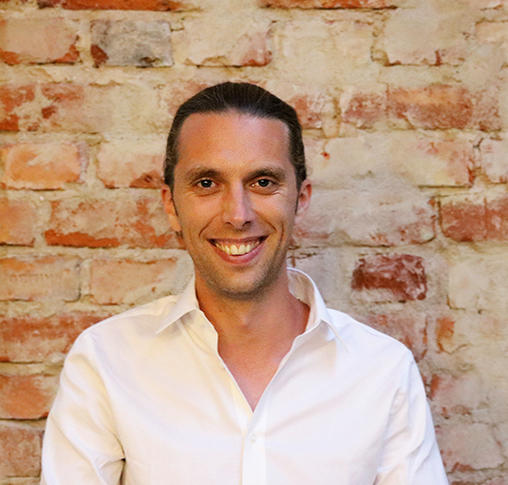
Andreas Larsson hosts Ledarskap och miljön Sverige (in English Leadership and the Environment Sweden). As you’ll hear in our recording, I also profiled him in my book Initiative: A Proven Method to Bring Your Passions to Life (and Work). Here’s the start of that profile:
Andreas came to me as a co-founder of a software company he wrote the code for. He’s Swedish, living in Sweden, and we’ve never met in person.
The other co-founder and the company’s main investor had offered to buy him out. He came to me for business coaching since he’d never created a deal for himself with such big numbers. It took time and new skills, but they came to a mutually satisfactory deal.
The deal meant that he wouldn’t have to earn money for several years and that he had credibility for having created a business profitable enough for him to cash out—in other words, freedom and access to resources to do what he wanted.
His path soon diverged from traditional entrepreneurship. Ironically, that alternate path led him to what on the outside looks less entrepreneurial or even professional, but, in his words, “When I helped run that company, I saw business grow and had to keep writing the software so I felt like I must be on the right path, but my heart wasn’t in it, even though I helped start it. I never asked what I wanted to do. I was doing what I thought I was supposed to and everyone congratulated me for it.”
He continued, “I know what I’m doing now looks from the outside like a step in an unusual direction, but I have more freedom than ever. I love what I do. I get more responsibilities when I want them. Entrepreneurship and initiative for me don’t mean doing what everyone else does. They mean doing what I want to on my terms. I love what I’m doing.”
What was his path and what does he do now?
First he traveled, an interest he exhausted in six months. Next, he didn’t want to found another company but did want to work in an entrepreneurial environment. Since Method Initiative develops relationships with valuable people and presents you as a problem-solver and initiator, it tends to lead to job offers, so we worked on it.
Soon he began working on a project of his creation. His relationships and network grew. He transformed from a programmer who follows to a problem-solver who initiates. As his skills to meet and meaningfully connect with people grew, he organized a panel discussion of experts in his field.
He said, “Before starting the exercises I didn’t think I had the confidence or skills to talk to people. I wouldn’t expect them to see value in talking to me. Instead, I started talking with founders and CEOs who told me they needed people like me. As you mentioned, they were offering me jobs.”
You can see how social and emotional skills create the what and whom you know.
He continued, “The first guy that offered me a job, I thought, ‘This is amazing!’, and wanted to take it and visited them a few times. But I could feel my skills developing week by week. By the time he started offering me a position, the panel was forming and I was meeting people at more prestigious places. These professional consulting firms invited me to interview and I realized I was beyond what that first place offered, even though at first I felt lucky to talk to them.”
He kept meeting people at places he felt more attracted to. Then everything changed. He said, “I realized that I felt grateful to all those places out of insecurity. I felt lucky to get any attention because I didn’t feel confident in myself. As my skills increased, I realized I could do whatever I wanted if I set myself to it.”
You can see him exhausting the appeal of projects that didn’t resonate with him. Each distraction dispensed with increased his confidence in taking new interests. The Myth of Too Many Passions would tell him not to act but to analyze before acting. Action leads to understanding and epiphany more than the other way around.
He continued, “Only then could I realize what I loved. As much as I cared about entrepreneurship as everyone else defined it, I wanted to explore life and myself. Now that I could meet people and connect on passions, I wanted to apply these things everywhere in life. That’s when I decided to move to Stockholm despite having no plans. I was no longer a programmer looking for work. I was an entrepreneur in the sense of creating the outcome I wanted. I was still doing the exercises, but my way, since I had internalized them.”
374: Andreas Larsson, part 1: Leadership and the Environment Sweden
Andreas and I go back five or ten years. He hired me as a coach when he was selling his share of a business he cofounded. He appears in my book Initiative about that experience and what he’s done since.
I invited him as a guest for two reasons:
One, he started the Leadership and the Environment Sweden podcast. I shared with him my vision of working on sustainability in a way to help people become valuable in their communities. I coached him on podcasting. He’s still ramping up with only a few guests so far, but you’ll hear in this episode his experiences, how shy and introverted he felt before starting, and how much the training led him to enjoy it.
Two, he’s taken on challenges to act on environmental challenges to where he looks forward to taking on more. He talks about his challenges to avoid plastic, sleeping outdoors once a month, limiting his meat, and the unexpected joy they’ve brought him. You’ll hear how acting changes his perspective from expecting a burden or chore to enjoying the process, from feeling disconnected to learning more about himself. He’s starting, so I look forward to bringing him on again after he’s reflected more.
I hope you’ll listen actively, thinking about communities you’d like to bring joy and stewardship to and how strong his fears were that
he’s enjoyed getting over. If you’d like to start a Leadership and the Environment offshoot, contact me, let’s start training you, and let’s start you meeting, befriending, and becoming a peer of the most important people you can think of.
Andreas said,
You might find it interesting how my no plastic challenge is developing. Yesterday I went to a summer party with my now former colleagues. And I’ve consumed very little plastic these past few months and I’ve gotten used to and it feels good to not do that. So when they bring in all the food they’ve ordered for everyone, all of it packaged in plastic, with plastic forks and plastic cups I feel horrified. I keep seeing the mountains of plastic in India from that documentary you recommended, and the plastic beaches in the Philippines. My rule was no plastic when I buy food in the store but now I think I need to step it up.
I can’t tell you how heartwarming hearing someone share how my influence helped someone improve his life feels. I’m not sure what you heard, but I heard profound change in many areas—personal leadership, environmental stewardship, meeting people, self-expression
Most of all, I heard deep connection with something powerful through connecting more with nature. I heard him struggling to put into words the feelings propelling him to keep doing more, to look for more motivation even if it means seeing horrifying things, to share with
others.