
Andrés Reséndez
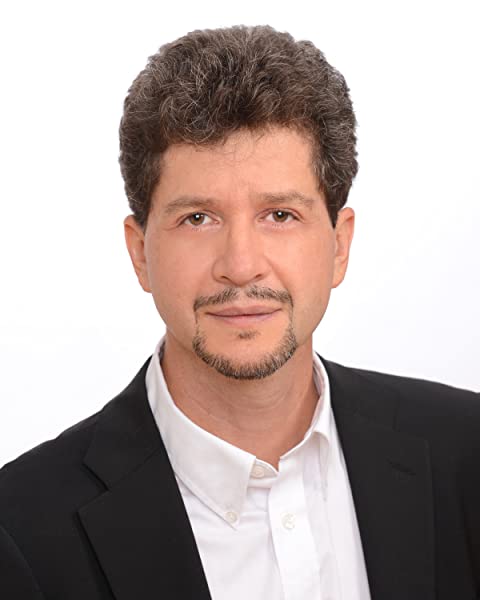
In Andrés’ own words:
I grew up in Mexico City where I worked in various capacities–the best job I ever had was as a historical consultant for telenovelas (soap operas).
After getting a PhD in history at the University of Chicago, I taught at Yale, the University of Helsinki, and UC Davis. I have written about the history of border regions (Changing National Identities at the Frontier–Cambridge University Press, 2005), early European exploration (A Land So Strange–Basic Books, 2007), and the enslavement of Native Americans (The Other Slavery–Houghton Mifflin Harcourt, 2016).
More recently, I have focused on the “Columbian moment” in the Pacific, beginning with the first expedition that went from America to Asia and back (1564-1565), instantly transforming the Pacific into a vital space of contact and exchange (Conquering the Pacific: An Unknown Mariner and the Final Great Voyage of the Age of Discovery–Houghton Mifflin Harcourt, 2021). These days I am researching the fallout from that venture. Just as Columbus’s voyages triggered a major transfer of plants, animals, and germs across the Atlantic, so did the opening of the Pacific created a biological corridor across the largest ocean on Earth with very significant but little-understood consequences for the world.
440: Andrés Reséndez: The Other Slavery
About six months ago the parallels started forming for me between our global economic system today that creates great suffering on the scale of hundreds of millions of people with nightmarish cruelty, but also people benefiting from it looking the other way or saying “what I do doesn’t matter” or “the youth will solve it”. . . And the systems of slavery.
Also looking for role models who changed systems of that scale.
My historical knowledge of abolition and slavery was limited. You’ve heard guests Adam Hochschild, Manisha Sinha, Eric Metaxas, and others sharing historical background on the systems of slavery and abolition, as well as individual abolitionists. I believe we can learn from them and honor them by learning from them. Our situation is different, but on the scale of billions and we are alive to act.
Today’s guest, Andrés Reséndez, wrote The Other Slavery, a book on the enslavement of Native Americans, mostly by the Spanish. I knew little about it and what I did know was off. Our conversation covers the different character of the Spanish enslaving Native Americans to mine gold and silver, leading to global trade and a different character.
Motivating me was to consider how future generations would look at us. Listeners may recall from, say, my conversation with Rod Schoonover, the scientist in the US State Department who described the suffering facing climate refugees in Central America. Once they cross borders, they face war atrocities. Then there is Syria and more. We can expect those numbers to increase by some estimation into the billions of climate refugees, as one of many places our system generates cruelty for our way of life, which is totally optional. We don’t have to extract, exploit, and so on. I believe that there is nothing more meaningful and purposeful than to take responsibility for how our behavior affects others.
What more can we do for the past than to learn from it, to avoid repeating the mistakes of exploitation and discounting where our material wealth comes from?
I ask myself what I would have done then. Would I have accepted the silver?
Would I have said what I did didn’t matter?
I have to be honest with myself because I can easily say I would do then what I today would. What do I consider right today? Can I look away from those at the receiving end of my plastic, pesticides, jet fuel, and so on?