
Bob Inglis
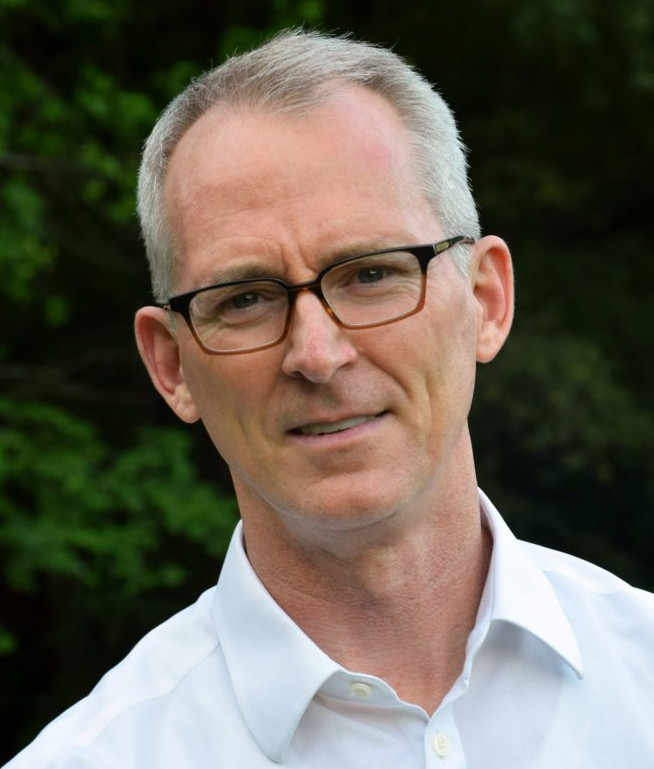
Bob Inglis is the Executive Director of republicEN—the EcoRight, a balance to the Environmental Left. In republicEN’s words
We stand together because we believe in the power of American free enterprise and innovation to solve climate change. Together, we encourage, embolden, and applaud conservative climate leadership.
The age of conservative climate disputation is over.
We’re here for those who want to embrace the competition of ideas about solutions. If you believe conservative principles are well-suited to tackle big challenges like climate change, you’re one of us.
Bob launched the Energy and Enterprise Initiative (E&EI) at George Mason University in July 2012 and serves as Executive Director, where he promotes free enterprise action on climate change.
For his work on climate change Inglis was given the 2015 John F. Kennedy Profile in Courage Award. He appears in the film Merchants of Doubt and in the Showtime series YEARS of Living Dangerously, and he’s spoken at TEDxBeacon Street and at TEDxJacksonville.
He was a Resident Fellow at Harvard University’s Institute of Politics in 2011, a Visiting Energy Fellow at Duke University’s Nicholas School of the Environment in 2012, and a Resident Fellow at the University of Chicago’s Institute of Politics in 2014.
He was elected to the U.S. Congress in 1992, having never run for office before. He represented Greenville-Spartanburg, South Carolina, from 1993-1998. In 2004, he was reelected to Congress and served until losing reelection in the South Carolina Republican primary of 2010.
He grew up in the Lowcountry of South Carolina, went to Duke University for college, met and married his college sweetheart, graduated from the University of Virginia School of Law and practiced commercial real estate law in Greenville, SC, before and between his years in Congress.
Bob and Mary Anne Inglis have five adult children and live on a small farm in northern Greenville County, South Carolina.
391: Bob Inglis, part 2: Is Biden better for conservatives on climate legislation?
Bob and I begin lightheartedly, covering mulberry trees, gingkos, and how our views of nature change when we act in stewardship of it. Then I ask him about the decision as a conservative to endorse Biden. Question to you, the listener: will Bob describe that decision as hard or easy? Did he face serious repercussions, wide support, or something else?
What would you do in his situation? I couldn’t put into words what he does. It’s his leadership journey, so you’ll have to listen.
Another question for you. Who traveled more since our last conversation: the guy who wants to travel but can’t but committed
if he does to bring a spoon to avoid polluting or the guy who isn’t flying?
We also talk about conservativism, sustainable living, and how to practice them both. Do they need reconciliation or do they make sense
together already?
2020 has meant most political talk is polarizing and divisive. I’ve learned any two people can find something to disagree on. I’ve also found any two people can find things to learn from each other.
I hope he’s wrong about future generations not knowing what changed things. I believe that people who take a stand today to live by their values—when the overwhelming culture motivates keep doing what you’ve done, maybe recycling a bit more when convenient, even among people who call themselves environmentalists, who mostly tell others to change first—I believe we will leave legacies that others look back on.
He described Wilberforce’s difficult, decades-long challenges. Whatever challenges he and his peers face, I know he feed better doing what he did, knowing his world and how doing anything different would prolong an industry he knew he had to do everything he could to end.
t hit me yesterday as I walked home from my daily picking up other people’s litter in Washington Square Park. I used to think it curious to
view picking up litter as spare-time activity like going to a park or beach. Yesterday I asked myself, given my neighborhood’s litter, what would I rather do, watch Game of Thrones? What would you rather do, clean up your neighborhood or watch Game of Thrones?
386: Bob Inglis, part 1: the EcoRight, a balance to the Environmental Left
Everyone can lead when everyone around them agrees. How about when your conscience tells you what’s right differs from everyone around you?
Bob Inglis is a former Congressman from South Carolina—the reddest district in the reddist state, as he puts it. The short story is that he stated he believed the science behind climate change. That was ten years ago. They voted him out.
You’ll hear in this episode the story of how he transformed to take such a risk, how he responded, and what’s come since. Last month he “endorsed Joe Biden for president Monday, arguing the Democratic nominee will help stabilize American politics and restore the country’s institutions.”
I’m linking to his two TEDx talks, a Frontline interview, and his new organization, RepublicEN, which I recommend no matter your political views. I consider acting on your values leadership. I’ve met or heard of few people who have led on sustainability as much as Bob. Many people on the left talk about it, but haven’t led—that is, they’ve mostly spoken to people who already agreed with them. They haven’t worked with hearts and minds.
Most of us want to act on ours but hold ourselves back. I bet you’ll find him a role model for actions you’ve held back on, whether related to nature or elsewhere in life.
We talk about meaning, purpose, and faith. I hope we can wrestle the wedge from those at the poles of our polarized society, as Bob spoke at the end.