
Dr. Leonardo Trasande
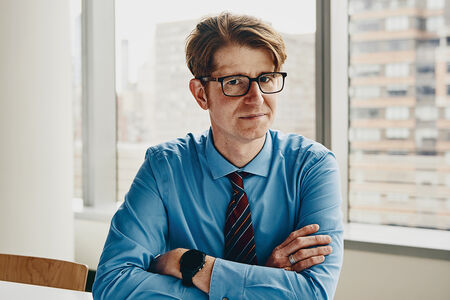
Leonardo Trasande, MD, MPP is an internationally renowned leader in environmental health. His research focuses on identifying the role of environmental exposures in childhood obesity and cardiovascular risks, and documenting the economic costs for policy makers of failing to prevent diseases of environmental origin in children proactively. He also holds appointments in the Wagner School of Public Service and NYU’s College of Global Public Health.
He wrote the book Sicker, Fatter, Poorer: The Urgent Threat of Hormone-Disrupting Chemicals to Our Health and Future . . . and What We Can Do About It.
He is perhaps best known for a series of studies that document disease costs due to endocrine disrupting chemicals in the US and Europe of $340 billion and €163 billion annually, respectively. Most recently, his team has documented $249 billion/year in disease costs in the US due to chemicals used in plastics.
Dr. Trasande leads a cohort center in the National Institute of Health’s Environmental Influences on Child Health Outcomes program. He is Principal Investigator on numerous other NIH-funded projects. These include a study on preconceptual and prenatal and childhood phthalate and bisphenol exposures in a Dutch birth cohort to examine obesity and cardiovascular risks, a study of effects of glyphosate and other contaminants on kidney development and a study of epigenetic risks for liver disease.
He is also Multiple Principal Investigator for a research project exposomic signatures of exposure in early life to the World Trade Center disaster.
He also directs a Collaborative Center in Children’s Environmental Health Translation funded by the National Institute of Environmental Health Sciences, with Dr. Lorna Thorpe and Dr. Chau Trinh-Shevrin.
He has served as a member of numerous scientific committees and expert panels, including:
- The American Academy of Pediatrics’ Executive Committee of the Council for Environmental Health
- The Science and Technical Advisory Committee for the World Trade Center Health Program
- The National Children’s Study Methodological Review Panel of the National Academy of Sciences
- The United Nations Environment Programme (UNEP) Steering Committee on a Global Outlook for Chemicals
- The Board of Scientific Counselors for the National Center for Environmental Health at the Centers for Disease Control and Prevention (CDC)
He represents the Endocrine Society as an observer to the Global Plastics Treaty negotiations, and is an author on the forthcoming World Health Organization/UNEP Second State of the Science Report on Endocrine Disrupting Chemicals.
After receiving his bachelor, medical and public policy degrees from Harvard, he completed the Boston Combined Residency in Pediatrics and a legislative fellowship in the Office of Senator Hillary Rodham Clinton.
840: Dr. Leonardo Trasande, part 1: Sicker, Fatter, Poorer: The Urgent Threat of Hormone-Disrupting Chemicals to Our Health and Future … and What We Can Do About It
I found Dr. Trasande quoted in a Washington Post article The health risks from plastics almost nobody knows about: Phthalates, chemicals found in plastics, are linked to an array of problems, especially in pregnancy. He said, “Endocrine-disrupting chemicals are one of the biggest global health threats of our time … And 2 percent of us know about it—but 99 percent of us are affected by it.”
The article said that he said that “at the population level, scientists can see telltale signs that those chemicals are undermining human health, adding to growing male infertility or growing cases of ADHD.” This outcome suggests a violation of this nation being founded on protecting life, liberty, and property, and the consent of the governed. I also found from this video, Food Contaminants and Additives, that he reported his results thoroughly, taking care not to venture outside his research.
I had to talk to him.
We talked about his research, what brought him to a new field, now burgeoning, of learning about chemicals that disrupt our endocrine systems—that is, they mess with our hormones. You’ll hear that he didn’t intend to go into it. It was (tragically) growing in importance since our hormone systems are becoming increasingly disrupted, as are those of many species.
I should be more accurate. They aren’t passively being disrupted. Consumers are paying companies to produce chemicals that do it.
It sounds slimy and scary. I’d rather it didn’t happen, but since it does, I’d rather know than not know. I think you would too.