
Dr. Mark J. Plotkin, Ph.D.
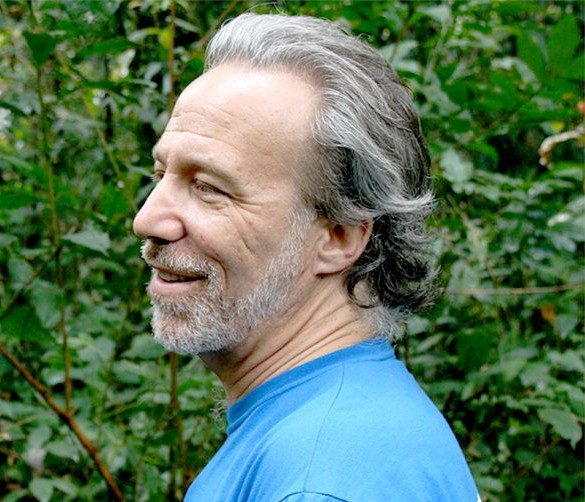
Dr. Mark Plotkin is a renowned ethnobotanist who has studied traditional indigenous plant use with elder shamans (traditional healers) of Central and South America for much of the past 30 years.
As an ethnobotanist—a scientist who studies how, and why, societies have come to use plants for different purposes—Dr. Plotkin carried out the majority of his research with the Trio Indians of southern Suriname, a small rainforest country in northeastern South America, but has also worked with shamans from Mexico to Brazil.
Dr. Plotkin has a long history of work with other organizations to promote conservation and awareness of our natural world, having served as Research Associate in Ethnobotanical Conservation at the Botanical Museum of Harvard University; Director of Plant Conservation at the World Wildlife Fund; Vice President of Conservation International; and Research Associate at the Department of Botany of the Smithsonian Institution. Dr. Plotkin is now President of the Amazon Conservation Team (ACT), a nonprofit organization he co-founded with his fellow conservationist and wife Liliana Madrigal in 1996.
Dr. Plotkin has authored or co-authored many books and scientific publications, most notably his popular work Tales of a Shaman’s Apprentice, which is currently in its fortieth printing and has also been published in Dutch, German, Italian, Japanese and Spanish. Acclaimed filmmaker Miranda Smith produced a related documentary titled The Shaman’s Apprentice featuring Dr. Plotkin’s work, which has garnered awards at eighteen different film festivals. His children’s book The Shaman’s Apprentice – A Tale of the Amazon Rainforest (1998), co-authored with Lynne Cherry, was called “the outstanding environmental and natural history title of the year” by Smithsonian Magazine. That same year, he played a leading role in the Academy Award-nominated IMAX documentary Amazon.
Time Magazine hailed Dr. Plotkin as an environmental “Hero for the Planet” in 1999.
His work has been featured in a PBS Nova documentary, in an Emmy-winning Fox TV documentary, on the NBC Nightly News and Today Show, CBS’ 48 Hours and in Life, Newsweek, Smithsonian, Elle, People, The New York Times, along with appearances on National Public Radio. Smithsonian magazine’s 35th anniversary issue profiled Dr. Plotkin as one of “35 who made a difference” in November 2005. In March 2007, he was honored with the Cincinnati Zoo and Botanical Gardens Conservation Award. And in March 2008, Dr. Plotkin and Liliana Madrigal were awarded the Skoll Foundation’s prestigious Award for Social Entrepreneurship.
Dr. Plotkin was educated at Harvard University Extension, Yale School of Forestry, and Tufts University.
666: Mark Plotkin: Learning From Indigenous Cultures, the People Not Just Our Projections
Every step I take toward sustainability leads me to learn how much humans have figured out how to live sustainably. I’m far from living sustainably, though I’ve come a long way. We are wiping out the cultures living sustainably these cultures, now hanging on by threads. Besides practices and viewpoints, I’m learning humility. We don’t have all the answers. Far from it. They may not either, but at least they can help us restore lost values of community we’re jettisoning in favor of isolation and humility to nature we’re jettisoning in favor of ignoring that our attempts to dominate nature are accumulating unintended side effects hurting us more than helping.
Such are my views. I haven’t lived among indigenous cultures and don’t expect to. Mark has, among several for long times. He can speak more knowledgeably, compassionately, and helpfully than many can.
In this conversation he shares his decades of learning from experience and research. He describes actual people and cultures, not projections or hopes. I share some views I’ve developed, which he helps me refine and extend based on that experience. We talk about how life benefits from learning from them, contrary to what our culture tells us, that without what fossil fuels and other tamed energy bring we would suffer.
On the contrary, on what means the most to us, we would thrive. And we’d stop wiping them out.