
Gautam Mukunda
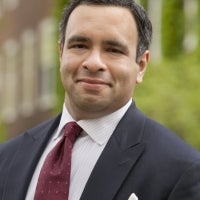
Gautam Mukunda is an internationally recognized expert in leadership and innovation. He often jokes that his life’s ambition is to have the world’s most confusing resume and that he’s most of the way there. He is a Research Fellow at the Harvard Kennedy School’s Center for Public Leadership. He is also the host of Nasdaq’s podcast “World Reimagined” and a columnist at Nasdaq’s World Reimagined. Previously he was a professor at Harvard Business School and a Distinguished Visiting Professor for the Schwarzman Scholarship.
He is the author of two books: Indispensable: When Leaders Really Matter (Harvard Business Review Press, 2012) and Picking Presidents (University of California Press, forthcoming in 2022). He has published articles in Harvard Business Review, Foreign Policy, Security Studies, Slate, Fast Company, Parameters, Politics and the Life Sciences, and Systems and Synthetic Biology on leadership, reforming the financial sector, military innovation, network-centric warfare, and the security and economic implications of synthetic biology. His work has been profiled in the New York Times, Atlantic, New Yorker, Economist, Washington Post, Wall Street Journal, and on All Things Considered. He advises a variety of companies and organizations on leadership and strategy.
Gautam was a Term Member of the Council on Foreign Relations and the Massachusetts Institute of Technology’s Security Studies Program and Program on Emerging Technologies. He was a Paul & Daisy Soros New American Fellow, an NSF IGERT Fellow, a Next Generation Fellow of The American Assembly, and a Principal Investigator on the National Science Foundation’s Synthetic Biology Engineering Research Center grant. He served on The Chief of Naval Operation’s Executive Advisory Panel and as a member of the New England Regional Selection Committee for the White House Fellowship and was a Member of the World Economic Forum’s Global Agenda Council on New Models of Leadership. He was also a Jeopardy Champion.
At MIT, Gautam was the National Science Foundation Synthetic Biology ERC Postdoctoral Fellow resident at MIT’s Center for International Studies. He received his PhD from MIT in political science focusing in International Relations and Security Studies and an AB in Government from Harvard, magna cum laude. Before his academic career he was a consultant with McKinsey & Company, where he focused on the pharmaceutical sector.
In addition to his current work as an academic, Mukunda was a Founder and Board Member of SVN Med, a medical device company developing cancer diagnostics and therapeutics. He is a member of the board of directors and chair of the Mentorship Committee of The Upakar Foundation, a national non-profit devoted to providing college scholarships to underprivileged students of South Asian descent. He is on the Advisory Board of Bionic Solutions and KITT Bio. He is an Overseer of the Boston Ballet and a member of the Museum Council of Boston’s Museum of Fine Arts.
725: Gautam Mukunda, part 3: The Spodek Method Doesn’t Always Create a Huge Mindset Shift
Gautam and I had a lovely conversation about environmental things. He’s become a good friend (we talk outside our recordings). Still, listen to determine for yourself, but I’d say this conversation exhibited a minor mindset shift if any. After we talked about Gautam’s experience, we spoke mostly about abstract environmental issues, not personal ones.
He spoke about some difference in his views and feelings brought on by his commitment, but mostly he talked about the beauty of nature flying-distance away. I want to help people find the beauty or any value they like of nature where they are, or realize that it’s possible, or worth fighting to restore if we’ve paved too much of it over.
So it’s a different conversation than usual—both friendlier between us and more abstract on his connection with the environment—though you might hear differently.
686: Gautam Mukunda, part 1.5: Can Humans Thrive Without Modern Technology?
In the first part of our conversation, we start by reviewing Gautam’s commitment to sailing, which seemed and still seems a good idea to him. but maybe too much for now. We revisit what motivated him and come up with a new commitment.
The second part gets more exciting. Gautam expresses that we need to develop technology to help people who aren’t living as well as us so we can help them. (I may not have summarized accurately; listen to his recorded words for his precise meaning.) This view is like waving a red flag to me since I used to think things like that but now see otherwise.
We engage in different views on technology, progress, how humans used to live versus how we live today, values, and such.
In other words, we openly talk about the underlying beliefs driving our culture and individual behavior we don’t question or talk about, but that guide our decisions and behavior. If we can only imagine a world working a certain way, we can’t change course. If that course leads to billions of people dying, being stuck in beliefs is a problem.
I greatly appreciate a civil, productive conversation on topic that many find inflammatory.
682: Gautam Mukunda, part 1: Teaching Passion for Leadership at Harvard
I’ve made it no secret that sustainability lacks leadership and leaders. If you want to help on sustainability, I suggest that the most valuable thing you can do is learn to lead. If you know how to lead, improve it. Nothing can change as much as leading cultural change.
Gautam’s passion is to learn how leadership works, how to teach it, learning more about it, writing about it, the military, most relevant to our conversation: conveying what he knows and that passion.
The upshot: someone who knows as much as anyone about leadership, what works, what doesn’t, learning more about it, how to teach it, and passionate to convey what he’s learned. He also knows and has befriended some of today’s most effective leaders, whom he mentions in our conversation. He calls General Stanley McChrystal “Stan.”
Let’s see if we can bring Gautam’s knowledge, experience, and connections to sustainability.