
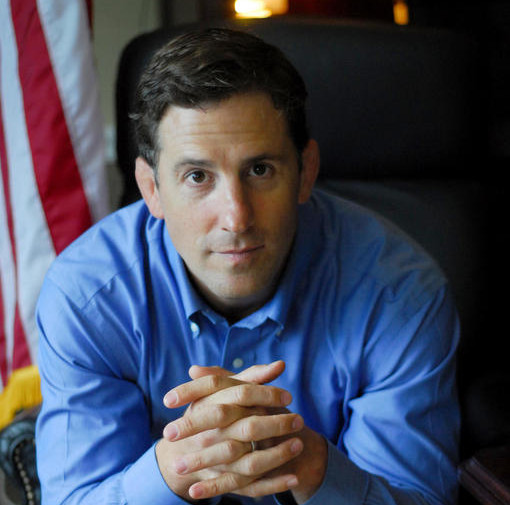
Jim Harshaw

Jim Harshaw

Jim and I have become friends since I did his podcast, Success Through Failure, twice. He’s as friendly and approachable as anyone you’ll meet, despite or maybe because of his reaching the top levels of one of our most demanding sports.

I’ll put his description below, but printed words don’t express his enthusiastic approach to life and helping others. You can almost hear the excited sparkle in his eyes at what fun and growth he extracts from life and that he enables his clients to.


From his About page:

My name is Jim Harshaw. I’m a speaker, personal coach and former Division I All American wrestler.

I grew up in a blue-collar home so learned the value of hard work early on.

I have spent my life surrounded by Olympians, CEO’s and millionaires. They’ve all struggled and failed on their way to success. Just like you.

You need to understand this…

Every success story includes crushing failure. Steve Jobs, Michael Jordan, Phil Knight, Elon Musk have all failed.

When you realize this, you’ll see that failure isn’t the opposite of success. It’s a necessary step on the path to success.

But we live in a society that tells us that when we fail it means we’re not good enough or not smart enough or not capable enough. When people fail, they lower their goals and settle for less.

On March 20, 1998, my sixteenth year of wrestling ended in a locker room with blood on my face and tears in my eyes. I’d just lost the match to become an NCAA Division I All American.

But I had one more season at the University of Virginia. One more chance. And exactly one year later, in front of over 14,000 fans at the NCAA Championships, I did it. I earned a place on the podium as one of just eight wrestlers in the country with the status of Division I All American.

I followed a blueprint for success to get there. The same blueprint got me invited to the Olympic Training Center and took me overseas to compete on a US National Team.

Unfortunately, no one taught me how to apply this blueprint to life outside of athletics.

Fast forward 15 years, and I’m working below my potential and feeling stuck. But then I started noticing patterns in my life. Patterns of failure and success. I noticed them in business, in personal relationships, in my health and well-being, and in my level of happiness. These patterns reminded me of how I’d failed as a wrestler. And how I’d been successful.

I began to see how those lessons could be replicated throughout my life. When I looked at other former athletes who had been able to achieve success, the same patterns were there.

That’s when I knew I’d found a framework for creating a path to elite success in the real world.

Since then, I’ve shared this blueprint with others. They say things like:

“I’m shattering the goals I’ve set for myself already. I feel pretty much unstoppable. Every aspect of my life has been affected positively.”
-Neal Ewers, marketing director, Beat the Streets Toronto

“What I found most valuable was getting a level of clarity on my most important goals that I haven’t had since I was competing in college.”
-Sam Shames, MIT grad, entrepreneur, 4X All American wrestler

“[Your program] helped me get clarity and knowledge on my life. It helped me develop a system for getting the right things done.”
-Jake Bloom, M.A., LPC, NCC, Counselor, AOD Program Specialist

“I took away two game changers that are now a regular part of my life.”
-UFC veteran, author and motivational speaker, Charlie “The Spaniard” Brenneman

“I  know it sounds cliche but I really do think it helped me change my life.”
-Trevor Kittleson, Engineering Teacher, Football and Wrestling Coach

My clients include Olympic coaches, professional athletes, and entrepreneurs. They’ve achieved their personal best and now you can too.

You can regain the confidence, clarity and accountability that you had as an athlete. Once you do, failure will be your secret weapon for success.

You have unique skills because of your background as an athlete.
You can achieve success by harnessing the power of failure.
You just need the framework to put it all together.

I will teach you.


010: Jim Harshaw, Conversation 2: The joy of overcoming challenges

In conversation 1, Jim shared his values and committed to live by one.

In conversation 1.5, he shared problems with the challenge and how he overcame them.

In this conversation he shares how it worked. Listen to hear how persevering through challenges to live by your values leads to a better life.

Judge for yourself what you find from his experience. I heard:

  • More time with his family
  • Quality time with his family
  • Fun
  • Finding more challenges (why not, if they’re fun?)
  • Things became easier than before

What are you waiting for? Commit to a personal challenge.

Start your journey of fun, ease, and peace of mind that Jim did.

Take off your wet socks

I introduce my wet socks analogy for not living by your values in this episode, which is:

Say you step in a puddle and get your socks wet in the morning. You can still go about your day. If you’re busy, you might not notice them.

It’s still a relief when you get home and take them off at the end of the day. Finally you feel fresh, clean air against your skin instead of wet sock. You look back and realize they’ve been annoying you all day. Making yourself busy distracted you from noticing them, but never made them go away. You wish you had taken them off earlier.

Living by your values after ignoring them feels like taking off wet socks. As with wet socks, you look back and realize that abandoning your values has annoyed you your whole life. Making yourself busy distracted you from noticing that you weren’t living by them, but never made it go away. You wish you had chosen to live by them earlier.

Denying that you’re abandoning minor values, prevents you from noticing big ones. On the other hand, fixing the little ones opens your eyes to others, which motivates you to fix them, then to fix bigger ones, and so on.

You may consider small denial not that big a deal, but once you take off those socks, you realize you could have long before. Living in conflict with your values means living without integrity. It eats you up inside.

Take off your wet socks. Enjoy the freedom of living by your values. The environment is a great place to start.

Read the full transcript.

008: Jim Harshaw, Conversation 1.5: Turning problems into solutions

I will recommend this episode a lot. You’ll hear an accomplished man struggle with a goal he expected to be easy.

You’ll also hear him triumph, bringing his wife and children to the triumph—creating it with them.

I’m releasing it on a holiday because it’s as heartwarming a story of a father bringing his family and community together as any—despite, or because of, adversity and the skills he’s learned to handle it. Skills you can learn, starting by listening to his story.

This episode is a real-time update from someone implementing a change in his life, facing resistance, figuring out how to handle it, and succeeding through failure where most people give up.

I scheduled this conversation because Jim wrote me that he was struggling to meet the personal challenge he came up with. Between that email and scheduling the conversation, he figured out a solution better for him than the original challenge.

Many people decide to change their lives then face unexpected challenges. Most give up or let their standards slide.

Overcoming challenges

With the plan fresh in his mind, Jim shares

  • How he understood the situation
  • What he did to solve it
  • How he involved others
  • He he built community
  • His mindset

If you’ve struggled making commitments, Jim’s story will help you.

Leading without authority

Beyond personal change, the episode also reveals the leadership techniques I’m finding work in leading people when you don’t have authority over them. For full depth, read and do the exercises in my book, Leadership Step by Step. You can hear me practice them in my first conversation and their results here:

  • In conversation 1, I didn’t tell him what to do, I asked him what he cared about, then invited him to act on those values
  • As a result
    • In conversation 1.5, he saw doing this challenge as for himself, acting on his values
  • In conversation 1, I set up future conversations, creating accountability
  • As a result
    • In conversation 1.5, he described motivation to meet those expectations

See if you can find other techniques in how I framed and led starting the challenge and the resulting behavior.

Read the full transcript.

006: Jim Harshaw, Conversation 1: Public transportation

I expect to refer to Jim’s episodes more than most, maybe most because how he approaches changing himself is so effective for himself and people around him. It comes from his attitude, the questions he asks himself, how he involves others, and more, all of which he shares.

We get to know him in this episode—a regular guy who happens to have been an All-American Wrestling champion and now coaches people to potentials beyond their dreams.

We also hear his challenge, which sounds simple, but its unexpected twists will prompt him to show what makes him a leader for whom hardship just prompts him to grow more—skills we can all learn from him.

Read the full transcript.

← Back to Guests