
John Sargent
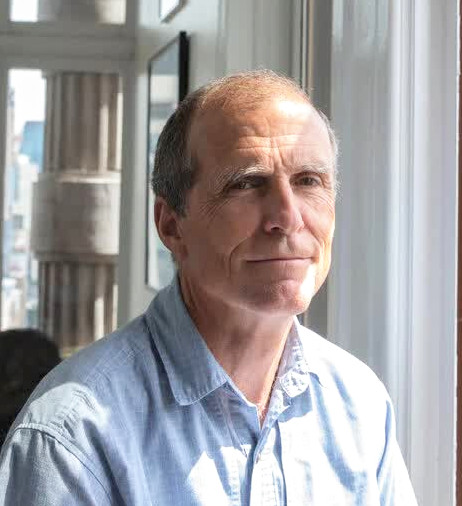
John Sargent is a book publisher and vocal advocate for the importance of book publishing in the United States and around the world. He was CEO of Macmillan and is the Executive Vice President of the Holtzbrinck Publishing Group.
His career contributions were recognized with the 2017 PEN Publisher Honoree Award, given “for his fierce advocacy for the right to publish and for serving as a defender of publishers’ and authors’ intellectual property rights.” After receiving the award, John spoke directly about the importance of defending free speech. His remarks closed with a call for continuing to do what publishers do best, especially when doing so is difficult: “I hope we will apply the principles of the First Amendment and have the courage to resist the great power of polarized opinion.”
John has not shied away from taking hard business positions. In 2012, he maintained Macmillan’s innocence in the face of Department of Justice claims of collusion in the implementation of the agency model for e-book pricing, refusing to settle even after several other publishers had agreed to terms offered by the DOJ. Agency pricing itself, proposed in 2010, was part of an effort to create what John called “a level playing field” for sales of digital books in the United States.
John ran the US operations of Holtzbrinck, including all the US trade companies, the Macmillan Higher Education group, St. Martins Scholarly and Reference, Hanley & Belfus medical publishers and Scientific American. He started at Holtzbrinck as CEO of St. Martin’s Press. John has also served as CEO of Dorling Kindersley Inc. and the President of the Children’s Book Division of Simon & Schuster.
484: John Sargent, part 2: Fun Transforming MacMillan, a Big 5 Publisher
Everyone treat changing corporate culture like a horror show, but John did it. How? Through making it fun.
The way most people talk about it, only dictators can change cultures, I’ll trust his experience over their speculation. This episode begins with his reviewing some of how he implemented that change. My biggest takeaway was his focus on people before technology, what they want, and what makes them tick. The result is their engaged participation.
He also shares the result of his commitment. As usual with experienced leaders, if things don’t go perfectly, they don’t pretend. They share what didn’t work too, I believe from experience finding that exposing vulnerabilities doesn’t make them weak. It connects people.
If you want to change yourself and your organization, you’ll learn from John how to achieve more by having fun, listening, and caring over analyzing forever, coercion, and such.
441: John Sargent, part 1: The CEO who reduced a Big Five publisher’s footprint
I learned of John’s work through his statement at Macmillan’s Sustainability page while researching Ray Anderson:
In 2009, after reading Ray Anderson’s “Confessions of a Radical Industrialist,” I decided it was Macmillan’s responsibility to lessen our impact on the earth, and in particular, to lower our carbon emissions. We created a senior position in the company and spent well over a year measuring our carbon footprint. We then set ourselves the daunting goal of reducing our scope one, two, and “major” three carbon emissions by 65%, and we gave ourselves a decade to get it done. Over the course of the last nine years, we have made sustainability a major component of all our decisions at the company. In 2010 we instituted a carbon offset program to supplement our efforts. Over the last nine years, we have lowered our carbon emissions by roughly 50%, and with our offsets, we have been carbon neutral globally for the last two years.
Getting here has not been easy. We have initiated lots of projects. We have often failed, but we have been relentless in our efforts. We always tried to make good common sense decisions along the way, keeping a balanced approach. In the end, we will not reach our goal of a 65% reduction, but we have been relentless in our approach and it has become a matter of great pride in our company.
The completion of our ten-year plan leaves us again at the starting line. Climate change is now a burning issue (as I write this the Amazon rainforest is literally burning). We must rededicate ourselves to the cause, and willingly sacrifice when called upon. There is a lot to do, and I’m looking forward to getting after it.
I often lament the lack of what I call leadership in the area of sustainability. What I call management, plenty, which I’m glad to see. That’s things like measuring, facts, figures, seeking compliance. By leadership I mean stories, images, working on the system not just in it.
It looked like John was leading so I brought him to share. I believe I found a role model and leader in business.