
Kim Stanley Robinson
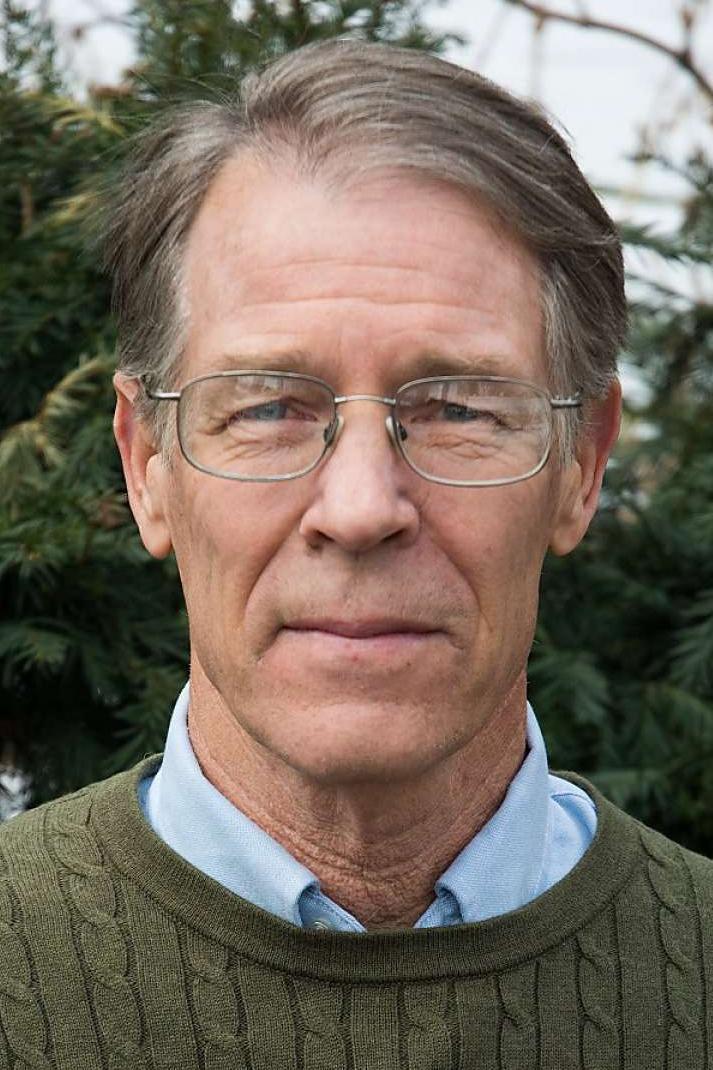
Kim Stanley Robinson is an American science fiction writer. He is the author of more than twenty books, including the international bestselling Mars trilogy, and more recently New York 2140, Aurora, Shaman, Green Earth, and 2312, which was a New York Times bestseller nominated for all seven of the major science fiction awards—a first for any book.
His work has been translated into 25 languages and won a dozen awards in five countries, including the Hugo, Nebula, Locus, and World Fantasy awards.
In 2008, he was named a “Hero of the Environment” by Time magazine, and he works with the Sierra Nevada Research Institute, the Clarion Writers’ Workshop, and UC San Diego’s Arthur C. Clarke Center for Human Imagination.
In 2016, he was given the Heinlein Award for lifetime achievement in science fiction, and asteroid 72432 was named “Kimrobinson.”
In 2017, he was given the Arthur C. Clarke Award for Imagination in Service to Society. A prolific writer and speaker, his work has appeared in The New York Times, The Washington Post, Newsweek, Nature, and Wired, among many others, and he has lectured at more than one hundred institutions over the last 25 years.
His novel, The Ministry for the Future, was selected as one of Barack Obama’s Favorite Books of 2020 and one of Bill Gates’ “5 Great Books for the Summer” in 2022. The New York Times named both The Ministry for the Future and Aurora as two of “The Ten Best Books of the 21st Century.”
His most recent book, The High Sierra: A Love Story is a non-fiction exploration of Robinson’s years spent hiking and camping in the Sierra Nevada mountains, one of the most compelling places on Earth.
857: Kim Stanley Robinson: Science fiction writing and leadership
I met Stan in person at an event in Brooklyn. I had read Ministry for the Future a few years ago. He pointed out something I hadn’t noticed since most people identify him as a science fiction writer. Ministry for the Future isn’t exactly science fiction. He projects into the future, but he only includes plausible things—no flying cars or time travel.
This practice invigorated my interest in his work. I also asked him how he handled water in New York 2140, since I knew it would have to be heavily polluted from sea level rise would flood landfills and cause their contents to disperse throughout the oceans. I enjoyed talking to him and invited him here.
He has another identify besides as an author. He knows a lot about our environmental situation and attempts to address it. He’s not an activist but more than an educator.
I couldn’t wait to engage with him on both identities. For him as an author, I found more to learn from him than I expected relevant to leadership, which I consider a performance art. As a writer, he has to create visions that readers accept and embrace. He has to express himself candidly but in a language the reader likes and feels engaged to continue. These points are relevant to leadership I asked him a bunch about the art and craft of writing from the perspective of someone wanting to improve his leadership.
Naturally, we also talked about creativity regarding solutions.