
Madeline Ostrander
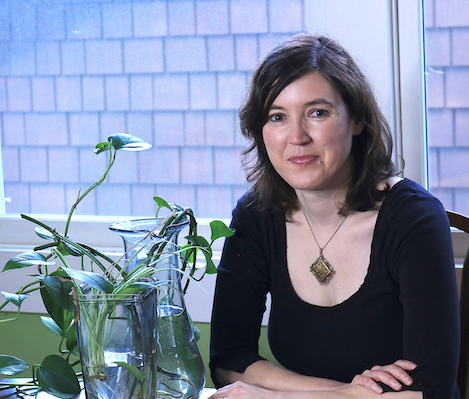
In Madeline’s words from her About page:
I am a journalist who writes about humans and our ongoing struggles to find an appropriate place on this round, blue planet. My book, At Home on an Unruly Planet (Henry Holt and Co.) tells the stories of four American communities on the frontlines of the climate crisis—and reflects on what it means to make a home in this era of upheaval and transition.
Much of my reporting focuses on climate, energy, and environmental justice, but I’ve also covered a wide range of other topics, including social movements, protest songs, food, agriculture, neuroscience, and health. My writing has appeared in The NewYorker.com, The Nation, Sierra Magazine, Audubon Magazine, Slate, PBS NOVA Next, Seattle Met Magazine, Undark, Hakai, High Country News, and numerous other outlets. Along the way, I’ve had support from grants, fellowships, and residencies from the Alfred P. Sloan Foundation, Artist Trust, USC Annenberg Center for Health Journalism, the Fund for Investigative Journalism, the Jack Straw Cultural Center, the Mesa Refuge, Hedgebrook, and Edith Cowan University in Australia.
I come from a family of teachers and educators, and I also love offering workshops and classes. I often teach nonfiction writing at Seattle’s venerable Hugo House and have given workshops at various other writers’ centers and retreats.
I am also the former senior editor of YES! Magazine and hold a master’s degree in environmental science from the University of Wisconsin, Madison. I’ve previously caught crickets for an entomologist, taught composition to business majors in rural Uganda and biology to pre-med students, helped coordinate urban policy programs in Washington, D.C., and worked in a reservation community along a river in rural South Dakota.
I live in Seattle with my husband—who is a community mental health counselor and a kind, adventurous human—and a sweet feline. In my spare time, I tend a raspberry patch in the backyard and make frequent excursions by boot and bicycle into the extraordinary forest, mountain, and coastal landscapes of the Pacific Northwest. I am also a songwriter and musician, a bean-eater, a kayak-paddler, and an auntie.
710: Madeline Ostrander, part 2: Finding Refuge on a Changed Earth
Since our last conversation, check out the reviews that have come in about Home on an Unruly Planet from past guests of this podcast:
“With deep, compassionate reporting and elegant prose … Ostrander finds creativity, vital hope, and a sense of home that outlasts any address.”
—Michelle Nijhuis, author of Beloved Beasts: Fighting for Life in an Age of Extinction
“As each new climate calamity obliterates, incinerates, or engulfs entire communities, we shudder to think our own could be next. Gently but purposefully, Ostrander guides us into places that have known this nightmare, not to shock but to show that the meaning of home is so powerful that people will make surprising, imaginative, even transcendent leaps to hold on to theirs. By her book’s end, you realize that maybe you could, too.”
—Alan Weisman, author of The World Without Us and Countdown
“What does it mean to maintain a sense of place in an age of climate change? In At Home on an Unruly Planet, Madeline Ostrander explores this question with searching intelligence and uncommon empathy.”
—Elizabeth Kolbert, Pulitzer-prize-winning author of Under a White Sky: The Nature of the Future
The book comes out in paperback today (As I wrote in part 1, I don’t get a commission, I just couldn’t stop reading the book).
In today’s conversation, we talk more about what people are doing in the communities she spent time with. I may not have conveyed enough in the notes to part 1 that she spent years with these communities. She didn’t just drop in on them. She created enduring relationships. She shares more from behind the scenes and her personal relationships with people who start with creating gardens and bike programs. They don’t stop there. They organize to find ways to move oil refineries out of their neighborhoods.
I brought up how Chevron doesn’t buy its products. We all do. What they do, when we fill our gas tanks, buy airplane tickets, buy things shipped around the world, buy disposable diapers and other plastic, we fund their efforts. In my view, we have to change those patterns, not wait for them even if we say it’s their responsibility. So Madeline and I talk about that view a bit too: individualism, capitalism, profit, and sustainability. Also, the way out: fun, community, gardens, persistence, and taking responsibility.
709: Madeline Ostrander, part 1: At Home on an Unruly Planet
What’s actually happening with our environmental problems? Scientists predict. Journalists in periodicals tend to write what gets attention and clicks, so we don’t know how accurately they represent versus sensationalize. There’s plenty to sensationalize after all.
Madeline spent time with several communities to find out what problems they faced, how seriously, and what they were doing about it. The result is she sensitively portrayed them in her book At Home on an Unruly Planet: Finding Refuge on a Changed Earth. The book reads at time like she’s projecting doom, but she isn’t. She’s describing things as she sees them and the people there describe them. The second half of the book talks about what people are doing. It’s sobering, but if we want to do anything, we have to know where we are and how fast we’re changing.
In our conversation, beyond describing highlights of the book, she gives backstories of how she picked them, what motivated her, her goals, and more.
GOOD NEWS: the paperback comes out tomorrow. (I don’t get a commission, I just couldn’t stop reading it once I started).