
Mark P. Mills
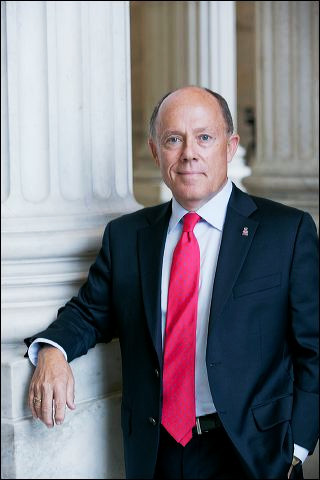
Mark P. Mills is a Senior Fellow at the Manhattan Institute, and a Faculty Fellow at the McCormick School of Engineering and Applied Science at Northwestern University. He is a co-founder and strategic partner in Montrose Lane, a software-centric energy-tech venture fund. He was formerly the co-founder and chief tech strategist for Digital Power Capital, a boutique venture fund, where co-founded and served as Chairman and CTO of ICx Technologies helping take it public in a 2007 IPO (later purchased by FLIR), and in addition served on numerous Boards, including as Chairman (and an interim CEO) of a lithium battery start-up. And for seven years prior to an acquisition in 2008 by HP, he was the independent Director on the Board of EYP Mission Critical Facilities, one of the world’s leading data center design and engineering firms.
He is author of the bookThe Cloud Revolution: How the Convergence of New Technologies Will Unleash the Next Economic Boom and A Roaring 2020s (Encounter Books, 2021), which rose to #1 in Amazon’s business planning & forecasting rankings. He authored, previously: Digital Cathedrals: The Information Infrastructure Era (Encounter Books, 2020), Work In The Age Of Robots (Encounter Books, 2018), and co-authored “The Bottomless Well: The Twilight of Fuel, the Virtue of Waste, and Why We Will Never Run Out of Energy” (Basic Books 2005/2006). About The Bottomless Well, which rose to #1 in Amazon’s science category, Bill Gates said “this is the only book I’ve ever seen that really explains energy.” Mills writes frequently for various popular publications, including the Wall Street Journal, TechCrunch, Forbes, City Journal, Real Clear amongst others. He has appeared on many radio and TV news and talk shows including CNN, Fox News, CNBC, PBS, NBC and ABC, and on The Daily Show with Jon Stewart. Mark’s online PragerU videos on energy and technology have been viewed over 10 million times.
Mark was earlier a technology advisor for Banc of America Securities, and a co-author of the energy-tech investment newsletter, the Huber-Mills Digital Power Report, published by Forbes and the Gilder Group. He has organized and served as Chair for numerous Forbes technology conferences, and founded and chaired a series of Digital Power investment technology conferences. He has been responsible for creating and directing several non-profit organizations including; the Electric Council for the Economy, the Critical Power Coalition (white paper available), and the Center for Science Technology & Media.
Mark has frequently testified before the U.S. Congress and briefed many state public service commissions and state legislators, as well as serving as an expert witness on energy-economic issues. Earlier, Mark founded and ran an energy technology consulting business with several hundred clients. He served as a staff consultant to The White House Science Office under President Reagan, a number of the Federal Research Laboratories, the (former) Congressional Office of Technology Assessment, and the U.S. Department of Energy. He worked as science advisor for the Atomic Industrial Forum, and spent the week of the accident at the site of Three Mile Island. He co-founded and served as Executive Director of Scientists & Engineers for Secure Energy where he worked with a number of the iconic scientists of the 20th century including Dr. Edward Teller and Nobelist Dr. Eugene Wigner.
Early in his career, Mark was an experimental physicist and development engineer for RCA in the fields of integrated circuits and microprocessors in development and production fabs and the RCA Sarnoff Research Center. He also worked at RCA OptoElectronics and Bell Northern Research (NORTEL) in fiber optics, defense and solid-state devices, fields in which he holds several patents. And earlier, he worked for Eldorado Nuclear (now Cameco), a uranium mining and refining company. Mark holds a BSc Honours degree in physics from Queen’s University, Canada, and is a member of numerous professional societies including the American Physical Society and Institute of Electric and Electronic Engineers.
823: Mark Mills, part 5: We’ll Never Have an Energy Transition
Reading Mark’s recent piece We’ll Never Have an Energy Transition in Manhattan Institute’s City Journal prompted me to write my recent post, When they say “transition fuel,” they mean “more polluting and depleting,” not less pollution or depletion.
Read them both and you’ll see he inspired what I wrote and he wrote a lot more, with more research and editing. I recommend reading it and listening to his podcast episode there, but I’d start with this one. In our conversation, you’ll hear more details and back story.
The core idea of his piece: Every fuel we’ve ever used, we still use, and more than ever. If you think that by ramping up solar and wind that in any way that new energy availability will decrease our use of old energy, you’re dreaming. More likely you’re lying to yourself.
That idea is hard for people to swallow if they think humanity’s best hope for survival is what they call “clean,” “green,” or “renewable” energy and learn that those sources aren’t clean, green, or renewable. It matters to do the numbers. Mark does.
For the record, I come to different strategies than Mark, but I agree with his starting point in the article. I don’t think we should start from denying the numbers.
662: Mark Mills, part 4: What to Do Next
I’ve said before and I’ll say again that conversations like mine with Mark Mills are what I value and wish we had more of. We do our research, we have strong opinions, we agree on many things, we disagree on some things we care about.
Most of all, I believe we learn from each other, respect different opinions, and try to understand the other’s view and goals.
In this conversation we talk about his book and the challenges of predictions at first, The most interesting parts are challenging each other on our understandings of our environmental problems and what we can do about them. We agree most proposed solutions that humanity is pursuing don’t work and people are misguided. We differ on our expectations in what can work between technology and people. He has me opening my mind to some things I’d be closed off to otherwise, in part because he’s not just spouting opinion or blind hope. He’s done the research. I believe I have too.
654: Mark Mills, part 3: The Cloud Revolution
After I’ve read his recent book The Cloud Revolution, Mark and I continue our conversation on sustainability and what to do based on qualitative and quantitative understanding. I’ve also been listening to his podcast.
I came to Mark for his thoughtful research on the problems with solar and wind power, which people call clean, green, and renewable but are none of the above. I mainly want to get his views in general, which he shares. Within that frame, and trying as a host, not an investigative journalist, I’ve tried to focus him on exposing the larger problems with fossil fuels, nuclear, fusion, and other sources.
He doesn’t seem to consider their problems seriously. I hear him motivated by the view that lower energy prices and greater supply have benefited society and the concern for society breaking down if energy prices increased or supply decreased.
Regular listeners know I find huge potential life improvements in lowering energy use and that I see significant problems with our lives and future if we stay with oil, gas, coal, nuclear, and fusion so I support decreasing energy demand and supply, as I’ve lived and am living.
As you can hear, we two physics-trained examiners of our environmental situation enjoy our conversations. I expect it won’t be our last.
640: Mark Mills, part 2: Low cost, high availability energy creates wealth
Mark and I share more highly researched, thoughtful conversation on human welfare and the environment. We see things differently, but I consider our conversations the type we should have more of.
This session we cover
- The book Limits to Growth as well as the concepts underlying limits to growth
- Earth’s carrying capacity
- How much wealth is consumed by food and fuel, now and historically, and how much it’s dropped
- How the low cost and high availability of energy has allowed us to devote more money for other things, inventions, and life improvements
- What is pollution?
and plenty more.
636: Mark P. Mills, part 1: “Renewables” aren’t renewable
Mark is a physicist who went into business around the environment. There aren’t many of us, so I think you’ll hear a rapport we enjoyed that I think you’ll enjoy too. We indulge in physicist talk.
I contacted him because I found his reports on what solar and wind—what I don’t see how we can call renewable, green, or clean energy sources—require in their manufacture, transportation, installation, decommissioning, and more. Many fans of such technologies gloss over their problems, which seems to me irresponsible. If we are not honest about them we will make mistakes. Partisanship is a problem when there are testable answers to how much a particular solar installation or strategy to lower emissions works.
Mark looks at possible futures but also returns to what’s happening today, what works now, not just in the future. He looks at what’s going on behind the scenes that can be measured. I recommend reading his work I link to below.
We talk about the book Limits to Growth, I welcome his views though, for the record, don’t find it as wrong as he does. I consider its systemic approach essential and didn’t view its simulations as predictions so much as learning what patterns our global environmental and economic system could show.
I use solar, but don’t consider it a long-term solution. I also don’t think things like nuclear and fusion work long-term either, but we didn’t get to that topic. We’ll continue our conversations, though, which I look forward to.