
Dr. Michael Gurven
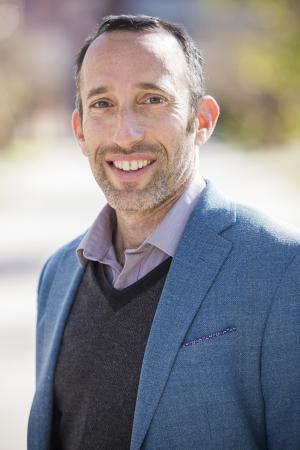
Dr. Michael Gurven is Chair of Integrative Anthropological Sciences at the University of California Santa Barbara, a co-Director of the Tsimane Health and Life History Project, and Area Director of Biodemography and Evolution at the Broom Center for Demography.
He has conducted fieldwork with the Ache of Paraguay, and the Tsimane and Mosetene of Bolivia. three South American indigenous populations.
His research group studies how ecological and social factors shape behavior, physiology, health and psychology. Incorporating insights and perspectives from behavioral ecology, life history theory and evolutionary medicine, biodemography and human biology provides a unique research environment for explaining human diversity.
His working group occupies both wet lab and behavioral lab space, and field sites around the globe.
In Michael’s words from the Gurven Lab’s page:
I am an evolutionary anthropologist aiming to explain behavior and physiological systems as adaptive solutions to competing demands of limited resource allocation. I employ ethnographic field settings as laboratories for testing hypotheses about human variation in behavior, psychology and physiology.
Currently my research focuses on two broad, inter-related areas:
(1) biodemography of human health, lifespan and aging. I am interested in the roles of pathogens, diet, activity and reproduction in shaping the aging process – including immune function and chronic diseases such as type 2 diabetes, cardiovascular disease and dementia.
(2) transitions in social and economic behavior. I study how pro-sociality and risk management strategies change with socioeconomic transformation.
619: Dr. Michael Gurven, part 2: The Forager Population Paradox and what do we do
Most second conversations on this podcast come weeks or months later, after the guest does his or her Spodek Method commitment. In Michael’s case, our first conversation was so engaging, we kept talking almost two hours, so I split the conversation into two parts.
The first mostly covered Michael and his research. This part covered applying his research and my leadership to sustainability. What can we learn from cultures that lived thousands of years or longer? What can we learn from cultures that thrive without polluting? What benefits do we enjoy that they lack and vice versa?
How can we apply answers to those questions? Can we change our culture?
We also discussed Michael’s research on the forager population paradox. Quoting from a UCSB article on his research that links to his peer-reviewed paper:
Over most of human history — 150,000 years or so — the population growth rate has hovered at near zero. Yet, when we study the contemporary populations that are our best analogs for the past, they demonstrate positive growth.
If population growth rates among our early ancestors matched those of subsistence populations from the 20th century, the current world total of 7.8 billion people would be many orders of magnitude higher. This is true even if population rates increased only after the dawn of agriculture, some 10,000 years ago.
It’s long been a paradox with no obvious solution.
“Contemporary hunter-gatherers from the past century show positive population growth rates that couldn’t possibly represent long-term averages over our species history,” said Michael Gurven, a professor of anthropology at UC Santa Barbara. “So if our ancestors must have been at near zero growth over many millennia, how is it that most studied groups living under traditional conditions — without healthcare, clean water, sanitation or other modern amenities — are growing, and some very rapidly? Some experts even believe that hunter-gatherers today live in marginalized habitats unfit for farming, and so hunter-gatherers in the past may have lived under even more favorable conditions.”
Now, Gurven and UC Santa Barbara postdoctoral scholar Raziel Davison have a good idea why. Slight differences in average fertility and mortality rates between then and now combined with periodic catastrophic events could explain what scientists call “the forager population paradox.”
618: Dr. Michael Gurven, part 1: Our ancestors evolved to live to 72 years*, and did (not 30).
*”The average modal age of adult death for hunter-gatherers is 72 with a range of 68–78 years. This range appears to be the closest functional equivalent of an ‘adaptive’ human life span.”
Would you be surprised that humans evolved to live to 72 years old? Wait, isn’t one of the greatest results of our technology and progress to advance human lifespan from 30 years old?
How long do humans live naturally? Of course, the question and its answers is complicated, but I found Michael through a paper he co-wrote with Hillard Kaplan: Longevity Among Hunter-Gatherers: A Cross-Cultural Examination, that researched the question through populations all over the world. Read the paper for their full research, but the quote at the top suggesting 72 years resulted from extensive research and analysis.
Michael lived among many cultures that live more traditionally than anyone you’ve probably met. Not France or Japan, but the Tsimane, Ache, and Mosetene, and researched a world of others. In this conversation he shares how a guy from Philadelphia ended up there, as well as running a lab at UC Santa Barbara. Then we talk about how much we don’t know about how our distant ancestors used to live but also how much we do know.
I don’t think I downplay the richness and complexity of this subject to ask why we so commonly believe all our ancestors used to live to around 30 but we lived much longer, at least if we lived past childhood.
How did 30 become old age? What does progress mean if the system and culture that restored our lifespan lowered it in the first place? What if that system and culture is now lowering our lifespans? It forces me to reevaluate the values my culture promotes.