
Michael Moss
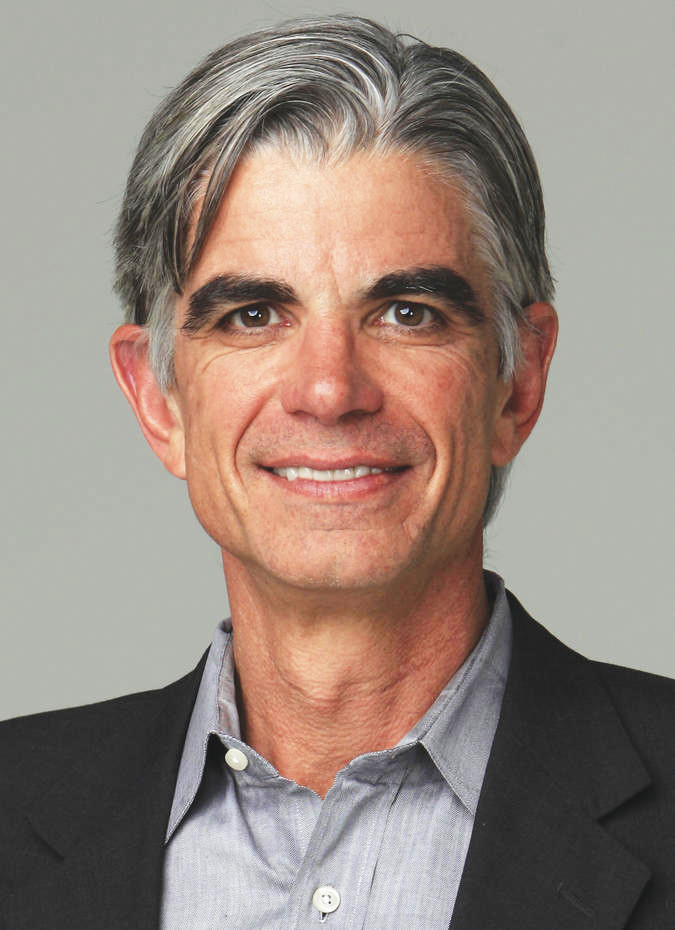
Michael Moss is the author of Salt Sugar Fat: How the Food Giants Hooked Us, a Pulitzer Prize-winning investigative journalist formerly with the Wall Street Journal and the New York Times, a keynote speaker, and a guest on shows like CBS This Morning, CNN The Lead, ATC and the Daily Show.
His work has ranged widely from exposing the corporate interests in nursing homes to the Pentagon’s failures in providing soldiers with armor, and now focuses on the food industry in the context of health, safety, nutrition, politics, marketing, and the power of individuals to gain control of what and how they eat. His next book, Hooked: Food, Free Will, and How the Food Giants Exploit Our Addictions is being published by Random House on March 2, 2021.
He won the 2010 Pulitzer Prize with other New York Times staff in explanatory reporting “For relentless reporting on contaminated hamburger and other food safety issues that, in print and online, spotlighted defects in federal regulation and led to improved practices.”
Before The Times, he reported for The Wall Street Journal, New York Newsday, The Atlanta Journal-Constitution, The Daily Sentinel in Grand Junction, Colorado, and the High Country News in Lander, Wyoming.
He was a finalist for a Pulitzer Prize in 2006 for his reporting on the lack of protective armor for soldiers in Iraq, and in 1999 for a team effort on Wall Street’s emerging influence in the nursing home industry, and received an Overseas Press Club citation in 2007 for stories on the faulty justice system for American-held detainees in Iraq.
He wrote “Palace Coup: The Inside Story of Harry and Leona Helmsley,” a Doubleday bestseller, He has been an adjunct professor at the Columbia University Graduate School of Journalism and has had fellowships with the German Marshall Fund and the Gannett Center for Media Studies. In 1983 he covered an expedition up the West Ridge of Mount Everest in Nepal.
Born in Eureka, California, on Dec. 16, 1955, he attended San Francisco State University. He lives in Brooklyn with his wife, Eve Heyn, a writer, and their two boys.
413: Michael Moss, part 1.5: Maybe that was the addiction speaking
Michael wrote me the morning before we scheduled this conversation to say he ended up spending more time on the screen when he intended less. He wondered if we should skip it. Longtime listeners may remember similar results with guests Jim Harshaw and Caspar Craven.
I told him I’m not looking for a Disney version implying that acting sustainable was easy. I believe listeners engage more with hearing the challenges than perfection, though it would mean him sounding human. He magnanimously agreed. So we’ll get to hear his challenges.
As it happens, his next book is called Hooked: Food, Free Will, and How the Food Giants Exploit Our Addictions, which overlaps with getting hooked on screen time. We ended up with some sneak preview of the book and how it relates to polluting behavior, especially Michael’s challenge.
We describe a parallel between changing eating habits and sustainability habits came across, as well as the techniques doof industries use to establish habits that help them, however unhealthy for you or damaging to Earth’s ability to sustain life and human society. Since they work to get past your defenses, often with children too young to have developed defenses, I would call them insidious or creepy, like a tick creeping slowly past your defenses.
The challenge in changing these habits, from one perspective, is to create new neural pathways. We focus on the objects of our craving and the craving, but looking past our craving to seeing that we are training ourselves and the feelings of withdrawal will pass seems to make it
easier.
404: Michael Moss, part 1: Salt, Sugar, Fat, Convenience, Addiction, and the Environment
Michael Moss had already risked his life as a reporter in Baghdad, where he interviewed Islamic militants and exposing that US marines lacked body armor. He had also already won a Pulitzer prize for reporting on food. Then he wrote Salt Sugar Fat, which has become one of the core books on the field of the food and doof industries. For me, the title has become one word, SaltSugarFat, to which I often add convenience, SaltSugarFatConvenience.
The book shows how the system evolved its incentives and motivations. They lead all players to create products and behavior that take advantage of our reward systems to induce craving, temporarily satisfy that craving while re-creating it, and continuing that loop.
The book pulls you along with detailed stories, often insiders where you can’t imagine how he learned the details. They combine to a greater story of our industrial food and doof system. The book was a number 1 NY Times bestseller and won awards including a James Beard award.
In our conversation, he shared some back story not in the book, and we spoke about the environment and his values. I don’t have to tell you how food touches everything in our lives. I see our beliefs and behavior toward food and doof as parallel to our beliefs and behavior toward the environment.
Michael’s book intrigues and fascinates at the sentence level. All the characters in the book rang true. Their stories were compelling. The results outraged me, but they also motivated me to keep away from their insidious work. Most of all it pointed to a playing field with incentives that motivate overproducing and getting people to eat more cheap products.
Each person is doing what he or she thinks is best. No one intends it, but they create obesity, disease, helplessness, addiction. Beyond those easily measurable results, it leads the people targeted, to protect their identities, to promote their lifestyles as if they were born that way, attacking people who disagree as if they were attacking accidents of birth, like racism or sexism.
But we aren’t helpless, however effective doof engineers have become at manipulating and controlling us. SaltSugarFat helps us prepare. You’ll also enjoy reading it.