
Michael Werner
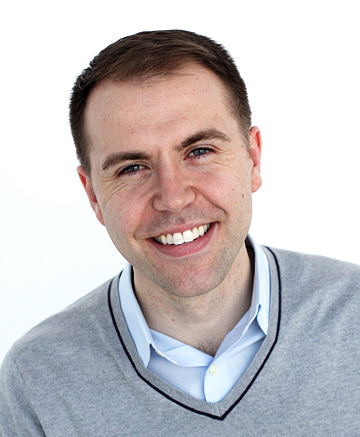
Michael champions the efforts and work with cross-functional leaders across Google to accelerate the transition to a circular economy in which the business creates environmental, economic, and community value through the maximum reuse of resources. He and his team are focused on achieving this across our products, operations, infrastructure and supply chains and also working to enable others to do the same. Their principles are to 1) design out waste and pollution, 2) keep products and materials in use, and 3) promote healthy materials and safe chemistry.
Before Google, he led a team responsible for establishing Apple’s leadership vision and execution strategy for green chemistry, restricted substances, and full material disclosure for all products. He built a biocompatibility team to address materials and products in prolonged skin contact and wearable products including the Apple Watch. He oversaw toxicological review of materials, testing, and specification development.
Michael holds a BS in Chemistry from Villanova University. He was Sr. Sustainability Engineer with Haworth Inc. Michael has worked in the green building and product design space for 14 years including with renowned green architect Bill McDonough. He serves on the advisory board of the Green Science Policy Institute and has previously served as a sustainability advisor to the Department of Homeland Security and the National Institute of Building Sciences.
232: Michael Werner, part 2: Leading Google by bike
Since recording this episode, Michael has become Google’s Lead for Circular Economy.
Michael took on a challenge many people consider: biking to work for a month. He challenged himself amid product releases at work and family obligations as his wife traveled, so he couldn’t just start. He had to plan and work at it. Even so, he created cheerleaders of his riding at Google among his coworkers.
He led them by doing what others wanted to but didn’t.
I can’t help wonder if his biking contributed to his promotion to a role of environmental leadership.
Before all that, you’ll get to hear about his spectacular blow out.
Michael clearly explains his plans, actions, and results — what worked and didn’t — so if you’re thinking about biking more or any environmental action, you can use him as a role model.
I’m curious if he’ll follow his personal experience with leading people more at Google or steering Google beyond where he would have otherwise.
211: Michael Werner, part 1: Dream job results from environmental leadership
Not everyone gets his or her dream job. Michael Werner did, on sustainable product design at Google and Apple. Since our conversation he’s become Google’s lead on circular economy. Whatever your thoughts on these companies, he is in a position to help lead them in areas of great importance.
How did he get those positions? By working up the ladder? On the contrary, by leading from the start, before people were following.
A major goal of this podcast is to show that if you want to lead, especially on the environment, a successful path is to start leading now with what you can. Waiting for a position to open doesn’t work as well. Acting creates opportunities and Michael is an example.
I’m glad to hear people within big companies with major inertia are working on sustainability, but they have challenges ahead. It’s also rare to find people who get what I described as reusing and recycling, or efficiency in general, is tactical. Reduction is strategic, as I spoke on in episode 183: Reusing and recycling are tactical. Reducing is strategic.
Most companies prefer recycling and efficiency because they drive growth, which makes people feel better, but is the opposite of reduction. I haven’t looked into Google’s practices.
Note, this was an early episode. I didn’t ask Michael first about what the environment meant to him, so I didn’t connect his challenge to something personal. I got lucky that he had something in mind at first. But I think leadership works far more effectively when the leader makes the person feel comfortable sharing their values, which makes it feel more meaningful. It wouldn’t have worked with someone less enthusiastic and didn’t lead him to find his project as meaningful.
Still, I think he’s doing it for himself. We’ll hear in his second episode.