
Rabbi Yonatan Neril
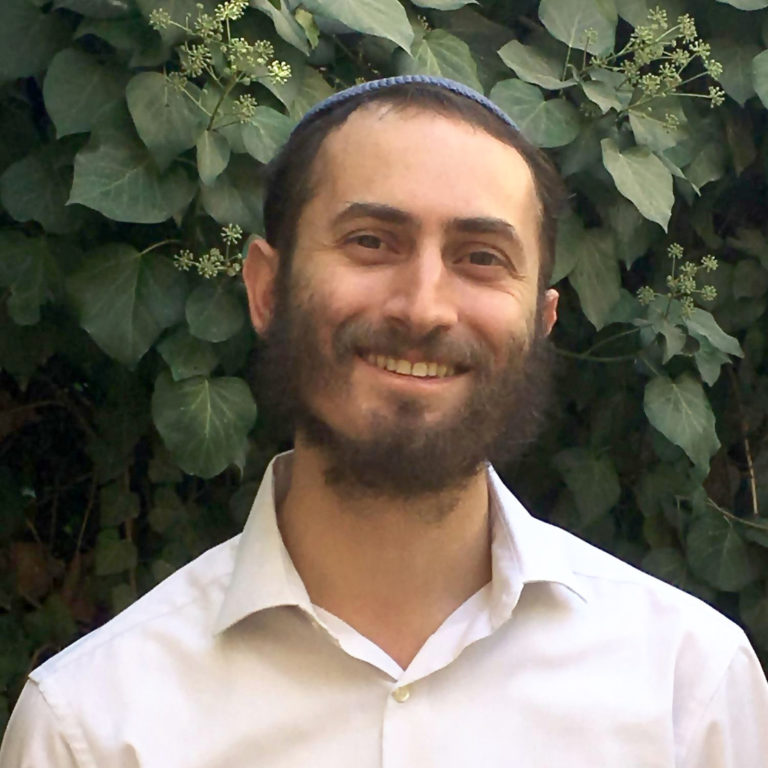
Rabbi Yonatan Neril founded and directs The Interfaith Center for Sustainable Development. Raised in California, Yonatan completed an M.A. and B.A. from Stanford University with a focus on global environmental issues, and received rabbinical ordination in Israel. Yonatan is coauthor of the bestselling book Eco Bible, published by ICSD, which shines new light on how the Hebrew Bible and great religious thinkers have urged human care and stewardship of nature for thousands of years as a central message of spiritual wisdom.
He has spoken internationally on religion and the environment, including at the UN Environment Assembly in Nairobi, the Fez Climate Conscience Summit and the Parliament of World Religions. He co-organized ten interfaith environmental conferences in Jerusalem, New York City, Washington D.C., and Atlanta. He is the lead author of three books on Jewish environmental ethics and also co-authored three reports on faith and ecology courses in theological education. He lives with his wife, Shana and their two children in Jerusalem.
445: Rabbi Yonatan Neril, part 2: Religion, Interpreting the Torah, and Nature
We got into territory I’d wanted to talk to a religious scholar about. I would have expected being recorded would make us more tentative, but I found the opposite. I didn’t keep track, but several times I said feel free not to answer. Instead he answered more, sharing what he’d thought and researched about in depth.
We cover Joseph, Isaac, the Arch Bishop of Burundi, population, contraception, consumption, and more, both in principle and in our
personal lives. We also cover his personal experience in the woods near his home, his family, his work, and how they all interplayed.
Family is the number one reason people give about not being able to act. “Josh, you don’t have kids, you don’t understand how it’s impossible.” Well, take it up with yet another family man who found nature and stewardship bringing his family closer.
This conversation, along with ones with religious guests like Bob Inglis, Brent Suter, and Eric Metaxas, as well as unrecorded ones with friends, make me evaluate the approach of many environmentalists, including myself often. Too often their message comes from a place of “I’m right, you’re wrong, let me explain how.” I’m not excepting myself.
What works? I’m sure I’ve mentioned the root of convince — vince as in vanquish. When was the last time someone vanquished you and you responded, “You beat me, now I agree with you.”?
I find it more interesting to learn from people I disagree with, more fun, more engaging, and I learn more too. I don’t want to imply I’m a paragon of humility or even remotely like that ideal, but I’ve come a long way and am glad for the distance I’ve traversed.
430: Rabbi Yonatan Neril, part 1: The Eco Bible
In the midst of several episodes on religious approaches to sustainability I learned of today’s guest, Rabbi Yonatan Neril’s book The Eco Bible: An Ecological Commentary on Genesis and Exodus.
He founded and directs the international Interfaith Center for Sustainable Development, including its Jewish Eco Seminars branch. He wrote the book to shine new light on how the Hebrew Bible and great religious thinkers have urged human care and stewardship of nature for thousands of years as a central message of spiritual wisdom.
He has spoken internationally on religion and the environment, including at the UN Environment Assembly, the Fez Climate Conscience Summit, the Parliament of World Religions, and the Pontifical Urban University. He co-organized twelve interfaith environmental conferences in Jerusalem, New York City, Washington D.C., Atlanta, Los Angeles, and elsewhere.
On a personal note, I saw the chance to learn about my family and upbringing. My father is the person I know most knowledgeable and practicing about Judaism. He is also among the people I know among the most resistant to reconsidering views on nature, pollution, and considering changing how he interacts with it. I was curious how his religion influences him.
Yonatan presented another approach full of joy, community, connection, service, and faith. I can’t say others all approach it like a chore or burden, like something we have to do but really don’t want to, but I sure see that approach more. I like Yonatan’s mood more.
We recorded our conversation on video too. See it here.