
Scott White
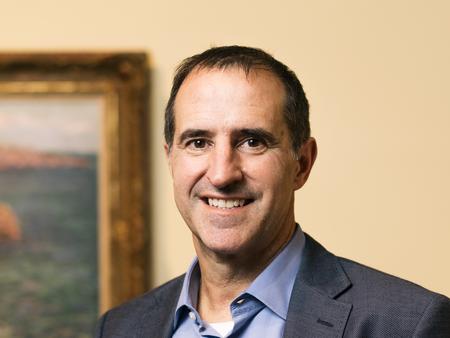
Scott founded IGS in 1989 with his dad, Marv, and his sister, Cathy. Under his leadership, IGS has grown from a three-person startup natural gas company, to a company with hundreds of employees who proudly serve more than one million residential and commercial customers throughout the country. As a visionary leader, Scott is focused on making sure IGS does the right thing and serving as a role model in the business community as a proud member of the Conscious Capitalism movement. He makes sure to bring along each member of his team in every endeavor, ensuring they’re invested in the decisions made at IGS.
Scott’s personal purpose is “to bring out the best in others and inspire them towards living meaningful and fulfilling lives.” It may be surprising for a company leader to say that what matters most is purpose over profits, but that’s been a guiding notion for Scott since the beginning. He has always felt that giving back to the community is an opportunity, not an obligation, which led to the development of IGS Impact. This philanthropic social impact program is an extension of the company’s purpose-driven culture.
Scott has received several accolades for his personal contributions to the energy industry and business community, such as:
- Smart Business Leader in Central Ohio by Smart Business Magazine
- Social Entrepreneur of the Year by Ernst & Young
- 20 to Know in Energy by Columbus Business First
- Most-Admired Executives by Columbus Business First
When he’s not busy leading the IGS family of companies, Scott moves to the beat of his own drum. As an accomplished musician, he enjoys playing the drums as a member of the company’s all-employee 6100 Band (named after the corporate office’s address). He’s also active in the community, particularly inspired by causes that encourage people to grow and become self-sufficient, such as Junior Achievement. A proud Bobcat, Scott graduated from Ohio University with a bachelor’s degree in Finance and Marketing.
573: Scott White, part 2: An energy CEO considers leading on sustainability
Scott went above and beyond acting on his sustainability commitment to run. He battled covid during training. Did the extra effort bring him down? On the contrary, since he did it for personal, intrinsic motivation based in his connection to the environment, he valued it more.
I read curiosity on his part so shared my personal actions and systemic strategy different than the typical ones to switch from fossil fuels to so-called renewables. I say “so-called” because they require fossil fuels at every stage plus we have to handle their end-of-life pollution. As I see it, polluting less than the most polluting energy sources but still polluting isn’t sustainable, it only buys us more time to become sustainable.
He seemed genuinely interested in my experience improving my life in ways accessible to everyone, especially all Americans, by reducing my polluting behavior. This pattern shocks many so it requires leadership to stick. Listen for yourself, but I hear him considering that leadership role. Why not when it’s based in authentic, intrinsic motivation? In his case, it comes from running outdoors. In your case it will be your rewarding experiences.
You’ll hear him seeing the effort to act more sustainably, but since he just found joy in the effort of running, I think he sees the potential to get that same extra reward from leading on sustainability, even in a company that profits from providing people with power.
531: Scott White, part 1: The Founder/CEO of an Energy Company on Sustainability
Scott White, Founder/CEO of an energy company, helped achieve this podcast’s two top goals:
- To bring leaders to share and act on their environmental values, from any area, but especially polluting fields
- To help change culture from expecting sustainability is a chore or burden to expecting joy, lightness, freedom, and reward. Both happened in this episode.
On the second, you’ll hear when I invite Scott to act, he had something in mind (he knows This Sustainable Life!). It sounded extrinsically motivated so I asked if it connected with the values he had just shared. As we spoke, more personal things emerged. Do you hear a different level of interest and depth of motivation for his second task? Does it sound intrinsic and more motivating?
I heard between the two commitments the difference between intrinsic and extrinsic, between leadership and management. Most of what passes for motivating people on sustainability in the media sounds to me more like coercion, implying people don’t want to do it.
On the first goal, Scott is the CEO/Founder of a company that sells fossil fuels. He chose to change his company. I haven’t evaluated the effectiveness of his change. Plenty of companies and people, even with the most sincere intentions, mean to reduce pollution but don’t. I’m only looking at him for leading his organization. How hard is the change? How easy? What does it take? How can we motivate more people and organizations polluting less?
One lesson: companies want to follow consumer demand. If they don’t hear it from you, they don’t know to act. It helps no one for consumers to stay silent about their interest to pollute less. Communicate your interest so power companies can hear.
He’s taking risks and trying. He sounds like a role model.
I would have liked more emphasis on reducing use. Nothing keeps fossil fuels in the ground like not taking them out in the first place. Here’s my last electric bill:
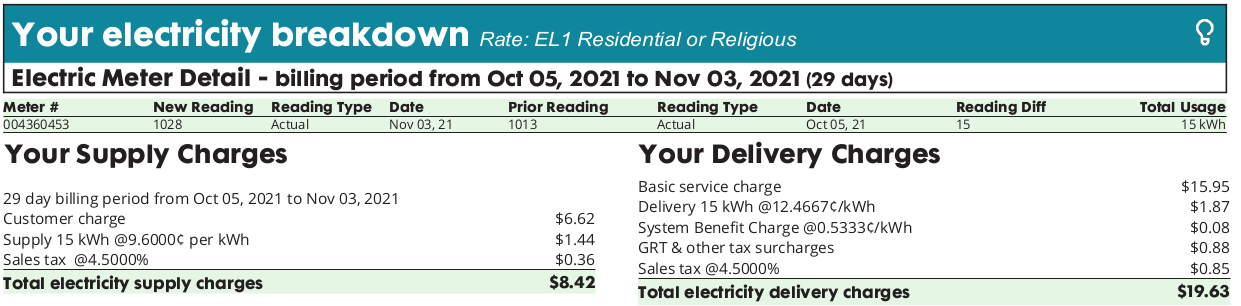
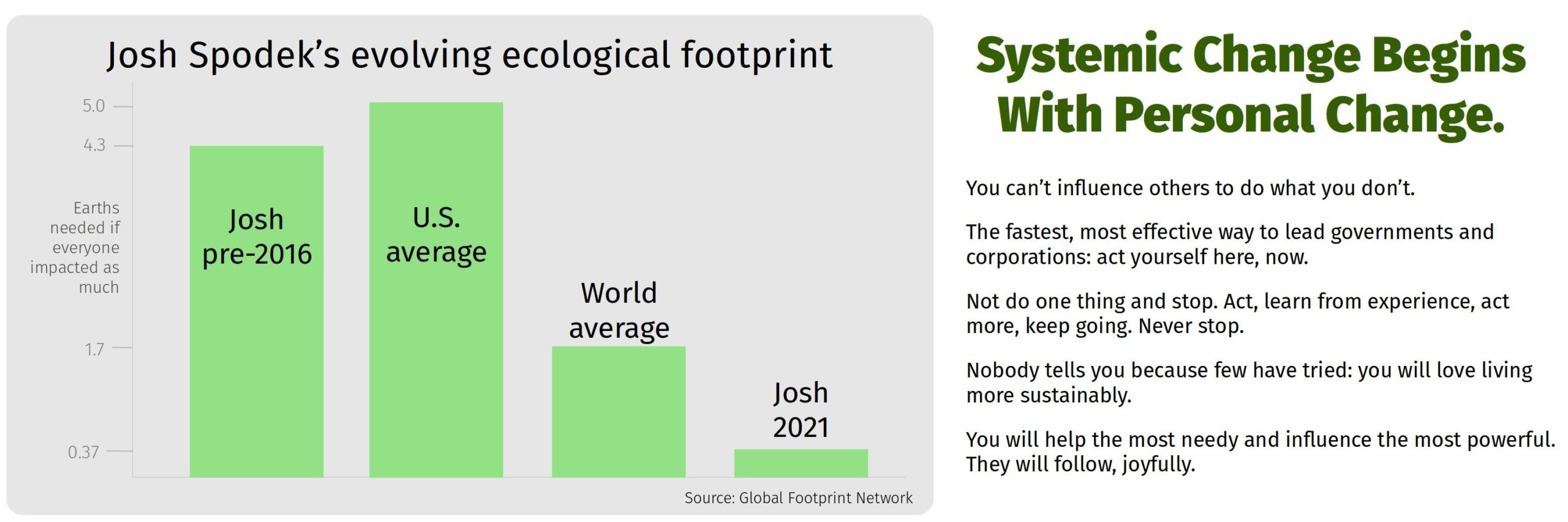
$1.44 for the customer charge. The rest is fixed fees I can’t do much about. On life values, I’m as healthy and happy as anyone I know. I couldn’t have imagined lowering this much, but now it’s normal. Since systemic change begins with personal change, this change allows me to help others achieve it.
If a power company had helped, I could have lowered long ago. Could IGS help consumers and businesses live healthily and happily consuming less, like most of the rest of the world? Are power companies motivated to help consumers reduce consumption? How many Americans realize that less power will improve their lives?
While I’m at it, here’s my evolving footprint compared to the U.S. and world.
I see power companies as able to influence consumer behavior. Is it in any of their interests to motivate people using less? A lot less? If so, how?