
Steven Kotler
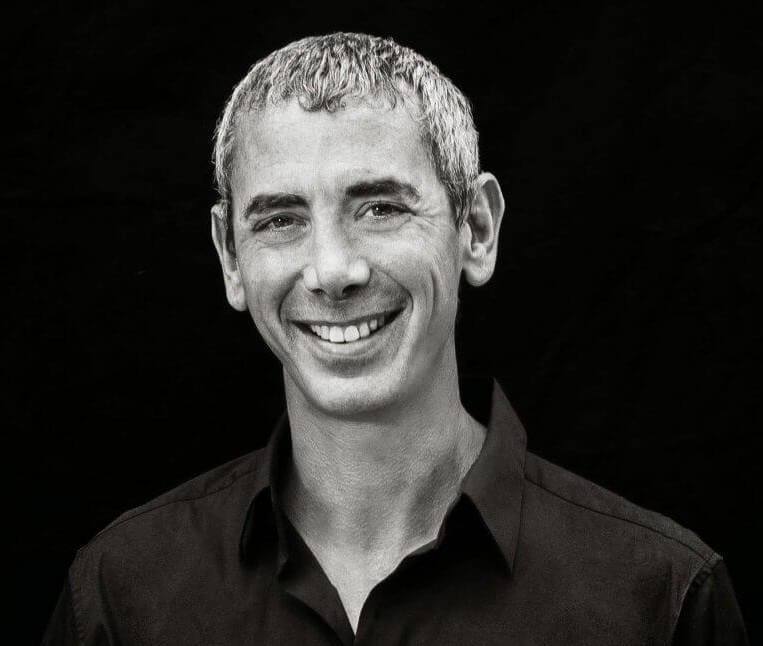
Steven Kotler is a New York Times bestselling author and an award-winning journalist. As the Executive Director of the Flow Research Collective, he is one of the world’s leading experts on high performance.
His most recent work, Stealing Fire, was a national bestseller and nominated for a Pulitzer Prize. It documents an underground revolution in peak performance that is rapidly going mainstream, fueling a trillion dollar economy and forcing us to rethink how we lead more satisfying, productive and meaningful lives.
This work was preceded by two books about the technology, Tomorrowland, which is about those maverick innovators who transformed science-fiction ideas into science fact technology and Bold, which was called a “visionary roadmap for change,” by president Bill Clinton and spent many months atop both the New York Times and Wall Street Journal bestseller lists.
His previous book, The Rise of Superman, was one of the most talked about books in 2013 and the first book in history to land on the New York Times bestseller lists in the sports, science, psychology, and business categories simultaneously. In Rise, Steven decodes the science of flow, an optimal state of consciousness where we feel our best and perform our best.
Just as Rise explores the upper limits of individual possibility, his book, Abundance, explores the upper limits of societal possibility, breaking down four emerging forces that give humanity the potential to significantly raise global standards of living over the next 20 to 30 years. Abundance spent 10 weeks atop the New York Times bestseller list and appeared on four prestigious “Best Book of the Year” lists.
A Small, Furry Prayer—Steven’s book about the relationship between humans and animals—was a national bestseller and nominated for a Pulitzer Prize; West of Jesus, which examines the neurobiology of spiritual experience, was a Pen/West finalist; and his bestselling novel, The Angle Quickest For Flight, won the William L. Crawford IAFA Fantasy Award.
Steven’s work has been translated into over 40 languages and appeared in over 100 publications, including The New York Times, Atlantic Monthly, Wall Street Journal, Forbes, Wired and TIME. He also appears frequently on television and radio, and lectures widely on human performance, disruptive technology and radical innovation.
Steven is also the cofounder of Creating Equilibrium, a conference/concert/innovation accelerator focused on solving critical environmental challenges, and, alongside his wife, author Joy Nicholson, Steven is the cofounder of Rancho de Chihuahua, a hospice care/special needs care dog sanctuary in the mountains of Northern New Mexico.
He has a BA from the University of Wisconsin, Madison, and an MA from Johns Hopkins University and, whenever possible, can be found hurling himself down mountains at high speeds.
323: Steven Kotler: The Future Is Faster Than You Think
One of my goals of this podcast is to bring people with alternative views. I won’t deny this motive being mainly selfish. I want to learn and grow from alternative view. I grew up viewing technology and efficiency as better ways for humans to live. I saw them as ways to decrease our impact on nature.
I’ve changed, as my podcast episodes distinguishing raising efficiency from decreasing total waste, to working on values. Most of the world, especially Silicon Valley, seems to think even more the way I used to. I read Steven Kotler and Peter Diamandas’s upcoming book, The Future is Faster Than You Think, wondering what to expect.
It’s part of their Exponential Technology series that includes Abundance: The Future Is Better Than You Think and Bold: How to Go Big, Create Wealth, and Impact the World. I read them as pro-technology. My goal with guests is to listen and support so I can learn, and I hope you do too.
I’m glad to have spoken with Steven. Before we started recording he told me some of his past interest in the environment. Understanding those views changed how I understood the book, so he repeated it in the conversation you’re about to hear.
The book is subtitled How Converging Technologies Are Transforming Business, Industries, and Our Lives. It compiles andexamines basically all the big transformations technology is about to create or is creating—Quantum Computing, AI, Networks, Sensors, Robotics, 3d printing, VR/AR, Blockchain, nanotech, and so on. If you’ve heard or read about them but haven’t researched or reflected enough to digest and see how they’ll affect you and us, read Steven’s book.
Steven and Peter researched, reflected, and wrote about them all and projected how they will affect us. They talked to the people at the forefront of these technologies and institutions behind them. The book covers far more than a short conversation does, but this conversation covers what the book doesn’t: where Steven is coming from.
These things exist and are happening, he points out. We haven’t put many technology genies back in the bottle. If you want to know what’s coming and what it means, listen and read.
You can probably tell I love learning what Steven’s book shares. I’d heard about all these technologies and their exponential rates of change. How they combine and reinforce echoes Geoffrey West’s research, but Geoffrey talked high-level theory. Steven talks on-the-ground detail.
Things are happening, better learn them. I don’t see them as inevitable. I’d hope the people developing them would consider more the unintended side effects that have plagued technological advances, like the green revolution or, say, how ride sharing has led to the opposite of expectations of lower miles driven or congestion.