
Tom Szaky
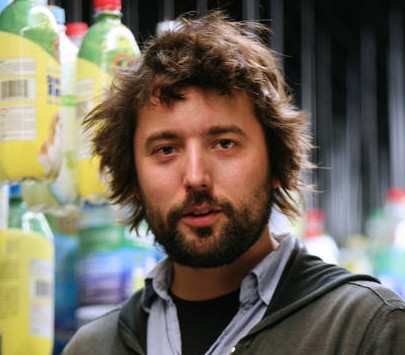
Tom Szaky founded TerraCycle in 2001, then a student at Princeton University, on a mission towards Eliminating the Idea of Waste®. From these humble beginnings TerraCycle has grown into the global leader in collecting and repurposing hard-to-recycle waste: operating in over 20 countries, engaging over 80 million people, and recycling billions of pieces of waste through various innovative platforms.
You can learn more about Tom and TerraCycle at TerraCycle’s page. I’ll copy the first and last parts of their history to illustrate the man, the company, and their growth.
2001: A freshman at Princeton University, 19-year-old Tom Szaky took several of his friends up to Montreal for fall break. There, he stayed with friends who were feeding kitchen scraps to red worms and using the resulting fertilizer to feed some of their indoor plants. The results were amazing and the idea for TerraCycle was born: to help eliminate the idea of waste by making quality fertilizer from food waste.
2002: Tom emptied his savings accounts, borrowed money from friends and family, and maxed out his credit cards to create a massive worm poop conversion unit. Most of Tom’s time was spent shoveling rotting food out of the back of Princeton University’s cafeterias. Broke, exhausted, and ready to throw in the towel, Tom met Suman Sinha, an angel investor who cut the young entrepreneur a check and became TerraCycle’s first investor. With the money invested by Suman, Tom was able to rent his first office space at 20 Nassau St. in Princeton, NJ.
. . .
2016: TerraCycle started the year by forming a groundbreaking partnership with Suez, who purchased 30% of TerraCycle France, UK, Sweden, Belgium, Netherlands and Finland. In the US, TerraCycle launched the world’s first-ever recycling program for industrial adhesive packaging with Henkel, as well as the first-ever recycling program for contact lenses and their packaging with Bausch + Lomb. A unique baby car seat recycling program was also nationally implemented in partnership with Target. Internationally, TerraCycle opened national operations in China, with offices in Shanghai.
2017: TerraCycle was named a winner of the United Nations Momentum for Change Lighthouse Activity award. The honor was in recognition of its initiative with Procter & Gamble and SUEZ to create the world’s first fully recyclable shampoo bottle made with plastic collected from beaches and waterways. TerraCycle was also the recipient of the 2017 Green/Sustainable Business Achievement Award given by the U.S. Chamber of Commerce. In England, TerraCycle and Right Guard unveiled an outdoor gym made with recycled aluminum canisters and in Australia, TerraCycle and L’Oreal awarded their first playground made from recycled beauty products. TerraCycle opened operations in South Korea.
157: Tom Szaky, part 1: TerraCycle’s new initiative: Loop
Tom Szaky has been working on waste since his undergrad days at Princeton in 2001. Then I suddenly heard about him from many sources in the past few months.
His company, Terracycle, recycles waste others don’t. The new initiative, Loop, got attention at Davos and support from many companies
whose business plans depend on producing waste, within an economic model that promotes growth. He also published a book, the Future of Packaging, coauthored by top executives from these waste and growth places. I wrote more notes from that book to prepare for this conversation than any book, including Bob Langert’s, McDonald’s former head of Corporate Social Responsibility (that episode is still being edited).
It never mentioned reducing consumption, twisting, as I saw it, the idea to reducing material per package. Almost no one gets the subtle but critical distinction between efficiency and total waste. Our polluted world is the result of centuries of increasing efficiency and total waste. Nearly every initiative extends that trend, missing that efficiency in a polluting system leads to more efficient pollution.
His book did talk about responsibility, the counter to our system’s goal of externalizing costs. So the book missed the most important part of handling waste, reducing supply and demand, but got responsibility. I wondered if he was serious or yet another person confusing feeling like you’re reducing waste while increasing it, the way the Watt steam engine did, Uber does, widening roads does, and LED bulbs look on track to.
You’ll hear from this conversation that, as best I can tell, he understands the system issues and the need for systemic change. For the
rest, listen. He understands and seems to be acting for systemic change.
I hope this conversation is the first of many, not just to hear about his personal challenge, which is pretty big, at least to me. I still eat
cheese, about the amount on one pizza slice per year. Actually, it’s been decreasing annually. Maybe I’ll use his action as inspiration.
I’m glad he got and explained the reasons behind reduction and explained why his book didn’t touch it. I’ve heard enough to believe he understands the most important directions and changes. I don’t know enough about the details of Terracycle and Loop to tell if I think they’ll work.
It’s refreshing to talk to someone who understands the key issues.
Read the transcript.