
Tony Wagner
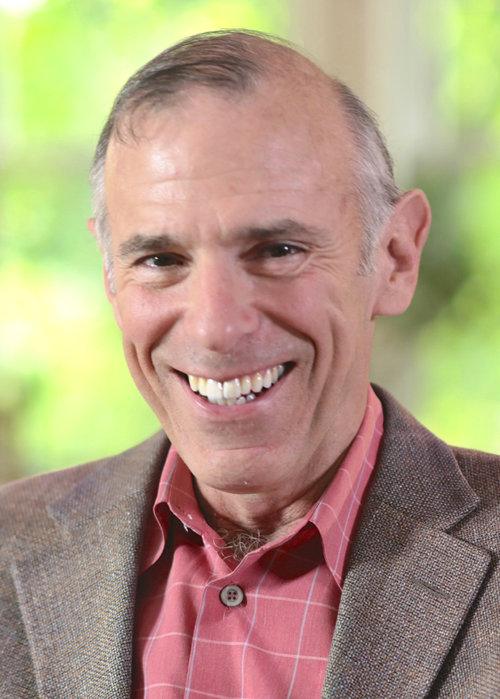
A globally recognized expert in education, Tony Wagner is a Senior Research Fellow at the Learning Policy Institute, founded by Linda Darling-Hammond in 2015. Prior to this appointment, Tony held a variety of positions at Harvard University for more than twenty years, including four years as an Expert in Residence at the Harvard Innovation Lab and the founder and co-director, for more than a decade, of the Change Leadership Group at the Harvard Graduate School of Education. His previous work experience includes twelve years as a high school teacher, K-8 principal, university professor in teacher education, and founding executive director of Educators for Social Responsibility.
Tony is a frequent speaker at national and international conferences and a widely published author. His work includes numerous articles and seven books, including three best-sellers. Most Likely To Succeed: Preparing Our Kids for The Innovation Era, co-authored by Ted Dintersmith, was published by Scribner in 2015. Creating Innovators: The Making of Young People Who Will Change The World, was published in 2012 to rave reviews and has been translated into 18 languages. His 2008 book, The Global Achievement Gap continues to be an international best seller, with more than 140,000 copies in print. Tony’s memoir, Learning By Heart: An Unconventional Education, will be published by Penguin/Random House in April 2020.
Tony served as the Strategic Education Advisor for a major new education documentary, “Most Likely to Succeed,” which had its world premiere at the 2015 Sundance Film Festival. He also collaborated with noted filmmaker Robert Compton to create a 60 minute documentary, “The Finland Phenomenon: Inside The World’s Most Surprising School System” in 2010.
Tony earned an M.A.T. and an Ed.D. at the Harvard University Graduate School of Education.
328: Tony Wagner, Learning by Heart
People often ask for advice on how to lead in a given situation, what leadership means, or one tip they can improve their leadership with. Nearly none of the questions help someone improve their leadership.
The most useful question I can think of is: How do I learn to lead? In other words, what steps can I take to learn to lead?
No leader would answer: read a lot of books, magazine articles, or journal articles. Nor would they suggest discussing case studies of other people’s experiences, write papers, listen to lectures, or take tests.
They’d probably say something about getting experience, especially related to leadership, not sitting in a classroom. What experience, though? Only random life experience, hoping it will help?
Learning the social and emotional skills underlying leadership may once have meant shots in the dark. No longer. Project-based, active, experiential learning teaches these skills as reliably and predictably as playing scales teaches piano and hitting ground strokes teaches tennis.
I learned of Tony Wagner and his work through his appearances in a documentary movie on that type of learning, mainly in US K-12 schools, called Most Likely to Succeed, based on a book he co-wrote of the same title. I had started learning to teach that way. The movie accelerated my learning and expanded my horizons.
Leadership and teaching this style overlap. You will benefit from learning this style of learning whether you teach or have kids or not. Hearing Tony speak of it will show you it’s importance and accelerate your learning. You’ll lead yourself and others better.
We start by him sharing problems with education. You’ll likely be able to read between the lines on our ineffective leadership in politics, business, and especially relevant to the environment. Current education focuses on facts and analysis, not skills. It produces would-be leaders who focus on facts and analysis who create plans they lack the skills to implement, if they even create implementable plans.
If you haven’t acted, you don’t know what you’re talking about regarding leading, yet people trained in the mainstream style consider themselves experts. It happens to all of us, all the more the less we know how to learn how Tony shows.
What’s causing environmental problems isn’t lack of knowledge or facts, but acting effectively to engage others. Tony talks about what we don’t teach and what we could teach—things missing from many areas in life as people seek compliance through coercion. I see scientists trying to influence legislators by bypassing the public—a process they decry others for doing in the other direction.
They think they’re right. They may be, but they’re trying to bypass democracy. Do they not see the problem? People who disagree think they’re right too.
When Tony says education, I recommend substituting leadership. In nearly each case, what he says applies equally.
I recommend reading his books (listed here) and watching Most Likely to Succeed, especially if you have kids or interact with other people.