
Do you stress over eating more than your want on the holidays? I found a great way not to that applies in many other places.
Since getting more fit, I’m more sensitive to smaller changes in my fitness. When I used to have more fat, eating more than I wanted for a few meals didn’t change much on my body. To go from having some fat to a little more fat didn’t register. So I would eat more than I wanted.
Now I notice the next morning or sometimes during the meal.
The more precise your standards, the more you can stick to them because missing them becomes more obvious. You hold yourself more accountable without mental effort. This precision creates freedom because instead of thinking about food and how much I should eat, I can eat what I want, knowing that my body will give me feedback so my mind doesn’t have to.
Likewise, the more vegetables I eat and learn to enjoy, the less I have to think about quantity or quality of food.
I’m writing about food here not because it’s on my mind but because it’s not. I think about regulating myself less than before, freeing my mind to think about other things. I didn’t expect this benefit. It’s yet another benefit of fitness.
This freedom, illustrated
I noticed this effect in meditation. Some people meditate on a stool, like this:
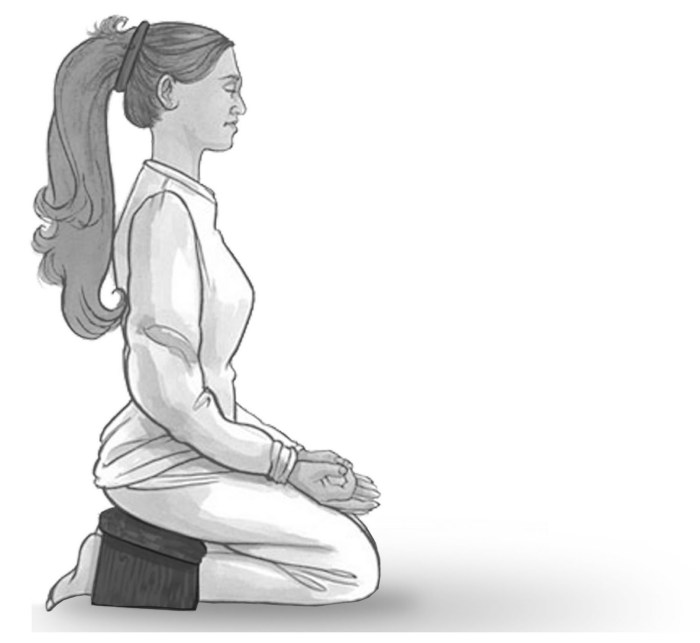
I do it that way a lot, although I don’t do the thing with the fingers and thumb. It keeps your spine straight and you can sit for a while. You usually sit on a stool like this:
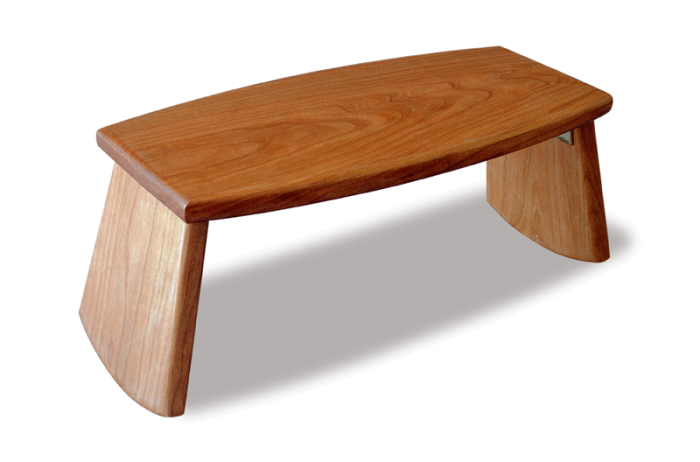
That stool is stable. You might think stability would help you meditate.
There are also stools like this one that are less stable. You’d think they’d make it harder to meditate, but I’ve found the opposite.
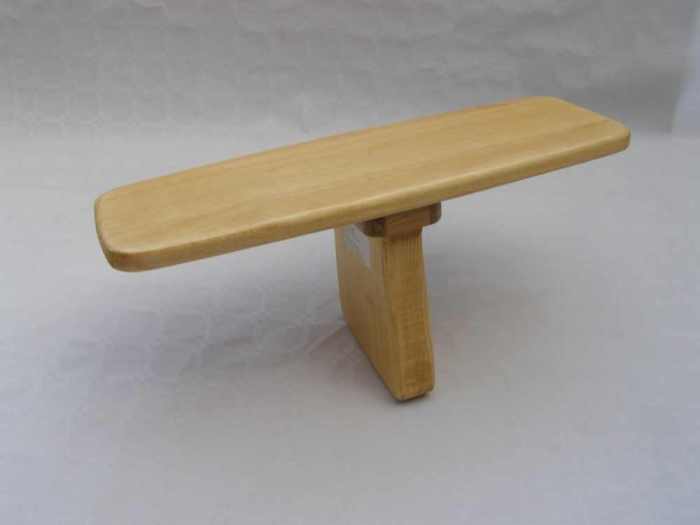
Your body immediately tells you when you lose your balance, so you end up keeping yourself more precisely aligned. You’re free to focus on your thinking while your body takes care of itself.
I love this post. The meditation stool example did seem counter-intuitive untiI I recollected examples from my own life and teaching at Montessori where it would work the same way.
Thank you!
I’d love to read your examples if you don’t mind sharing.
Ok, here are a few examples:
– I find it is easier to maintain balance and a good posture while wearing pencil-heel shoes.
– Organizing things, having a specific place for things, so that every time I don’t need to think about where to put it. It also makes it easier to restore order when things do get sprawled.
– In the Montessori class I found it was easier for the 3-6 yrs olds to learn to coordinate and control their movements by carrying glasses and bowls filled with water, by handling delicate glass objects. The spilling of the water and breaking of the glass provided a very obvious feedback, and instead of discouraging them it helped them to gain mastery over their movements.
– One of the Montessori materials called ‘Cylinder Block’ consists of 10 cylinders to be inserted into their respective holes. The cylinders range from 1 cm in diameter to 5.5 cm. Unless the child places them in their respective holes, the last one(s) would be left out. Thus very soon the child discovers what to focus on so as to get all the cylinders to fit and look like the way it did when on the shelf. This inbuilt ‘Control of Error’ helps the child direct his attention and figure out how to do this activity successfully without the teacher having to intervene or correct or provide outside feedback.
Thank you for those examples. You reminded me of another.
A guy named Monty Roberts is known for training horses without violence. They call him a horse whisperer because he’s learned to read the body language of horses and to communicate to them. I saw a documentary about him showing his technique.
Untrained horses are skittish and frightened. Slight mistakes could ruin the process, so he has to observe and react very consistently. It’s amazing to watch. He seems to find a peace in that accuracy.
At the end of the video I saw, he describe how he learned to communicate with deer, though not enough to train them. They need finer accuracy because they get scared faster and he can’t confine them, so if he makes a mistake, they could run miles away. He says that the finer accuracy leads him to greater peace.
Once again it seems counter-intuitive that untrained animals would get frightened easily but then upon thinking more about it, it makes sense. This mistaken notion probably comes from thinking that untrained animals are wild and wild things are ferocious and ferociousness is usually associated with daring.
They train them in pens they can’t escape from. For a wild animal, I expect feeling trapped creates something like anxiety or fear.