
This week I finished:
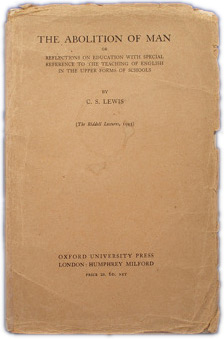
The Abolition of Man: Reflections on education with special reference to the teaching of English in the upper forms of schools, by CS Lewis: I read the Chronicles of Narnia as a kid but don’t remember much of them. Then between Hillsdale College courses and other conservative speakers, I hear about CS Lewis all the time.
I thought I’d start with a short book I heard mentioned a few times. Well, it’s short, but not quick or easy. It started off easy enough to follow, but it didn’t take long before I felt like I would have to write here something like: I must not be that smart because this book’s writing was too hard for me to understand. I felt like Lewis chose to make his writing sound fancy but at the expense of it being understandable. I learned to break my habit of making long, flowy sentences with lots of clauses in favor of shorter ones. I probably lapse more than I’d like, but I try.
Lewis seems to prefer the opposite. Luckily, I watched and listened to many commentaries on the book and they mostly also said they found it hard to understand. They also said it was important, so I worked at understanding it.
It argues that there are absolutes in truth, beauty, and morality, I think, and says that if we don’t recognize that truth, then we will lose our bearings and in attempting to improve nature and our lives will destroy what makes us human. He points out that many parts of society are ushering us on that path, especially those educating children and exploring the frontiers of science and technology.
I’m sure I missed a lot. I clung to my PhD in physics for security that I’m not stupid even if I’m not as smart and erudite as Lewis. In any case, as best I understand it, I think he misunderstands or misstates what he attacks from the start and in the middle. To say a waterfall is sublime does seem to say something about the emotions of the viewer, but not what he projects. What if someone’s loved one drowned in the waterfall. Would that person then be wrong to stop seeing the waterfall as sublime? I’m not trying to argue against him, just stating one line of inquiry that came to mind. Maybe he addressed it but I wasn’t smart enough to understand.
Then, when he described the commonalities of all religions in what he called the Tao, he seemed to miss the potential that all humans agreeing on something doesn’t mean it’s universal. It could just mean all humans evolved similarly and our minds perceive things similarly.
Despite my objections, I do agree that objective things exist, that we are neglecting our values as individuals and societies, and that we are sleepwalking into travesties as a result. I’m not sure where he and I agree or disagree. I expect I’ll reread or listen to this book again after having digested so many commentaries and with my expectations prepared for the challenge.
The Remains of the Day, directed by James Ivory, starring Anthony Hopkins and Emma Thompson: A friend who loves movies recommended this movie after I told him about the movies I’ve loved lately, particularly for their subtlety. This movie didn’t disappoint, but I don’t think it measured up. It’s subtle and nuanced. It made me think of my relationship with my father and times I held back from expressing myself, and still do, in favor of formality or fear of exposing vulnerability.
I’ll probably watch it again to catch the ins and outs of the lord’s being corrupted, seduced, duped, or whatever led him to work with the Nazis and how the butler ignored what was in front of his face. As I wrote that sentence, I sensed how all his (Stevens’s) relationships intertwine: with the lord, the housemaid, his father, the god-son, himself.
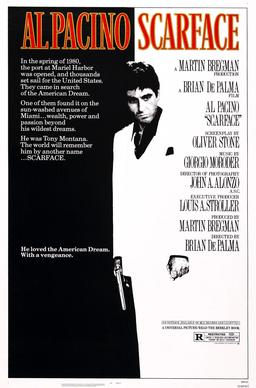
Scarface, directed by Brian De Palma, starring Al Pacino: I probably only watched Scarface once before, but so much is so memorable and our culture refers to it so often in so many ways it felt very familiar. I watched it because commentaries about Blow Out got me interested in more De Palma.
I can see why some would love and others would think less of the movie. The violence and cursing could divide, but I’m talking about more substance. I remembered the movie as being Shakespearean, about the rise and fall of a modern-day king, something like Richard III.
Pacino was incredible in that if I didn’t see someone play a role that way, I wouldn’t have believed it could be done. On the other hand, something seemed missing from the character. I couldn’t imagine a background that could lead to someone being that way. Michelle Pfeifer’s character seemed more interesting to try to understand but her role was much smaller, or Pacino’s mother.
Is it a cautionary tale? If it’s supposed to be about people, Tony Montana seemed too removed from regular humanity, so I didn’t feel I learned about myself or anyone I knew. For it to be about society makes more sense. I can see Montana being the personification of American culture, or parts of it.
In reading about it after watching, I kept seeing how hip hop culture refers to it and values it. I see the appeal with the guns, bravado, drugs, and high life, but that appeal is strictly superficial. To aggrandize the movie misses its point. I hope I don’t sound patronizing, but is there also a voice setting straight the people who misunderstand it?
Introduction to Aristotle’s Ethics: How to Lead a Good Life, from Hillsdale College, taught by Larry Arnn: I quoted Aristotle in a recent post, Aristotle’s Nicomachean Ethics and living more sustainably in a culture that rewards polluting and depleting, which came from the readings in this course.
I started that post with some relevant background: “I’ve been reading Aristotle’s Nicomachean Ethics as part of the online course at Hillsdale College. I should say rereading, since I read it in college as part of Columbia’s Core Curriculum, but that was the late 1980s. As long ago as the 80s were, it was recent compared to when Aristotle wrote them. I should also say reading selections from it, not the whole book.”
I’m glad to reread a work of such historical value and influence. I’m almost shocked at how much day-to-day life refers to it, from modern thinkers and writers to older ones. CS Lewis’s book and plenty from Hillsdale are steeped in it, as is plenty of leadership and self-improvement literature, whether intentionally or not, knowingly or not.
Still, it’s hard to read in a way that reminds me in physics how we learn the lessons of Newton and Maxwell, but we didn’t read them in the original in school. We’ve learned to express what they expressed more clearly and simply. There’s plenty of value in reading Principia, but you don’t need to to practice physics. That said, several professors told me they read it. I suspect more biologists read The Origin of Species and The Descent of Man, since those works are easier to understand and the difference between Darwin’s writing and modern writing in biology is smaller than between Newton’s and today’s physics.
If the goal is to live more ethically, I don’t think Aristotle’s writing is the best for someone today, though that point is greatly overshadowed by Aristotle’s influence.
Another point: having learned and written so much in my upcoming book on how material conditions led to what we call civilization but dominated by dominance hierarchy and competition over resources, I see Aristotle’s world as less universal than I think most readers. He lived in an imperialist society, which he seemed to see as eternal, for example that man was created for cities. I see limitations to that view. People outside civilization weren’t simple-minded or what we mean when we say barbarian. They lived in different material conditions so differed in many ways, including some values and ethics.
The result is that his ethics depend more on his situation than I think most people acknowledge or accept. I’m not taking away from the historical value of the work, but I suspect that not all he wrote would apply to them or us and we could learn from them to our benefit.
This Post Has 0 Comments