Podcast


833: Aaron Blaise: A Master Disney Director and Animator on Self Expression, Leadership, and Nature

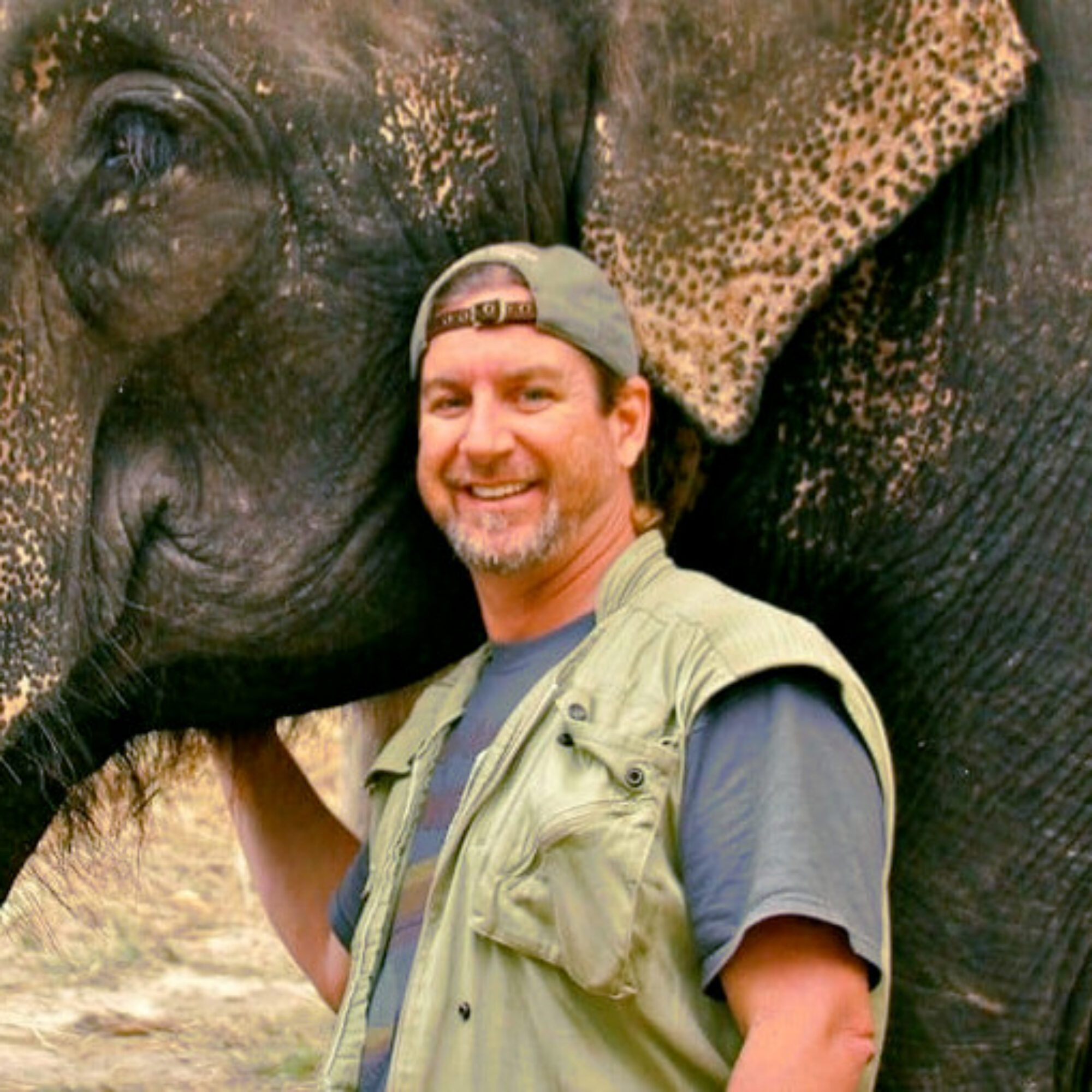
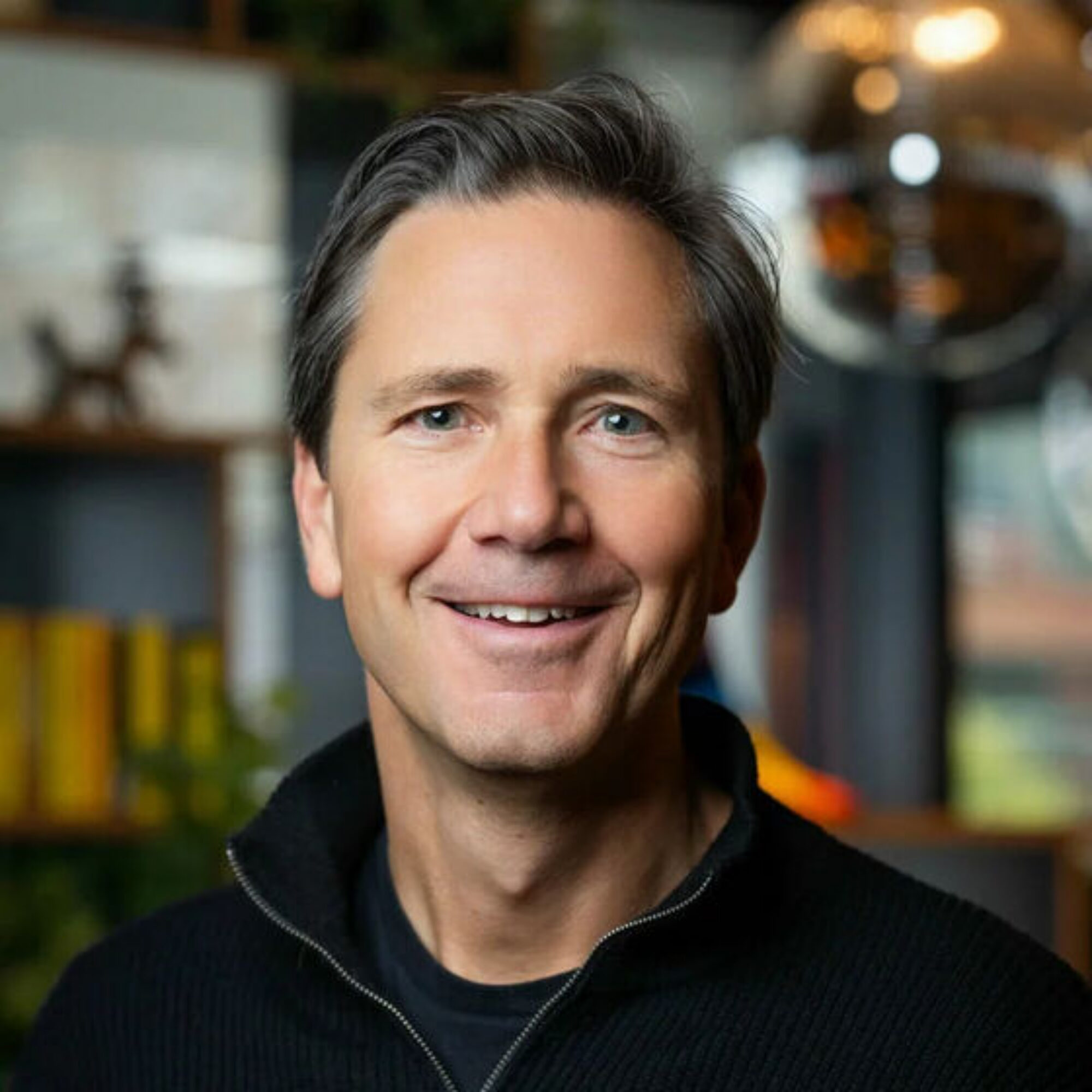
Aaron and I met after I got to see a screening of his recent short animated film Snow Bear. I knew about Aaron's achievements from participating in some of the biggest animated movies of all time. I expected to talk about art, creativity, and expression, topics I love. We did, after first hitting on leadership, especially empathy. He started by sharing his growth as an animator and director at Disney. Soon enough we dove into talking about the overlap between leadership and things he loved about his career: directing, teamwork, self-expression, and empathy. We talked about being generous, what it takes to get the best out of a team, and how it feels when you do. We distinguished leadership from authority and how many people confuse…

0 Comments

832: Robert Fullilove, part 4: Action in the Center of Civil Rights in the 1960s

Dr. Bob worked in the heart of the US Civil Rights movement in the 1960s. He shares stories of his interactions with Stokely Carmichael (later Kwame Ture), John Lewis, and more. In earlier conversations with him, I shared what brought me to him. I had been telling people who acted as if acting on sustainability was a burden. I pointed out that people who acted in the Civil Rights movement took greater risks and undertook more challenging work, risking jail, risking physical injury, going to jail, being beaten, and worse, compared to eating fresh, local fruits and vegetables. I continued that I bet they would consider those experiences high points in their lives, ones they wouldn't take back or trade for anything. Then I saw…

0 Comments

831: Glenn Hubbard: Dean of Columbia Business School on Adam Smith and Leadership

I can't help but call Glenn "Dean Hubbard" since I met him as a student at Columbia Business School. That was 2005, making him one of the guests I've known the longest. I invited him to the podcast after seeing a talk he gave on the 300th birthday of Adam Smith. My recent learning more about Smith and other Enlightenment thinkers led me to find relevance between their thinking about how to live together without hurting each other and how we handle polluting and depleting today. I knew Glenn studied Smith for longer and in more depth than I have so I invited him to share about Smith. We started with his background, having worked with the White House. He then shared about Smith, in…

0 Comments

830: Jo Nemeth, part 2: Nature improves time with loved ones

We jumped in to talking about her Spodek Method commitment. She lives in a suburban area. There's a place near her that borders on bush, which I guess is Australian for undeveloped land. This spot with a bench designed for experiencing nature has been a short walk away from her for a long time, yet until now she never experienced it. Even this time, she put off acting on the commitment. Then she went. You'll hear what it did for her. I had to compare her description to what many people derive from big vacations to Hawaii or Bali, but she spent nothing, didn't have to plan, and didn't pollute or deplete. Her sharing about her experience recreating a wonderful past experience led to her…

0 Comments

829: Adam Galinsky, part 1: Do you love being inspired? He wrote the book on it.

Adam teaches leadership at Columbia Business School, where I learned there were classes in leadership, which changed the direction of my life. Regular listeners know I consider leadership the most important missing element in sustainability. To change the environmental effects we're barreling into, we have to change the causes, which are our behavior, which result from culture. Changing culture requires leadership, not just management. Effective leadership inspires. Adam's latest book is Inspire. You can imagine my enthusiasm to talk with a star professor at one of the world's top institutions (to which I'm deeply connected) teaching leadership on the topic of how to inspire and become an inspirational person and leader. We begin by talking about his background, how he began working in psychology, then moved…

0 Comments

828: Richard Reeves: For Boys and Men: More support and love, less misunderstanding

When people talk about helping men, a lot of people think any and maybe every man might just have latent misogyny, so helping him risks augmenting misogyny. Richard Reeves has researched the situation extensively and for whatever advantages they (we) once had in some areas, still have in some of them, society has been kicking us down, especially in education, income, medicine, and law. A big part of his job is handling preconceptions and objections. In this regard, his work overlaps a lot with sustainability leadership: people's preconceptions override seeing what's happening right in front of them. Listen to him on any other podcast and you hear he has to bend over backward and repeat himself on simple points that I would think should be…

0 Comments

827: Chris Berdik: Scientific American loved his book Clamor (so did I)

Sound pollution is pollution. You know it's been growing for your whole life with little sign of decreasing. I wish I lived in a world with less sound pollution, but given that I do, I'd rather be aware and conscious of it than not know. Ignorance of how much sound was affecting me wasn't blissful. Noise still affected me. Awareness enables me to act. But it's not what you think. More decibels doesn't necessarily mean more annoying. Lower decibels doesn't necessarily mean less. Just think of a whiny drone that sounds like a mosquito. I can hear an electric leaf blower as I'm typing these words and while it may be quieter than a two-stroke engine, it's freaking annoying and I can't tune it out.…

0 Comments

826: Jo Nemeth, part 1: Living without money frees her to do what she loves

Can you imagine living without money? Humans lived without money for 250,000 years, so it's not necessary for life. Money seems like an invention on par with the big ones, like fire, the wheel, writing, and language. Right off the bat, Jo shares how her life before choosing to live without money was stressful, with less freedom or free time. If you thought having more money would give you more freedom, more free time, and less stress, her experiencing the opposite may prompt you to consider the basics of human interaction. What does it mean about our lifestyles, values, and beliefs that having zero of our culture promotes having more of actually giving us what we want? In earning a doctorate in experimental science, maybe…

0 Comments

825: Ryan Mandelbaum, part 2: Rising to the challenge of random acts of love and friendliness

Ryan shares his experience approaching people to share in his joy. The task is not easy anywhere, least of all the Bronx, where he doesn't live but was visiting. Do people in the big city want to hear why some guy is walking around looking at trees and the sky? They wouldn't know he was bird watching until he told them. Do you think they'd welcome him or consider some guy with big binoculars too odd? I don't think I'll spoil anything by giving away that the several conversations he initiated went well because the issue is how they went well and how it led him to feel and act the next day and after. Aren't we all looking for ways to talk about the…

0 Comments

824: Dr. Rob Reed, part 2: Learning to love leading effectively

Rob starts by sharing his experience from leadership coaching in the context of a hospital with people in intensive care as well as their families. Situations are often emotionally intense. Treating just facts doesn't work, or can work against you. It can be "terribly ineffective" (not unique to medicine). He recounts learning to lead through emotional awareness, using social and emotional skills he developed through practice in our coaching. He connects with people meaningfully: patients, their families, the other members of his team, everyone. He talks about not telling people what to do but to listen and act with empathy and compassion, that he's developing through deliberate practice. Maybe the most heartfelt part of our conversation comes at the end where he speaks about his…

0 Comments

823: Mark Mills, part 5: We’ll Never Have an Energy Transition

Reading Mark's recent piece We’ll Never Have an Energy Transition in Manhattan Institute's City Journal prompted me to write my recent post, When they say “transition fuel,” they mean “more polluting and depleting,” not less pollution or depletion. Read them both and you'll see he inspired what I wrote and he wrote a lot more, with more research and editing. I recommend reading it and listening to his podcast episode there, but I'd start with this one. In our conversation, you'll hear more details and back story. The core idea of his piece: Every fuel we’ve ever used, we still use, and more than ever. If you think that by ramping up solar and wind that in any way that new energy availability will decrease our use of…

0 Comments

822: Ryan Mandelbaum, part 1: Wildlife Is Everywhere, Including (especially) NYC (and where you live)

This recording went far beyond my usual preference for recording with guests in person when I can. We met in Prospect Park on one of the peak birding days of the year. Tons of people were out with powerful binoculars and cameras. You'll hear lots of birds chirping in th background and even people who knew Ryan coming up to talk to him. Nature is everywhere. We can enjoy it where we are when we want. You'll pick up how much fun we were having, wonder we were experiencing, and community we were connecting with. Nature makes such experiences happen. Have fun listening to us in nature watching and listening to birds and birders. Keep in mind: the point is only superficially birds and birders,…

0 Comments
When they say “transition fuel,” they mean “more polluting and depleting,” not less pollution or depletion
A6FY1C Brent Delta North Sea

When they say “transition fuel,” they mean “more polluting and depleting,” not less pollution or depletion

If "transition" means we stop using the old fuel then there has never been an energy transition. You can hear more details when I post my next episode with Mark Mills, but it deserves more publicity. I recorded with him again after reading his recent piece We’ll Never Have an Energy Transition, in City Journal from the Manhattan Institute. I find his results compelling, as always. Every fuel we've ever used, we still use, and more than ever. If you think that by ramping up solar and wind that in any way that new energy availability will decrease our use of old energy, you're dreaming. More likely you're lying to yourself. By contrast, I believe we can choose to use an energy source less deliberately…

0 Comments

821: Rob Reed MD, part 1: Learning leadership transforms your life and work

Rob is one of my coaching clients. I asked him to be a guest here since many people perceive leadership and learning it as different than I mean. His work in medicine may not be at the center of sustainability, but I work in leadership, which I apply to sustainability. Listen to this episode to learn what changes to your life you can expect when you take my workshops. Listen to him for the full picture, but I think you'll hear profound and enduring personal growth, professional growth, improved relationships with spouse, children, and coworkers, promotion, security, connecting with your passions and realizing them, and more. It seems an overwhelming majority of people I talk to who haven't explicitly learned leadership associate leadership with the…

0 Comments

820: Andy Samuel CBE: From worry before the workshop to Fun and Community during and after

Are you thinking about acting more but concerned about feeling guilty or judged that you aren't doing enough? If so, you'll love this conversation. I feel honored to work with people with Andy's background and community, which you'll hear about in our conversation. Despite his working with prime ministers and across Europe and the world, and acting in many ways already in his life, he was also worried about feeling judged or guilty. As he learned more about the Workshop, especially listening to Lorna's episodes before and after she took the workshop, he went for it. The nerves he started with faded before the first session ended, as you'll hear. You'll also hear that instead, he ended up fun. Try to count how many times he…

0 Comments

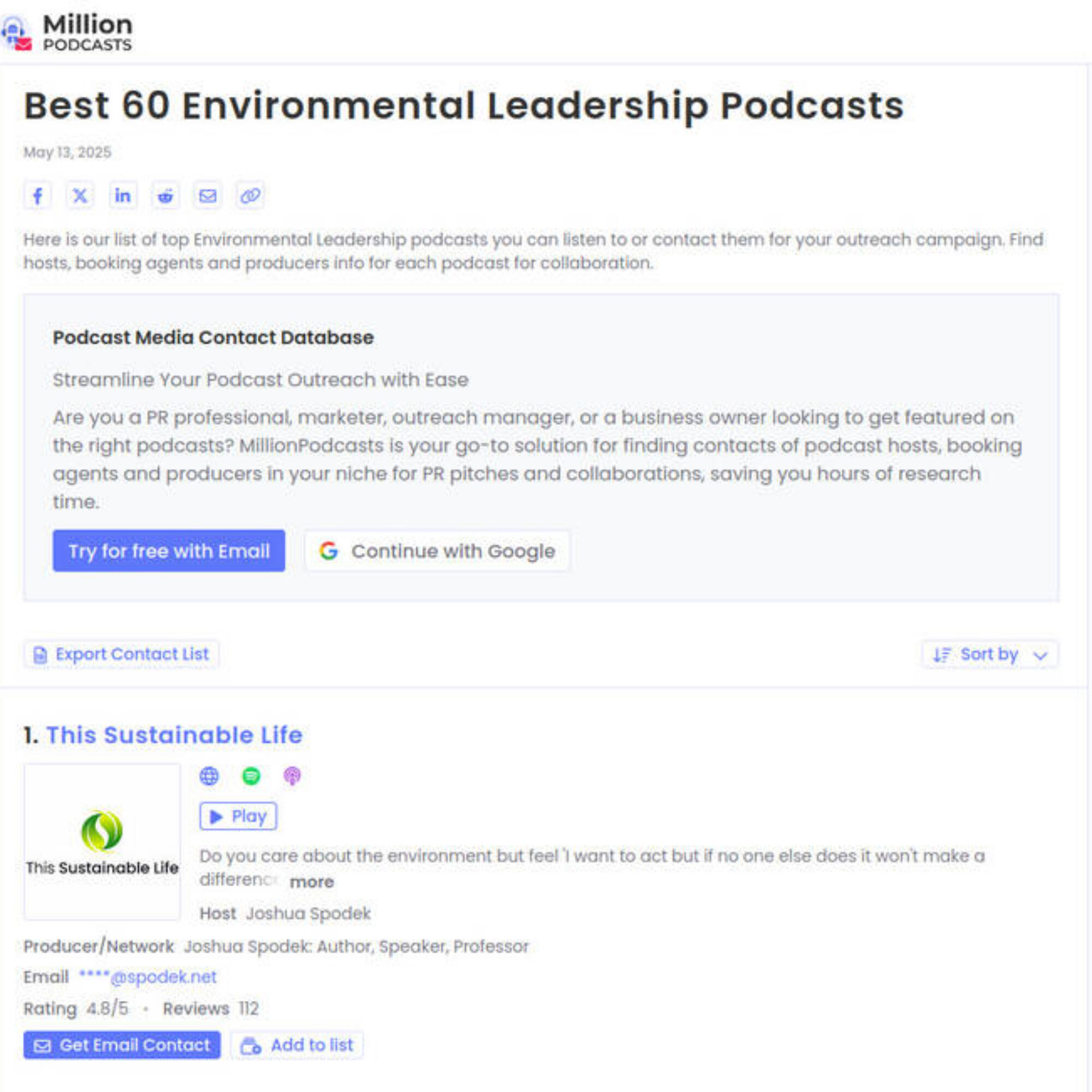
This Sustainable Life ranked #1 Environmental Leadership podcast

This Sustainable Life appeared on the rankings of many lists, including #1 Environmental Leadership podcast, by Million Podcasts. #6 in Sustainability I couldn't fit the header and listing for This Sustainable Life in one screen shot, but This Sustainable Life ranked #6 for Sustainability overall, a bigger group than Environmental Leadership. #6 in Environmental Stewardship This Sustainable Life ranked #6 in Environmental Stewardship. #5 in Sustainable Leadership This Sustainable Life ranked #5 in Sustainable Leadership. #7 in Stewardship This Sustainable Life ranked #7 in Stewardship podcasts. #22 in Earth podcasts This Sustainable Life ranked #22 in Earth podcasts. #27 in Global Warming podcasts This Sustainable Life ranked #27 in Global Warming podcasts. Others too! This Sustainable Life ranked #54 in Environmental podcasts overall #69 in…

0 Comments

819: A Course in Sustainability Leadership: 6: Our Brighter Future

This last recording in the series brings together the opportunities. We can't fix all the world's problems or to go back in time and change history. We can't change that people are already dying by the tens of millions annually from environmental problems, a number projected to increase by factors of ten or more. But we can do the best we can. The best we can is all we ever could do. Even if our culture weren't creating all these environmental problems, conflict would always exist. Restoring lost value to our culture that would restore stewardship would keep us from having to hurt innocent people, contributing to this suffering, just to live. Doing the best we can replaces despair, helplessness, hopelessness, anxiety, and all the…

0 Comments

818: A Course in Sustainability Leadership: 5: The Celebrity Opportunities

Look up "Greatest of All Time" on Wikipedia and you'll find Muhammad Ali. This lesson shares how he went from being just the heavyweight champion of the world to the greatest of all time, transcending sport to becoming a statesman. Business people say "culture eats strategy for breakfast," and our culture, while paying lip service to sustainability, promotes and rewards polluting, depleting behavior. Celebrities play a major role in setting culture. When I tell people, "Taylor Swift is probably in an airplane right now," they know what I mean. No one disputes because even if she isn't flying literally that moment, she flies plenty. Yet billions of people want leadership. They want to follow people living by their values. This lesson shares the potential legacy available…

0 Comments

817: A Course in Sustainability Leadership: 4: The Political Opportunities

Sustainability has become a polarized partisan political issue, despite everyone wanting clean air, land, water, and food. In the US, neither the Democrats nor Republicans have a vision of or plan to sustainability. Both rely on purported solutions that exacerbate and accelerate our current results. Since we reach the general through the specific, I focus on US political opportunities. I believe those outside the US will see clearly how to apply the spirit of this video to their homes. They're like two tired boxers who get stuck toward the end of a fight in an embrace, holding each other up, acting like they're punching but not. On the contrary, they've evolved into a mutually supportive dance, pandering to their bases, pointing at each other, not…

0 Comments

816: A Course in Sustainability Leadership: 3: Business/Entrepreneurial Opportunities

The solution in video 3---the Spodek Method---creates a new, more effective situation than anything I know of in sustainability. People act on their own motivation that they felt before I met them. Instead of me motivating them, it was more like I unleashed and inspired them. That's the difference in acting on intrinsic motivation instead of extrinsic. Every other sustainability effort I'd ever come across convinced, cajoled, coerced, lectured, manipulated. It might get compliance, but squashed motivation. When someone wants to do something but doesn't know how to achieve it, and you know they'll thank you for helping them do it, that's a business opportunity. This video explores the potential to revolutionize leading people and cultures, even global, toward acting more sustainable. It covers just…

0 Comments

815: A Course in Sustainability Leadership: 2: The Solution

Now that we understand our environmental problems as cultural, proposals based in technology, market incentives, and legislation don't address the problem. They generally won't achieve the desired outcome and will often achieve the opposite. I share my path toward discovering a solution that works, now called the Spodek Method. Changing culture requires many things, and leadership is one. The Spodek Method is an experiential leadership technique that prompts people to share and act on their values---that is, based on intrinsic motivations. I describe how it works and what it achieves, in yourself and others. So you don't have to take my word for it, I share the experiences of people who have learned the technique, some renowned. Some took my Workshop, others were guests on…

0 Comments

814: A Course in Sustainability Leadership: 1: The Actual Problem

Do you think our environmental problems are rooted in greenhouse gas levels or emissions? Or biodiversity loss? Or any of what makes the headlines? They are symptoms. They all result from our behavior, which results from our beliefs, stories, role models, images, and what makes up our culture. If we magically fixed all of the environmental conditions making the headlines, but didn't change our culture, we would recreate them. Every time you say, "individual action doesn't matter," blame someone else or BP, or anything that keeps you polluting, depleting, living unsustainably, you contribute to that culture, even if you really wish you weren't. You fund the lobbyists creating the political forces accelerating more polluting and depleting. Only by understanding the actual problem can we avoid…

0 Comments

813: A Course in Sustainability Leadership: Quick Introduction: Welcome to the Sustainability Simplified community

Many people see whatever part of what I do, think that's everything, and conclude I'm just doing some personal action or other form of spitting into the wind. I don't like wasting my time any more than anyone else does, nor do I want to see people continuing to Lower earth's ability to sustain life Destroy others' life, liberty, or property without the consent Deplete from nature to where there is not enough as good in common for others I'm partly insulted that they think I'm wasting my time or that I haven't developed a comprehensive plan that stops all those things that works at every stage, mainly by working on people's existing motivations. It's based on the Spodek Method and other effective leadership techniques.…

0 Comments

812: Robert Fullilove, part 3: Politics, family, race, and sustainability

Our third conversation matches the first two in intrigue and quality. We talk about the things that came up for Dr. Bob that got in the way of his commitment. These issues come up for nearly everyone (implying they aren't personal, but cultural beliefs): politics (including reacting to Trump), family, and race. This conversation was one of my first engaging on race unscripted. It's tempting to see some issues as immediate and conclude we have to address them first. This view misses that unsustainability causes them, including racism, tyranny, and corruption. I'm not saying sustainability alone will solve them, but as long as we live unsustainably, we keep causing them. You'll hear a lot more in the conversation. This conversation exemplifies what our culture needs…

0 Comments

811: Tina Tombstone: A friend I volunteer delivering food to the needy with

Tina is one of the central characters in that group that everyone knows (another is Kevin Fucillo, also a podcast guest). We go back a few years. She was born in the south in 1933, so you can do the math, but you'd never guess. She's at times a firecracker, full of life, ready to handle anyone. She's friendly to all, but ready to police anyone overstepping bounds. She's always caring about the community as a whole and each person in it. She goes out of her way to help people beyond just delivering food. The community wouldn't be the same without her. We talk about volunteering, homelessness, slavery, Africa, the South, and more. She worked at the Lone Star Cafe, which was a famous…

0 Comments

End of content

No more pages to load