Podcast


810: Giora Netzer, part 2: Leadership coaching leads to far more than “just” the C-Suite

In our second conversation, Giora reveals more about his developing as a leader. If you listen for it, you can hear the vision he had for himself and his profession, but also the development he needed to realize it. This podcast is about sustainability leadership. You probably envision a sustainable world, or at least trying with everything you can to help achieve it. Maybe you've adopted my vision and mission. Developing leadership skills and experience as Giora have is essential. We can learn from him. Beyond his leadership skills and experience, his doing the reps earned him credibility and developed integrity, essential elements for effective leadership.

0 Comments

809: Alexander Clapp: Waste Wars, how we profit off polluting the world claiming to help them

I found Alex when listeners sent me an opinion piece in the New York Times he wrote, The Story You’ve Been Told About Recycling Is a Lie. Getting to where I take years to fill a load of trash means I've researched waste a lot, so based on the headline, I thought, "yeah, I've read this story before. I'll skim it so I can say I read it and then move on to important things." Instead, I was fascinated and found plenty new. I had to read his book, Waste Wars: The Wild Afterlife of Your Trash, which came out last month. I can't recommend it enough. Whatever you know about waste and pollution, the book shares more and it's relevant to your life if…

0 Comments

808: Silvia Bellezza: Sustainable Marketing at Columbia Business School

Silvia created the course Sustainable Marketing at Columbia. It's an elective and has become the class at the business school with the most students from other schools at the university. In looking for a guest speaker on sustainable consumerism, she found the New York Times profile on me. She decided to invite me before realizing I'd gotten my MBA where she teaches. Only when we spoke did she learn I focus beyond just living sustainably to creating a leadership program with a mission to change global culture. When I spoke to hear class, I spoke about changing culture, which in some ways conflicted with the marketing goal of selling more products. It also resonated with many of her students' interests in creating a more sustainable…

0 Comments

807: Giora Netzer MD MSCE, part 1: A leader I coached to the C-suite

Are you reaching your potential, professionally or personally? Have you wondered what would happen if you got coaching? Giora did. A friend of his who was a client of mine recommended he get coaching from me. We worked together for several years. People who think my podcast is primarily about sustainability may think it's off-topic, but those who know I focus primarily on leadership will see this conversation is exactly what I focus on and I think is most necessary and lacking from sustainability. Recently he told me one of the most heartwarming things I'd ever heard. Despite that our coaching focused on his professional life, he told me that coaching improved his relationship with his daughter in ways he couldn't have imagined. That improvement…

0 Comments

806: Robert Fullilove, part 2: the spirit of the Civil Rights movement

Dr. Bob shares more about his experience acting during the 1960s, as well as today on helping prisoners and more. I hope you can hear the electricity I felt listening. Two kinds of electricity: one for the stories, another for how they resonated with the community, teamwork, and passion I see in the team I'm working with creating sustainability leadership workshops to change culture. He describes how they saw abolitionism as a role model movement. I see how they and abolitionism are role model movements for us. We did the Spodek Method. Since he works on engaging people to create mass change, you'll hear him both responding and evaluating the technique.

0 Comments

805: Osprey Orielle Lake: Founder and Executive Director of the Women’s Earth and Climate Action Network (WECAN)

I was pleasantly surprised in reading Osprey's book The Story is in Our Bones that she also sees the need to change culture, including elements like our stories, role models, images, and beliefs. Focusing on cultural elements doesn't mean ignoring or leaving out measurable things like greenhouse gas emissions or plastic waste. On the contrary, focusing on those things without addressing our stories tends to result in people complying at best, more often feeling despair at the lack of vision. Regarding role models, she also looks to sustainable indigenous cultures, and not to give solar panels or western-style schools to, as if we know better, but to learn from with humility. She uses different language, which I tried to learn from. Osprey's book: The Story…

0 Comments

804: Robert Fullilove EdD, part 1: Lessons from America’s Civil Rights era and effective action today

People call my behavior extreme, though I'm just acting in service of others. To be more precise, I'm acting in love for others. When people suggest what I'm doing is too hard, I sometimes remark how during America's Civil Rights era, some people went to jail for different people's freedom. Nobody looks forward to going to jail, yet people did. Their actions make mine look easy and fun. Still, I suggest, I bet they consider those actions of going to jail or even being attacked by dogs or beaten some of the best events of their lives. I doubt they regret it. I wanted to confirm my beliefs. I didn't go out of my way, but I looked out for people who had marched, protested,…

0 Comments

803: Nick Loris, part 3: Liberty, freedom, sustainability, and Rock Creek Park

You probably came to hear Nick's experience exploring Rock Creek Park in Washington DC based on his childhood experiences in nature with his father. Since we recorded shortly after my visit to DC, where I missed Nick but visited his friends and colleagues, and podcast guests, Jack Spencer and Travis Fisher, we talked about them. I mentioned visiting Heritage and Cato. Then we spoke about differences between conservatism and classical liberalism, as well as their different approaches to energy and the environment. Then we spoke about his experiences recreating the awe and wonder he recalled from his childhood. I predict you'll find the experience heartwarming. We inadvertently ended on a cliffhanger: if his experience improved his life while leading to consuming less and requiring less…

0 Comments

802: Lorraine Smith, part 2: The hidden, dirty secrets of corporate “sustainability” work

I start by sharing how much value I get from participating in Lorraine's weekly coaching group. Then she shares her path to coaching on sustainability. She worked in the heart of the corporate sustainability accounting and reporting. She saw it mostly did nothing and often exacerbated the situations it purported to solve. She has created a practice that exposes and helps fix these problems. I ended up coaching her back in asking her to clarify what a potential client would see in her work to start working with her. As I wrote before, Lorraine understands our environmental situation more accurately than nearly anyone. We have to change our culture. Transforming leaders of industry is necessary if we expect to change the system. Lorraine's home page

0 Comments

801: Travis Fisher, part 3: Restoring time with family

Meaningful interactions don't have to be complex. Travis simply shares his experiences in nature in childhood and finds ways to recreate the emotional experience today. To me the most meaningful part is the result: he expects to spend more time with his children (and dog) doing something he's meant to do a long time. It doesn't cost money. It sounds like it will give him more time. The cleaning part, we'll see how it goes, though I predict the activation that comes from that part of it will affect him. He works in policy so he describes how he sees personal change leading to systemic change more than trying to start with something top-down alone, like working from government or coercion. As I understand, he…

0 Comments

800: Lorna Davis, part 4: After the Sustainability Leadership Workshop

If you haven't listened to my conversation with Lorna before taking the sustainability leadership workshop, I recommend listening to it first: 794: Lorna Davis, part 3: Before taking the sustainability leadership workshop. In this episode, Lorna shares her experiences, reactions, and thoughts from taking the workshop. They're all multifaceted. They come from her classmates, leading them in the exercises, being led by them in the exercises, curiosity, and more. She shares vulnerabilities as openly as her discoveries and new commitments. I predict you'll find her engaging and captivating. Longtime listeners have heard me talk about the workshop, maybe Evelyn, but you might think consider me biased as the person who developed it and Evelyn as someone else leading it. Check out Lorna's experiences. If interested…

0 Comments

799: Josh Bandoch, part 2: Leadership: Humans feel first, then reason

Josh and I talked about a few aspects of his acting on his commitment from the Spodek Method. For one thing, since he and I both study, practice, and teach leadership, we talked about the technique, how it works, how it impacted him. Since leadership involves emotion, empathy, and related social and emotional skills, we talked about the emotional journey. If you ever want to infuriate me, maybe the most effective way is to get me talking about environmentalists who talk only science and policy, just what they consider the facts that make them right. They try to browbeat people into doing what they don't do themselves, as if integrity, credibility, and personal, hands-on, practical experience didn't matter for leading others. They're essential. Oops, I…

0 Comments

798: Nick Romeo: The Alternative: How to Build a Just Economy

Regular listeners and readers of my podcast and blog know I grew up with parents who helped form a grocery buying group which folded into a food co-op. Different co-ops work differently, but the general idea is that shoppers co-own the business. There's less motivation to stock doof and more to source local, fresh produce and keep money in the community. While we still shopped at supermarkets, we favored the co-op for having greater selection of produce that was fresher and tasted better. It was such a part of my childhood that I make sure to belong to a co-op today. Many people today see co-ops as luxuries or privileged, which seems bizarre to me since they did it because they didn't have much time…

0 Comments

797: Alden Wicker, part 2: Try and Try Again: E-biking in Vermont

Many people think sustainability requires fixing everything or else we'll collapse. The Spodek Method creates a mindset shift followed by continual improvement, not, as they might hope, a mindset shift followed by perfection. Alden has had her electronic bike in Vermont for some time but hasn't ridden it. She's used doing the Spodek Method as her excuse to ride it, but it's taken time. This time she used it and you'll hear both how she got it working as well as the challenges. As tends to happen with acting on sustainability, even the challenges end up rewarding.

0 Comments

796: Jack Spencer, part 3: Authenticity on Acting on Sustainability (also Project 2025)

We start by talking about the internal challenges Jack felt about acting to do something he wouldn't have otherwise. He cares about the environment and lives accordingly. Still, he wouldn't have done what he committed to when we spoke. Does that mean what we would do is inauthentic? Then we talk about nuclear and other policy issues. Heritage's Project 2025 came up so he shared some back story the news doesn't cover about it. Then we return to acting. On my suggestion, he invites me to visit and fish. I see this call as the beginning of meaningful collaboration and friendship based on a different approach to sustainability than I've seen in mainstream environmentalism.

0 Comments

795: Lorraine Smith, part 1: Leaving mainstream “sustainability” to pursue actual sustainability

Lorraine is one of the few people I know who saw mainstream sustainability efforts for what they are: ineffective and often counterproductive but self-congratulatory. I call most of them "stepping on the gas, thinking it's the brake, wanting congratulations." Unlike most others, once she saw their counterproductivity, if not outright lies, she left. She works to promote an "economy in service of life." I think it's easy to see that our current global economy is not serving life. The amount of life on earth is decreasing. Lorraine shares her history of ramping up on mainstream sustainability, her disillusionment, her acting by her values to exit, and her finding what to do. We also commiserate on the challenges we face in living by different cultures than…

0 Comments

794: Lorna Davis, part 3: Before taking the sustainability leadership workshop

Lorna first appeared on this podcast in 2021. We became friends and remained so, though we challenge each other, as you'll hear in this conversation. We don't try to. Just things about the other annoy us. But how much we respect and learn from each other outshines that annoyance. Lorna knew about the Spodek Method and workshops for years. I don't know why she didn't join one until now, but something clicked and she decided to. I think meeting Evelyn led her to see the technique appealed to people like her and unlike me; that acting as much as I do on sustainability didn't result from a quirk of mine. In this episode, she shares her views, concerns, and thoughts about the workshop and how…

0 Comments

793: Nick Loris, part 1.5: Heartwarming nature, family, and fatherhood

People I talk to on the political left who care about the environment see people on the political right as opponents to defeat. When I share that I talk to people from Heritage Foundation, where Nick worked, they sound skeptical at best, more commonly incredulous and fearful. In this episode, you'll hear heartwarming stories of Nick's childhood with his father, then Nick today finding a way to manifest what he experienced then. You'll also hear he just got married, so I predict the commitment he made in this episode helps contribute to his growing family life. I'm starting to find it hard to believe people see others as opponents regarding the environment and sustainability. Treating them that way makes things adversarial. I wish they'd stop.…

0 Comments

792: Travis Fisher, part 2: The spirit that America was founded on, Cato, and sustainability

We recorded this conversation just after the election. We talked about it, especially Travis's and the Cato Institute's views. One of his main views is that the US puts too much executive authority in the president. I'm also We shared our concerns about the Inflation Reduction Act coming from different standpoints, but agreeing with each other. Our main conversation was about approaching sustainability from a view of freedom, not coercion or imposing values. I share my view that If you think living more sustainably makes people’s lives worse, you have to become a better dictator. If you think living more sustainably improves people’s lives, you learn to become a better marketer, entrepreneur, or leader. Travis agrees on the problems with top-down coercion and we took…

0 Comments

791: Sustainability Leadership Is a Performance Art

I'm following up my recent solo post, 790: Talking to a guy injecting on the sidewalk, with another extemporaneous one. This one is also with a former podcast guest and fellow teacher of our sustainability leadership workshop, Evelyn Wallace. This episode gives an inside view of how I develop ideas in our entrepreneurial team. In particular, I share a few insights into what I offer in the workshops. I've long known to avoid facts, numbers, and lecture. I avoid convincing, cajoling, and coercing, which I call bludgeoning. Most sustainability work I know of go in those directions. I've long seen leadership as a performance art. We learn to practice arts through practicing the basics, which is why my books Leadership Step by Step and Initiative…

0 Comments

790: Talking to a guy injecting on the sidewalk

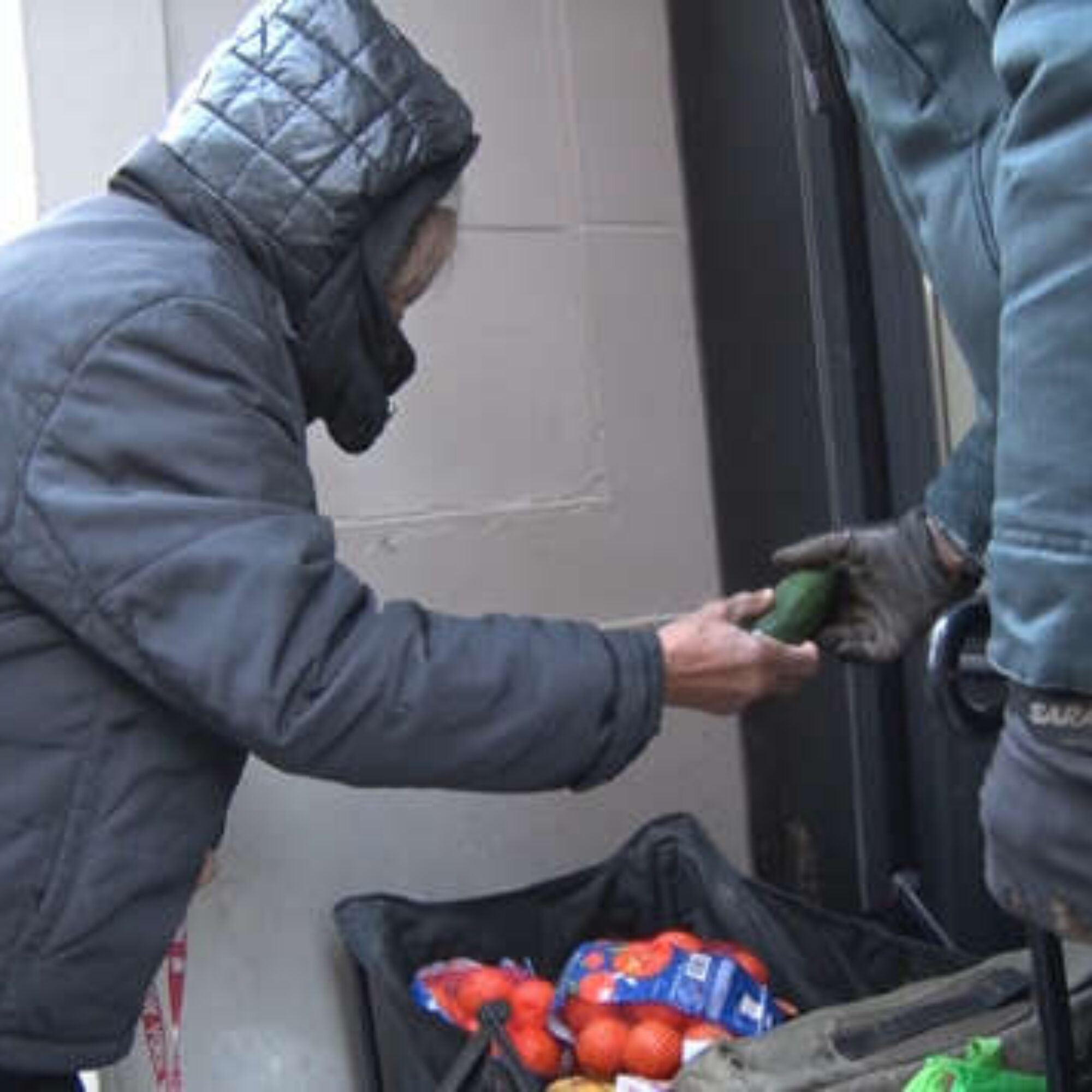
On a beautiful sunny Saturday, 9:50am, I was walking to Washington Square Park to charge my battery and talk at 10am to my friend Dan McPherson (he's been on the podcast, where he shared about his heart attack at age 46 the week before we recorded). I saw the guy in the picture injecting. I asked if I could take his picture and a brief conversation ensued. Instead of my planned conversation with Dan, we recorded my experience and thoughts about the conversation with the guy injecting on the sidewalk. I haven't edited anything. I recorded with just my headphone microphone so sorry about the audio quality, but I think you'll be able to understand us fine. I also didn't prepare. I'm not speaking from…

0 Comments

789: Solomon Schmidt: Author of Legal Gladiator, on Alan Dershowitz

As a podcast host, I get pitched a lot of authors, books, and more. Most aren't relevant or are counterproductive to sustainability. I received an email promoting the author of Legal Gladiator, a biography of Alan Dershowitz. I knew the name from the news, but didn't know more than the name, maybe a whiff of his being controversial. I looked up the book and author and found both fascinating. I scheduled talking to Solomon unrecorded to meet him and see if the connection would fit. I like bringing leaders from any field to sustainability since the field nearly completely lacks it. Solomon and Alan both seem like leaders, so I invited him. Quoting from the book's page: Praise for Solomon Schmidt:“You are a very talented…

0 Comments

788: Susan Liebell: John Locke, Stewardship, and the US Constitution

I quote Susan in my book, Sustainability Simplified. In it you'll see how much John Locke influenced my long-term vision for the US to understand and solve our environmental problems. Learning about the Thirteenth Amendment, which (mostly) banned slavery, and its improbable path to passage and ratification led me to think about solving our environmental problems similarly. I learned that many people working to abolish slavery worked hard when drafting the US Constitution to make it able to support abolitionism and to disallow property in man. Slaveholders opposed them, so they accepted compromises. Still, they put enough into the Constitution to enable weakening the institution enough to eventually end it. I wondered if sustainability might have similar precedent, like some law or phrasing of the…

0 Comments

787: Travis Fisher, part 1: A nonpartisan, libertarian view on the environment from the Cato Institute

I've been curious in what ways libertarian views on the environment and sustainability differ from conservative views. Travis worked at the Heritage Foundation, which is more conservative, and now works at the Cato Institute, which is more libertarian. Since I haven't spoken to many libertarians directly, I'm interested in this conversation to learn, so it's a conversation, not a debate. Early in our conversation, he describes some of their differences and similarities, and why he chose Cato. He shares some of his training and background that led him to his views. Then we talked about a few issues: the Inflation Reduction Act, regulation, how government funding of many programs results in industries growing without being profitable from its customers. We look at several moral hazards,…

0 Comments

786: Jan Mulder, part 2: The joy of finding and leading community

Usually when someone does their commitment with the Spodek Method, they enjoy it. Nearly always they do more than they commit to. Sometimes someone really enjoys it. Jan went to town on his commitment. You might wonder if there's any appeal to picking up litter. Is it worth the effort? Who cares, anyway? After all, more people litter than pick it up, as anyone can tell by how much litter there is and how much it's growing. Yet the pattern I've discovered keeps happening. On the other side of working on sustainability is always community. I can't prove it always happens, but so far it does. In Jan's case, he found community, in particular, people who had long wanted to act. They were just waiting…

0 Comments

End of content

No more pages to load