Podcast


784: Serving in Uniform on September 11, 2024

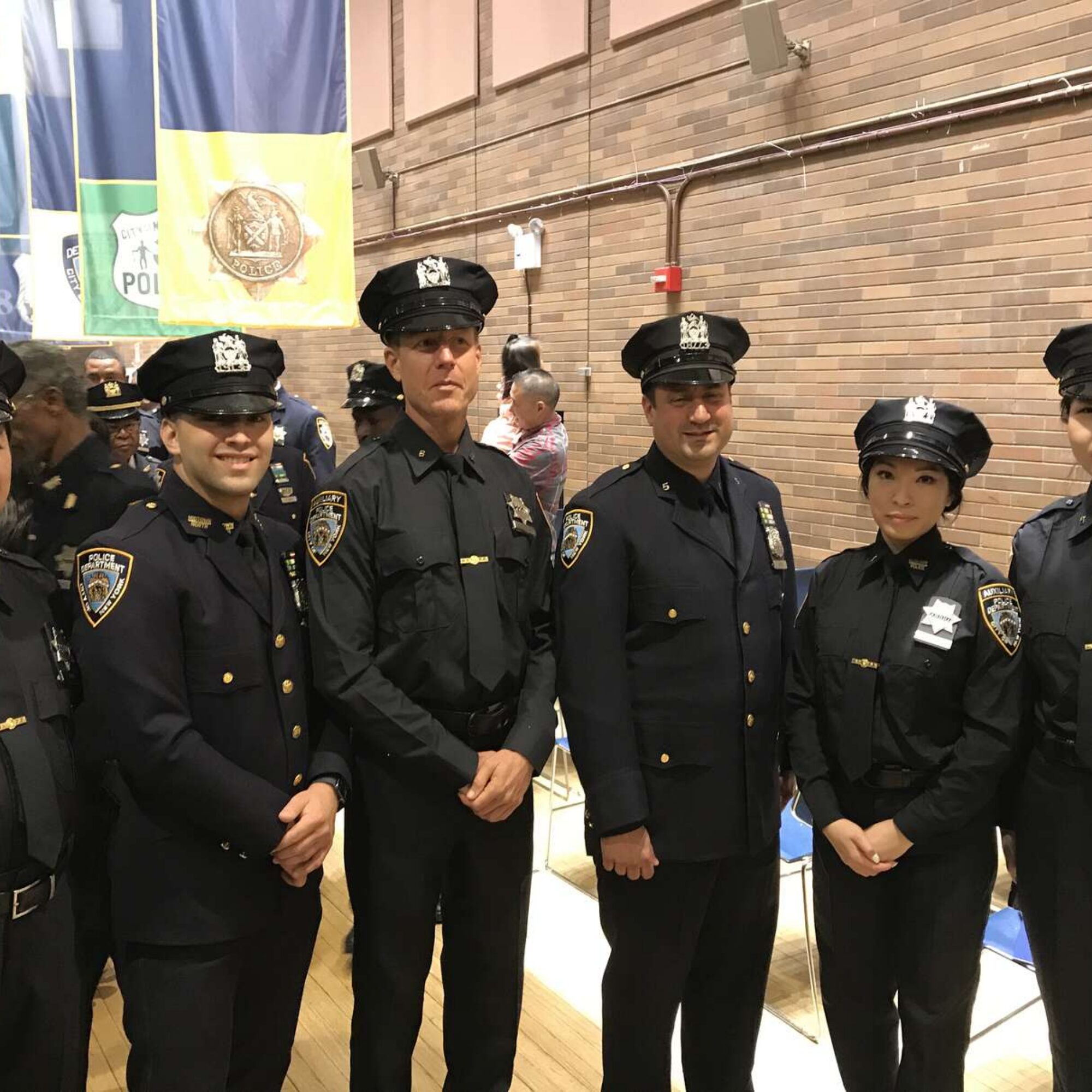
If you haven't listened to episode 781: My New Major Life Volunteering Community Project, four years in the making, listen to it first for context. That episode describes my journey to start volunteering as an auxiliary police officer and the background to it. Depending on how well you know me or not, you may find the activity as surprising as I do, though I seem to be a minority in that regard. Everyone else congratulates me. I remark on how different this part of my identity seems compared to the younger me who protested America's involvement in Central America, disrupted graduation to protest Apartheid, and knew friends who chose to be arrested at such protests. This episode recounts one of my first activities as an…

0 Comments

783: Jan Mulder, part 1: Listening to every episode of this podcast, starting from episode 000

Jan is a listener of this podcast who contacted me about how it changed his life. He is listening to each episode, starting from the beginning. I invited him to be a guest and he accepted. We've also crossed paths through working with podcast guest Dave Gardner, and his work in Growthbusters and running for President of the United States. Jan is Dutch, living in Germany, so can't vote in the US, but acts on sustainability locally. He told me he found my podcast made him feel empowered to act in a world where most people seem resigned not to act. I invited him to share more and to experience the Spodek Method. Beyond recording this episode, he joined the sustainability leadership workshop. To other…

0 Comments

782: Jane Muncke PhD MSc: Toxins in your food from plastic packaging. You’d rather know.

Toxic chemicals leach from food packaging into your food. Some of these chemicals disrupt your hormones. Some cause cancer. Some affect your children more. Some disperse into the environment and harm wildlife. For 300,000 years, humans lived without plastic. We created this system, maybe thinking only of the effects we wanted, imagining these toxic effects wouldn't happen. Maybe we didn't imagine they could happen. We don't have to create these materials or use them. We are creating more all the time. There's just so much oil, it's so cheap, and there's nothing stopping producers from creating and selling them. Nearly everyone agrees a role of government is to protect you from my taking or destroying your life, liberty, and property, yet businesses and government gain…

0 Comments

How do people have so much more time for social media than cooking?

When I say I spend less time cooking than I used to now that I eat mostly from fresh fruits and vegetables, and legumes and grains from bulk, people generally say they don't have time to cook. It's as if they didn't hear that I'm spending less time than I used to, therefore likely less time than they do. They just hear what they expected to. The average American spends five hours per day on social media. I spend about zero on social media and, if I'm in a hurry, less than an hour or two cooking per day. I have never heard anyone react to the greater time people spend on social media by saying they don't have time for social media. How can…

0 Comments

781: My New Major Life Volunteering Community Project, four years in the making

I started a new project volunteering in my community that is also a big life change I wouldn't believe I'm doing except that I am. In a sense I started the project over four years ago and it's only seeing the light of day now. Sorry I'm writing little about and the episode is long, but for now I wanted only those interested to learn in so you have to listen all the way through to hear the full scope and details. The episode I quoted in this one: 366: The Cops, Jocko Willink, and Joe Rogan Another episode I mentioned: 506: I lost $10 million on September 11, 2001. Here is what I learned from those who sacrificed and served.

0 Comments

780: Jack Spencer, part 2: Policy and the Individual Choosing

Jack shares his love for nature and passion to care for it, how central it is to his life, how much of his time and focus he devotes to it. He shares his principles of individual choice over top-down regulation. He especially opposes government subsidy for squashing innovation, including industries he prefers, like nuclear. He's not anti-government. Listen to the episode for his views in more detail. He is as sincere as they come and has thought the issues through. I couldn't help wonder how many political conservatives and libertarians care deeply about the environment yet get called "not caring." If they care but approach it differently, if I said they didn't care, it would drop my credibility in their view. I valued this conversation…

0 Comments

779: Nick Loris, part 2: Freedom to Explore, Freedom to Choose

Nick and I talk about freedom, liberty, personal action and, however paradoxical to most people, how important personal behavior is in changing systems. Then we talk about markets, regulation, and democracy and how they interact with community norms. Looking at the words markets, regulation, and democracy, they may look academic or abstract, but I think you'll find the conversation fun because it's personal. We don't talk theory. We're talking about how we live and work. A core of our conversation is where a society or state draws a line between things that benefit some people but hurt others. Some things may make messes but everyone agrees should be allowed, like exhaling or pooping. Others everyone agrees should be illegal, like putting poison in someone's food.…

0 Comments

778: The Entrepreneurial Strategy to Restore Sustainability Globally Without Waiting for Governments and Corporations

This episode follows up the last one, on how you can learn sustainability leadership through our workshops, so you can practice sustainability joyfully. You can teach others to, and teach others to teach others. If the process only led to a few people changing, or even many, it wouldn't be worth pursuing. Unlike almost any sustainability work, it can lead to global cultural change and a joyful, rewarding path to it. It doesn't require sacrifice or deprivation. It may look like it from our current culture, the culture that's lowering Earth's ability to sustain life, increasing isolation, and decreasing health, safety, and security globally, despite our reaching such pinnacles of scientific and technological achievement. Hear in this episode how we can change the world by…

0 Comments

777: How the Spodek Method Workshop Does What Other Sustainability Work Misses

If you've listened to a lot of this podcast, you've heard me walk many guests through sharing their values on sustainability and acting on them. If you haven't, you should, in my opinion. Why do they enjoy what most people consider deprivation and sacrifice? You can learn to do it. A growing team of us teach workshops in sustainability leadership. One is coming up soon, September 10, 2024. This episode shares what it's about, experiences of people who have done it, and how you can sign up. You can become a leader in a movement to live joyfully sustainably, to change global culture at the last minute. Can you imagine helping restore sustainability? You can. Listen to this episode, then contact me to learn more…

0 Comments

776: Chuck Marohn, part 1: Strong Towns and Sustainability Leadership

I'd heard of Strong Towns for years, mainly through guest Jason Slaughter's Not Just Bikes video series, and finally joined the community by taking a couple of their courses. I can't recommend them enough. Chuck Marohn founded that community. He found and publicized several of their core discoveries. Some include: North American cities grow based on a Ponzi scheme, the combination of a street and a road fails at both and wrecks everything it touches, cores of cities usually make the most economic sense, and outlying areas usually sap money and vitality. I invited Chuck because of the overlap between city planning and sustainability. Over half of humans live in cities. Many can't avoid following the patterns of where to live, traffic, where to eat…

0 Comments

775: Bruce Alexander, part 4: The Spodek Method clicks at last

You've probably listened to Bruce's past three episodes, so you probably know he wants a path to exist that leads people to want to live more sustainably and spread that change to others. It would mean them overcoming their addictions. By them, I mean all of us, since if we order takeout, fly, and drive big cars, we're in the group that has to change. His experience with addicts tells him it's hard, maybe impossible. On the other hand, while people may be conflicted and may have suppressed many of our emotions around the environment, we love nature. In this episode, we hear the Spodek Method finally clicking with Bruce. One interaction with it isn't supposed to change the world itself. It creates a mindset…

0 Comments

774: Alden Wicker, part 1.5: Foraging Is Fun

I ask guests to do episodes 1.5 when they tell me they couldn't do their Spodek Method commitment or keep postponing. Sometimes they say they don't want to share that they didn't do it. But experience has shown that talking about that vulnerability by sharing that they didn't do it overcomes it. Then redoing the Spodek Method usually leads to it working better than expected. The goal isn't perfection, after all. It's to create experiences that prompt emotions they like. Alden wasn't doing her ebike commitment, as you'll hear in this episode. She also shares some of her priorities in the rest of life. Many people think they don't have time for sustainability, but that view is a red herring. The Spodek Method acts on…

0 Comments

773: Frederic Laloux, part 1: His program, “The Week,” creates space for conversations on the environment

Frederic describes his program The Week in our conversation. I did it last year, invited by a friend (whom I misname in our conversation, sorry) and recognized him. Podcast guest and mutual friend Lorna Davis had introduced us before he had started creating The Week. The Week is one of the few programs on sustainability approaching it as a leadership effort, not management or lecture. Anyone can do it. It's a series of videos you watch with a group, then engage in discussion about it. It's different than the Spodek Method, but shares many aspects. I could describe it more here, but the best way to learn is to hear his description in our conversation, then sign up for it. Frederic's program The Week His…

0 Comments

772: Bruce Alexander, part 3: Advanced Spodek Method

I find this series of conversations with Bruce to be ending up excellent examples to learn advanced Spodek Method from. I think they're also engaging. I certainly enjoyed the conversations with Bruce. You can tell he believes in the vision and isn't trying to answer askew, or maybe I'm not picking up on cues, but the interaction is both not clicking but not falling apart either. If you're learning the Spodek Method from the How-To Guide or a workshop, or finished either, I think you can learn a lot from these conversations. Also, from Bruce, a lot about addiction, science, and applying them to modern life.

0 Comments

771: Jack Spencer, part 1: The Heritage Foundation, limited government, free markets and the environment

Regular readers of my blog know I took a course, Conservatism 101, from the Leadership Institute, which led me to read conservative literature I hadn't before: Edmund Burke, Frederic Bastiat, Friedrich Hayek, Russell Kirk, and more. This reading came after I started reading and watching Milton Friedman, Julian Simon, Ayn Rand, and current followers of their work like Marian Tupy, Gale Pooley, and Alex Epstein. I had blogged about them after reading their works too. I began seeing relevance of their work to sustainability that I don't think even their fans appreciate. At a social event, I met a woman who works at the Cato Institute. I told her of what I was learning and invited her to talk about it. She said sustainability and…

0 Comments

770: Nick Loris, part 1: A limited government free market approach to our environmental problems

Regular readers of my blog know I took a course, Conservatism 101, from the Leadership Institute, which led me to read conservative literature I hadn't before: Edmund Burke, Frederic Bastiat, Friedrich Hayek, Russell Kirk, and more. This reading came after I started reading and watching Milton Friedman, Julian Simon, Ayn Rand, and current followers of their work like Marian Tupy, Gale Pooley, and Alex Epstein. I had blogged about them after reading their works too. I began seeing relevance of their work to sustainability that I don't think even their fans appreciate. At a social event, I met a woman who works at the Cato Institute. I told her of what I was learning and invited her to talk about it. She said sustainability and…

0 Comments

769: Kevin Fucillo, part 1: An inside view of our community fridge and its volunteers

Kevin and I talk about volunteering at the Chelsea Community Fridge, how it formed, how it's evolved, and our roles. You'll hear he's involved with it more. I was curious to learn about parts I don't know about. It's outdoors so it operates 24/7, 365 days a year. New York City has no lack of hungry people, nor places with extra food. It's insane to see how much we waste, except that nearly every American wastes food. We can reduce that waste. I hope hearing our conversation inspires you to volunteer more, waste food less, and appreciate what food you have. Volunteering for me replaces time in front of screens, so it saves time and money. It connects me with my neighbors, including the hungry…

0 Comments

768: Trish and Evelyn, part 2: The birth of sustainability awards

Trish and Evelyn took the workshop, and neither seriously acted on sustainability before it, so one thing to listen for in this conversation is what people who look at personally living more sustainably sound like. I think it's safe to say we have fun. Partly we express exasperation at the depravity of our polluting and depleting culture. We also share the experience of our eyes opening to those things. Trish, for example, shares how she doesn't want to take cruises, despite anticipating enjoying them and her friends not seeing their pollution. I share how our culture turned preserving fruit from a way to conserve to a way to waste. We also talk about our vision to create sustainability awards. A few of them exist, often…

0 Comments

767: Andrew Bennett, part 2: Behind the scenes with a New York City chef

If you like food, you'll love this episode. I shared before how unbelievably delicious Andrew's food was, even if it were at a top restaurant. But he works at a hospital, so it was healthy too. I almost don't go to restaurants any more since they just pile salt, sugar, and fat onto everything. I don't need a stick of butter in every dish. I also tasted his food at a chef competition. He's shared his background training at groundbreaking top restaurants. I couldn't help indulge in asking him about behind the scenes in top kitchens and he shared. We talked about his artistry, how he learned, and teamwork. He also shared about his commitment, which led to talking about leadership, changing culture, intrinsic emotion,…

0 Comments

766: Chip Conley, part 1: Learning to Love Midlife

I'd heard about Chip long ago but only met him recently at a launch event for his book Learning to Love Midlife. It resonated since at 52 years old, I was smack in the middle of the part of life he was talking about, after adulthood but before old age. I've also been approached by universities with programs for people in their third acts. A big topic is finding and creating meaning and purpose. My life is overflowing with them since no one seems to be leading on the biggest issue or even know effective things we can do. So I was curious how sustainability fit into Chip's curriculum. Since he started a program from scratch, I was curious how it started and what drove…

0 Comments

765: Bruce Alexander, part 2: Can the Spodek Method scale from the individual to the world?

I think I can safely say Bruce and I have formed a friendship, both professional and from similar interests, even though he's retired and I'm not a psychologist. I learn psychology to help lead. We're both intrigued by addiction. We both want to improve our environmental situation, not just give in. He likes the idea of the Spodek Method. He hopes it works beyond just one person. He's not sure it can. In this episode we start practicing it. Working with him was one of the more challenging times doing the Spodek Method. I expect that as more people learn it, these conversations with Bruce will make effective lessons in challenging cases. He wasn't trying to challenge me. So far, it just works with some…

0 Comments

764: Erica Frank, part 2: “No Hairshirt At All.” Instead: Abundance

I rarely get to talk to people who expect living more sustainably to be joyful and rewarding from personal experience, not just hoping for the best. I enjoyed sharing that perspective with Erica last time, I invited her back with no specific agenda. This episode presents conversation between two people who have left mainstream culture and are living more how many people agree we should, but hold themselves back. So they speak in speculation and generalities. They still think more sustainability means lower quality of life because they can't speak from experience otherwise. Erica and I can, so we do. We don't lament missing out on things we don't do any more because we don't miss them. Moreover, we realize they weren't helping us in…

0 Comments

763: Guy Spier, part 2: Limited government, free market, low tax sustainability solutions

I loved where this conversation led. We began by talking about recent news: Greta Thunberg taking a political stand and acting publicly on it on an issue unrelated to the environment. Guy described how he saw this action distracting and undermining her credibility in sustainability. We got to talking about overwhelming tribalism today. In the process, Guy shared views he once held that he overcame, specifically about Apartheid. We talked about ones views changing. In the end we got to Guy sharing what I read as something he's had to settle on: that while he generally prefers limited government, low tax policies, with our environmental problems, he's concluded otherwise. Like with national defense, where you need aircraft carriers and such, with the environment he's concluded…

0 Comments

762: Chef Andrew Bennett: Changing the Culture of Hospital Food

I start my conversation with Andy with what brought me to him: the meal after recording with the guy who hired him, podcast guest Sven Gierlinger, and the Washington Post article that read like a paid ad for their food, Hospital food is a punchline. These chefs are redefining it. I didn't record in my conversation with Sven how off-the-charts the food was because I at it after recording. Andy was the Executive Chef at the hospital where we met who prepared that food. It was amazing. It would have been amazing in any restaurant, let alone a hospital. We talk about two main things. One was the art of food preparation. Andy shared his path there from washing dishes through working with chef Raymond…

0 Comments

761: Dave Kerpen, part 2: Joyfully Skipping Donuts

This conversation was brief, but covered the important points, particularly the challenges of changing habits. Dave didn't do everything he intended, though I thought he succeeded more than he did. The goal of the Spodek Method isn't to make big changes, though some do, but to share and act on intrinsic motivation relevant to nature and the environment. Just accessing intrinsic motivation at all can be a challenge in a world where most messages on the environment are based in lecture and telling people what to do. Yet we care about the environment. If we expect to be told what to or lectured at, we hold back from sharing. Dave seemed partly to hold back, but he also works in leadership so overcame the inhibition…

0 Comments

End of content

No more pages to load