
I was watching a dialog on Slavery and the Constitutional Convention hosted by the US National Archives (see the video below).
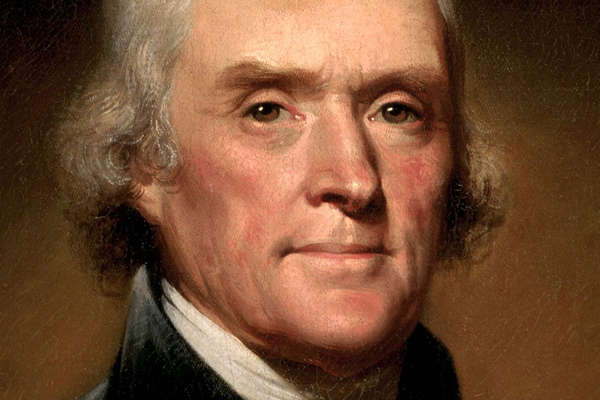
My upcoming book focuses on many relevant things, especially how culture induces people to act against their values, then to create beliefs to rationalize and justify the behavior violating their own values. Thomas Jefferson represents one of the most prominent cases of someone who promoted liberty, freedom, equality, and democracy to the point of risking his life for these values for himself and his peers. He didn’t extend them to his slaves.
A renowned and accomplished historian and lawyer, Paul Finkelman (bio below) said the following, which I found interesting and relevant. Most of us have been induced to violate our values and have created beliefs to rationalize and justify our violations of our values. If we believe he should have acted differently, how about ourselves?
Jefferson is ironically the person who gives us the language we’re all created equal, we’re all entitled to liberty and then a few years later becomes the first person I’ve been able to determine in the western world to write a pseudo-scientific argument in favor of enslaving blacks, so Jefferson both creates liberty and creates a racist argument based on science based on observation as he does it to prove it’s okay to enslave blacks.
His science is nonsense. His observations are nonsense, but it takes hold and of course they are supported constantly by all of the major churches. All of the big religions buy into slavery because slavery has always been consistent with biblical analysis, but this type of slavery is different.
It’s easy for us to say his science and observations were nonsense, but he didn’t think they were, at least not consciously. Our challenge, if we want to learn from history, is twofold.
First, we are challenged to see the world from their perspective, knowing only what they did, not what we do but they didn’t. This challenge requires empathy and compassion for people we disagree with. This view enables the second challenge.
Second, we are challenged to jump forward to future generations and see how much of our “science” and “observations” are nonsense. We need empathy and compassion for ourselves to see our corruption.
The person who said it:
Paul Finkelman is the president of Gratz College in greater Philadelphia. He is the author of Slavery and the Founders: Race and Liberty in the Age of Jefferson, and Supreme Injustice: Slavery in the Nation’s Highest Court, and more than 200 scholarly articles—including three for the National Archives magazine Prologue.
He is the author or editor of more than 50 books in a wide variety of areas including American legal history, U.S. Constitutional law, American slavery, the First Amendment, the history of the Second Amendment, American Jewish history, civil rights, and legal issues surrounding American sports. His work has been cited in four decisions by the United States Supreme Court, numerous other courts, and in many appellate briefs.
For my part, I’m looking up more of Finkelman’s work, particularly on the Dred Scott decision. More to come.