
Jay Walker
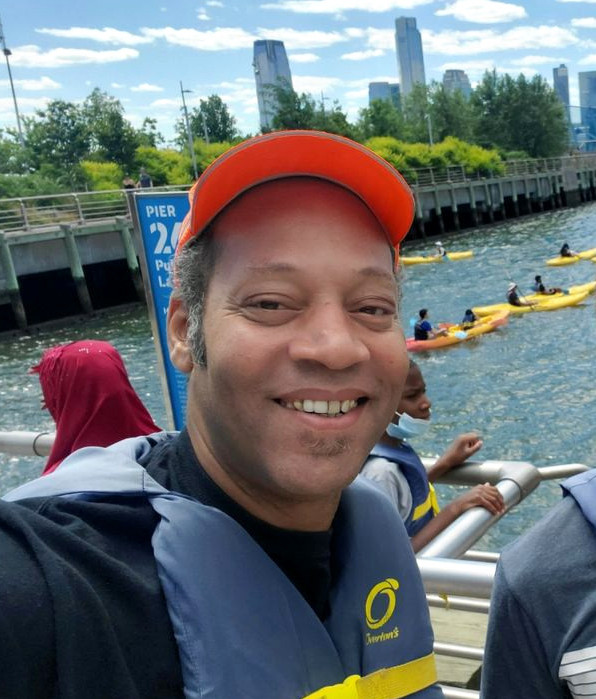
Jay W. Walker is a co-founder of the Reclaim Pride Coalition, which organizes the Queer Liberation March for Trans and BIPOC Freedom, Reproductive Justice, and Bodily Autonomy. His career in activism began in the 1990s as part of the Gay Men’s Health Crisis (GMHC), an HIV/AIDs service organization. He had moved to New York City in 1985, and attended his first Pride March in 1988.
In 2017, Walker and hundreds of other activists formed a “resistance contingent” and marched together as the first group in the Heritage of Pride March.
From the Reclaim Pride Coalition’s page:
The complex proliferation of Parades as the model for Pride Celebrations internationally is deeply disturbing to many people in the LGBTQIA2S+ communities. In the city of New York, home to the Stonewall Inn, a group of Queer activists decided the Parade in NYC had gone too far — too far from the spirt of the Stonewall Rebellion, and miles away from achieving societal equity for queer and trans people.
So was born the Reclaim Pride Coalition.
Community organizers, activists, and queers of conscience banded together after years of seeing the annual NYC Pride March transformed into a 7, then 9, then 12 hour circus. Overflowing with corporate floats and at the service of corporate money, the Pride Parade had become a new symbol of gay for pay. The imposition of barricades along the parade route separated the participants from its audience, turning the Pride March into an entertainment venue instead of a true expression of our cultural legacy. The presence of a dozen police officers at every intersection of the Parade marked the collusion of the non-profit board and the very instance of state sponsored oppression.
The Reclaim Pride Coalition stands by the tag, “No corps, no cops, no bs!”
628: Jay Walker, part 2: Kayaking on the Hudson
I think Jay’s commitment may be the first where I participated and we had a blast!
You may remember he committed to kayaking on the Hudson. He invited me to join. As you can see from the picture, I did, and we kayaked together. We shared about the experience.
Note the change in our conversation and relationship from last conversation to this one. By last conversation we had spoken several times to set up the call, then you could hear our recorded conversation. Then hear how things changed just spending time in nature, in a way suggested by his values. That the Hudson by Manhattan isn’t wild like, say, the mouth of the Amazon doesn’t change that acting on our environmental values opens us up and connects us. Mainstream culture has isolated us so much and cut us off from nature, we don’t know what we’re missing.
We’re talking about applying this experience to the Queer Liberation March team to help make keeping the event clean fun and enjoyable, not an obligation but an opportunity. Stay tuned!
626: Jay Walker, part 1: Organizing New York City’s Queer Liberation March
Regular readers and listeners know my passion for cleaning my local park, Washington Square Park, and how my heart breaks at how we abuse this sliver of a vestige of nature, especially the mornings after the Queer Liberation Marches of the past two years.
As an organizer, Jay didn’t have to respond to my request, but he did. By the end of this recording, you’ll hear us talk about reducing waste next year. We begin by talking about the evolution of the pride marches from when he started attending in the 1980s. He describes them becoming more corporate, less participatory, but most of all, controlled by the cops, not necessarily helping the march. The cops often seem like they’re just dominating parades; all New York City parades, not just this march. As a New Yorker, his description struck a chord. His split with the older march sounds almost heartbreaking.
Then we talk about the mess attendees created. I point out that nearly everyone identifies ground and waterway waste as sanitation issues, but I see them as too-much-supply issues. We talked about collaborating to reduce the waste people bring and buy at the event. For decades, if people brought things to marches and parades, they didn’t leave plastic garbage behind. If they did, not nearly in the quantities of today.
It may not seem fair for people to have to decline buying trinkets and bottled water when they just want to have fun, but attendees before cheap, abundant plastic enjoyed parades as much as today. I expect there will be more fun if we communicate to next year’s attendees to refuse disposable anything.
We also did the Spodek Method and you may be able to tell from the picture I used how it went before you listen to our second episode.