
First and foremost: any preventable death is tragic. The goal of this post is to prevent deaths while making people’s lives more safe, secure, and healthy. Any reading to the contrary misunderstands me.
You’ve seen tragic headlines of people not surviving difficult environmental conditions. A couple recent ones from Phoenix include ‘This should be a necessity’: Hundreds in Phoenix area die at home without air conditioning and Lack of air conditioning in metro Phoenix can kill. These are the recent victims. Some quotes from the articles:
On July 1, 2021, Louis Hernandez Jr. woke in a house already sweltering from the blazing summer heat. His air conditioner had failed the day before, and inside their Peoria home, he waited for the repairman to arrive.
Outside, by noon it hit 100 degrees. And at 2:45 p.m., the outside air rose to 104 degrees. Inside, Hernandez slipped into delirium. Forty minutes later, Hernandez, 53, died of environmental heat exposure and morbid obesity. The repairman never arrived.
In the scorching summers of the Valley, a broken air conditioner can become a death sentence.
and
The repair tech asked the apartment manager to check on Carol. Outside, it was 109 degrees. Inside, 96 degrees. The temporary cooling unit the repair tech had given her had tripped the circuit breaker. Kempiak’s body was already decomposing.
and, what seems unbelievable to the point that I suspect a typo:
Matt Nelson, a 58-year-old technician, died this summer after working on a call in Dewey. According to his family’s GoFundMe, the attic where he worked that July day reached over 150 degrees.
One piece also says, “Their deaths were preventable.“
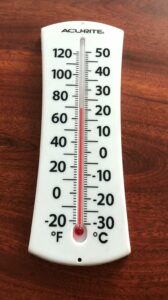
Relying on fallible technology means causing the results when it fails
Can you name a technology with many moving parts that wear out, that often consumes the most power in a home, and that only trained experts can repair that never breaks down?
Every preventable death is tragic. I want humans to flourish. I want to prevent preventable deaths, which is most of what I work on. Putting the lives of millions of people on a tightrope hovering over death, even if they’re comfortable as long as everything works, causes preventable deaths. If people can’t live somewhere, it’s a mistake to build homes and cities there. Yes, no place is perfectly safe forever, but building homes and cities in the middle of a desert is a world of difference from building them in the midst of fertile, arable land with a river nearby.
Relying on technology that pollutes and depletes means you’re hurting people
In my opinion more important than relying on fallible technology, using technology that hurts other people, as polluting and depleting do, means you’re hurting people just to live. Before about a century ago, nearly nobody polluted or depleted like today’s scale. We don’t have to pollute or deplete—that is, we don’t have to hurt people—just to live. Our culture may make them difficult to avoid, but they aren’t necessary for life.
If we choose to build homes or move to ones that require polluting and depleting, it seems to me that we take responsibility for the harms we cause.
Ghost towns
My father drove my sisters and me across the country when we were kids. I remember passing through a few ghost towns out west, remnants from gold rushes. When the gold ran out or didn’t pan out in the first place, should we have kept those towns indefinitely and kept growing them just because they existed?
No, when physical conditions made them no longer viable, people moved out.
If cities like Phoenix cease to become viable, if they ever were, there is no shame in them becoming ghost towns in time. Some may claim there is no place to house a whole city of people. If so, that person is claiming the region, nation, or world is overpopulated. They imply that many people’s lives depend on fallible technology, which means low safety and security.
If you dig a hole and are stuck but want to get out, stop digging.
If a society builds a city in the desert, it can’t complain when the cost to maintain it gets too high. If you value human life and society, don’t build cities in deserts. If you already have and want to save lives, maintaining the city and its population works against saving lives. That’s compassion and empathy speaking, the opposite of heartlessness, based in hands-on practical experience, not wishful thinking.