
I’m deep into writing my next book. It takes a lot of work, and I don’t just mean time and attention.
As part of the process, I went to the Metropolitan Museum of Art today. I wanted to see finished great works of art to inspire me, but I also hoped to see something in particular, and I found some examples. I wanted to see sketches and studies. Sometimes a museum will show early practice attempts.
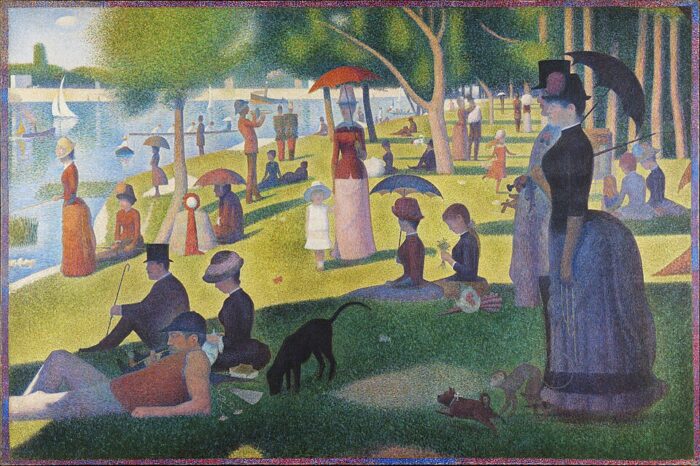
I found some such examples today. One was Georges Seurat’s A Sunday Afternoon on the Island of La Grande Jatte. The original is almost 7 feet high and over 10 feet wide, but the study I saw at the Met was a few feet tall.
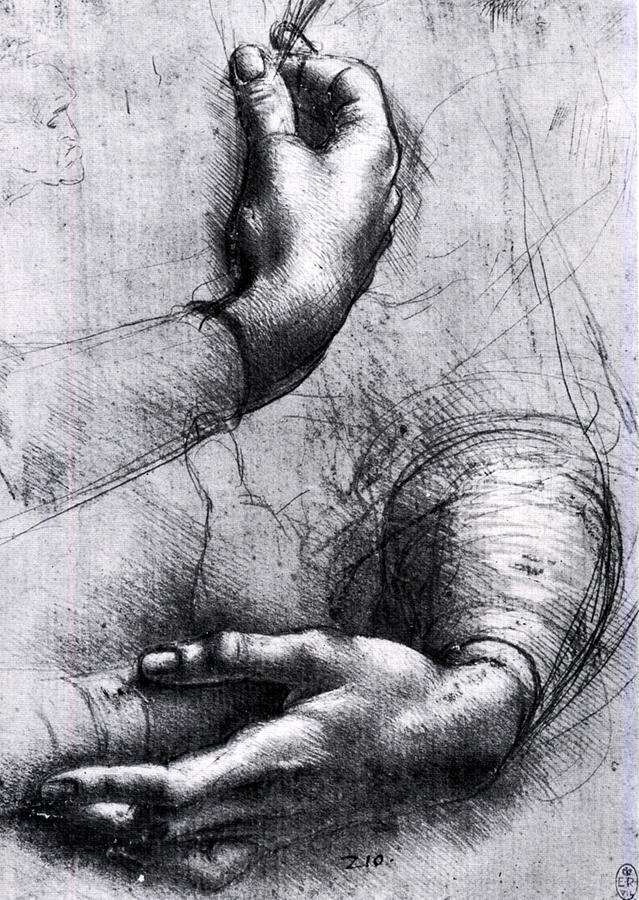
You’ve seen sketches da Vinci and Michelangelo did of hands, faces, and other detailed parts of the body. I like seeing them.
Why do I want to see studies and practice runs?
Because of how much writing involves rewriting, editing, and starting from scratch. Seeing others’ practices reminds me of the process.
A couple weeks ago I thought of what I thought would be a great way to open my book. I developed it. I wrote thousands of words. I outlined it. I researched tons to make sure I got the details and background right. I told friends about it and described it to them. They tended to like it.
Then over the weekend I talked to a couple friends who independently pointed out shortcomings. I defended it, but eventually came to agree. What felt so promising and what I spent so long developing I would have to cut.
Did I feel I wasted that time? No. Even if I don’t keep a part, I learned from developing it. I have to develop ideas to see if they work. I can’t tell before writing them out if I can make the details work. Seeing painters’ studies shows they have to practice too. I know they do in principle, but only seeing them reveals what they learn from making studies and how much they work at it.
I’ve gone to the Affordable Art Fair, which features art mostly below a certain price. Many pieces seem outstanding there. Still, every piece I see at the Met is a masterpiece, at least in the halls I visited today. The works at the Met often look simple. If I didn’t see merely good stuff I would be fooled into thinking these great pieces were easy. They look easy, but when I look, the complexity is incredible. All the elements: composition, brushstroke, color, subject, rhythm, how it fits with other work in its genre, and so on… everything matters. It’s mind-boggling to think of the number of things they could get wrong.
As far as I can tell, mastery requires practicing the basic and, in general, practicing. It can be easy to give up or accept good enough when I know I can do more. I’m writing another book of leadership applied to sustainability. It’s nonfiction but I consider it a work of art, in the making at least so far, and I intend for it to change the world.
I write a part I like and feel great. The next day I have to cut a lot of it. The next few days I struggle with details. The next week I realize what I really meant and rewrite that part from scratch. After a month of back and forth I learn something new about myself, or about solar panels, or about liberty, and I have to research that topic. Or I find a perfect quote from someone, but I don’t know that person that well so have to research them and I end up reading a biography.
The process takes forever, or rather, it takes the time it takes.
I’m confident today because since the friends’ advice over the weekend, I’ve found a through-line and composition that I think will take me to the end. I’m not sure because I’ve felt that way before and had to change a lot. We’ll see, but seeing great artists’ studies and sketches helps.