
This week I finished:
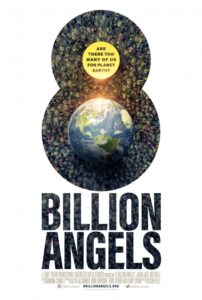
8 Billion Angels, directed by Terry Spahr: I’ve become friends with Terry since first watching his documentary on overpopulation years ago.
He recently released it free on YouTube.
I recommend it.
Here’s the movie’s page: https://8billionangels.org.
From Scientific American:
Eight Billion People in the World Is a Crisis, Not an Achievement
The major driver of plant and animal loss is habitat destruction caused primarily by the encroachment of a swelling human population.
By Naomi Oreskes
The world reached two important milestones toward the end of last year. First, the human population passed eight billion in November, a whopping increase of one billion people since 2011. Then, in December, representatives of 188 governments adopted the Kunming-Montreal Global Biodiversity Framework, promising to conserve and manage at least 30 percent of the planet for biodiversity and restore 30 percent of currently degraded ecosystems.
Read the full article
I’ll copy the filmmaker’s statement from the movie’s page:
In my lifetime I have witnessed remarkable changes in humanity’s growth, in prosperity, lifespan, and in sheer numbers across the globe.
As a child in the 1970’s, I saw the unintended consequences of this growth near my home in Philadelphia where pollution clogged the same Delaware River so celebrated for Washington’s crossing, huge landfills for garbage fouled the landscape close to Independence Hall, and masses of cars produced smog-filled air as they navigated roads designed centuries ago for far fewer people.
Despite awakening to our environmental pollution problem, giving rise to recycling, renewable energy, land conservation and environmental awareness and stewardship, we now see that no amount of technology, voluntary reduction in consumption, or conservation can halt the greater forces propelling us toward climate change, ocean acidification, deforestation and a host of other natural catastrophes. All of our efforts, up until now, have amounted to stop-gap measures that distract us from the fact that we add 80 million more people every year to the earth, who together consume more resources faster than the world can replenish, and emit more waste than the earth can naturally absorb.
That is why I decided to stop talking about it and do something, dedicating my time and money to telling the truth about the problem, and sharing the hope of real solutions in the stories of everyday people. After all, it is only when we are not afraid to name a problem, confront it and talk openly and honestly about it, that we can begin to fix it.
It is critical to offer an alternate vision for the future. If we, as individuals, families and nations, band together by pursuing smaller families, supporting the worldwide adoption of accessible and affordable family planning, and strengthening our global commitment to the education and empowerment of women and girls, we will not only bring tremendous social justice, economic prosperity and health equity to billions, but we will unequivocally restore the environment.
Join me in on this first step of my mission to ensure a planet that provides a just, safe and sustainable future for everyone.
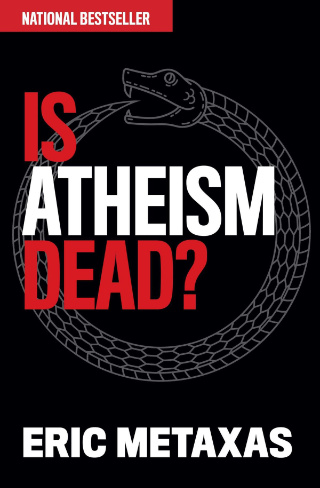
Is Atheism Dead?, by podcast guest Eric Metaxas: Besides hosting Eric on my podcast, I’ve read several of his books, met him in person a few times, watched several videos of his, and attended a premier of the video series being made of this book. He even mentioned me once in one of his broadcasts, though not by name.
Eric strongly supports Donald Trump and has described himself as a “Jesus freak.” You wouldn’t think someone who focuses on sustainability leadership would follow someone like that.
I learned of him through his book Amazing Grace on British abolitionism. He mainly focused on William Wilberforce. That book led me to his book on Dietrich Bonhoeffer. I mentioned both books in my podcast conversation with him.
Eric spoke about how most people in Wilberforce’s and Bonhoeffer’s times didn’t act as they did, nor would most today, without serious reflection and work to live by our values in the face of corrupting influence. I see Eric as promoting such reflection to help people live by their values, which is what I’m doing.
For examples, he said of William Wilberforce, abolitionists, and what we can learn from them:
Everybody knows, “Oh slavery is wrong.” Everybody knows the slave trade was evil. Everybody knows racism is wrong.
Well, don’t be so arrogant because not that long ago. Most people didn’t think it was wrong. Most people had a totally different perspective.
I think it needs to humble us and to say not just about the environment… some figures in history were totally swimming upstream. Everybody thought they were nuts to even propose the idea of ending the slave trade because it was buoying the economy and … existed since the beginning of time.
It takes a lot to see what we don’t want to see.
He said of Dietrich Bonhoeffer:
Today we all applaud: “Oh Bonhoeffer stood up against Hitler. He stood up for the Jews of course.”
No, not of course. Most of us would not have been where he was and that’s really humbling.
Before you criticize someone else, what are you doing in the face of a culture whose pollution and depletion kill millions of people annually, funded every time any of us buys an airplane ticket or orders takeout delivered in plastic containers?
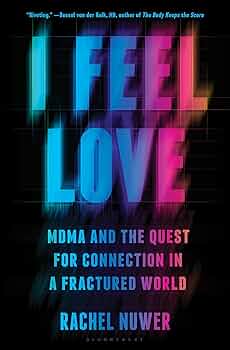
I Feel Love: MDMA and the Quest for Connection in a Fractured World, Rachel Nuwer: I contacted Rachel for her last book, Poached: Inside the Dark World of Wildlife Trafficking, by Rachel Love Nuwer, to bring her to the podcast.
I came across this book, which doesn’t clearly overlap with sustainability leadership, but covers something increasingly newsworthy: MDMA used for therapy. The book quoted podcast guest Albert Garcia-Romeu twice.
She is a science journalist. In interviews, she described how her reporting on wildlife trafficking and other environmental news brought people down, whereas MDMA brought people up, as did news about it. I suspect this book brought her more attention, though I suspect she considers sustainability more important. I’m curious her thoughts on that contrast.