
This week I finished:
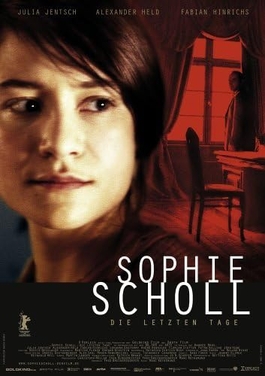
Sophie Scholl: The Final Days, directed by Marc Rothemund, starring Julia Jentsch: This movie was nominated for an Oscar for best foreign language movie in 2005.
I confess I only learned of the White Rose movement, and two of its key members, Hans and Sophie Scholl, this year. I recommend learning more about them, especially if you’re interested in learning what leads people to oppose a culture acting against your values. You are almost certainly acting against your values, induced by our culture.
Hans and Sophie Scholl were siblings raised in Germany in the wake of World War I. The movement was mainly students who organized against the Nazis in and around Munich.
This movie focused on Sophie, in the events leading up to her being arrested for distributing anti-Nazi leaflets and the investigation, trial, and its outcome after. As usual, I follow up books and movies I like with learning about their historical context and whatever else I can find relevant.
According to the Roger Ebert review, it is “based on fact and uses the transcripts of Scholl’s actual interrogation and trial, as kept by the Gestapo and liberated when East Germany fell. Most of the words in the questioning are literally what Scholl and Mohr said”
That questioning was the heart of the movie and wonderful. I found the acting engaging and compelling, which must be hard for playing Nazis or people facing imminent death sentences. But I only mention the quality of the acting to highlight that conversation, which took place over several meetings.
The key part came around the one-hour mark and lasted just over ten minutes.
The script and actor playing her interrogator show his humanity and the moral dialogue of someone induced to act against his values, then becoming corrupted and espousing them. But anyone not so corrupted can see he’s telling himself what he needs to sleep at night.
The conversation sounds like something that went on in each of their minds. Sophie came down one way, Mohr the other. They aren’t hearing things they don’t already know, nor saying what the other doesn’t already know. After choosing their conclusions, each lived his or her life and found what they needed to maintain his or her path.
As in Twelve Angry Men, Mohr’s actions are rooted in his relationship with his son. It’s easy to pass him off as evil. After all, he’s a Nazi building a case to condemn a student to death for nonviolent actions and speech that would be rights in this nation and in Germany before Hitler.
But if we look with care and empathy, we see he’s human. He has a lot to lose from opposing Hitler and plenty to gain from going with the flow. How many people today go with the flow to avoid losing a lot? Obviously it’s a trick question since the answer is those who pollute and deplete, what isn’t necessary for life or the pursuit of happiness, except that our culture has made it so.
Most of all, we see that he isn’t trying to bring her to execution. He is trying to help her. He is trying to save her. Only, in his corruption, his attempts to save her are to abandon her values—that is, to corrupt her. Likewise, environmentalists who promote pollution and depletion by calling things that pollute and deplete “clean,” “green,” and “renewable” are effectively trying to corrupt people and culture too. They don’t know it any more than Mohr did.
We can choose to live more like Sophie, and we know that we need don’t have to risk our lives, only our lifestyles, which are sickening us anyway, but that sickening is child’s play compared to how we are building tyranny by depriving others of life, liberty, and property without due process, and of the consent of the governed.
Following the interrogation is the show trial. The judge extrapolates the complicity and corruption of the investigator to the judge. Again, he’s human, but has become monstrous. Sophie’s cellmate tells her how much the judge had to lose from rejecting Hitler, so has taken his legitimizing myths to another level. If Mohr was most of us today, the judge is us as our environmental situation grows, especially for Americans and others who pollute and deplete in the top percent.
He screams at her. He performs for the crowd. He’s saving his skin and living what he has to after becoming the monster he is and anyone who contributes a tenth of what the average American pollutes and depletes.
We can be Scholl. Most of us probably sense that the chips are down today as much as they were in 1943, that we have become Mohr, but that we wish we could become Sophie. We probably also know we don’t have to risk our lives. We can eat more fresh, seasonal produce and stop flying at slight whims or even big family or work events.
I recommend the movie, though maybe watch or read a bit about the White Rose movement first.
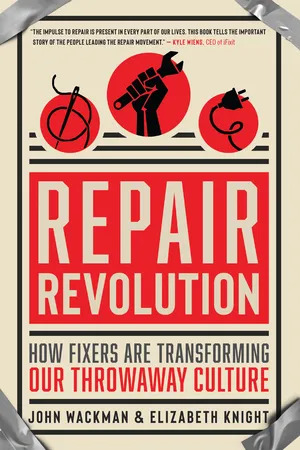
Repair Revolution: How Fixers Are Transforming Our Throwaway Culture, by John Wackman and Elizabeth Knight: I read this book for the book club of the alumni of my sustainability leadership workshop, which I recommend to everyone.
The book prompted me to think of all the marginally functional but fixable things in my apartment, especially my window blinds. I wish repair places existed like they used to. I almost can’t believe they existed. Now nearly everyone trashes everything as soon as they stop working as new, which the book describes, to give context to the repair movement its writers love and are helping grow.
My main thought was that while I support their cause to teach and lead more people to fix things and avoid buying things, all the problems they described seem to follow from the tyranny and outsized power that come from polluting and depleting with fossil fuels.
I would never say we shouldn’t promote more fixing, I believe that that result will only come from stopping polluting and depleting.