
Richard Feynman is the Nobel laureate physicist who studied what caused the Space Shuttle Explosion of 1986. He learned that the o-rings likely leaked because past measurements showed cracks in them at low temperatures, like those just before the launch. Anyone my age or older remembers the image.
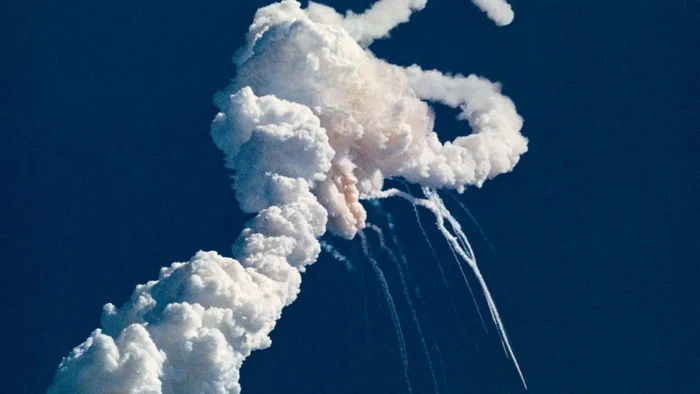
He saw that people who saw the earlier cracks saw that because the cracks only went about a third of the way through, “there was ‘a safety factor of three.'” I put the full quote below, which I recommend reading, but the gist is that since the o-rings were designed not to crack at all, there was no safety factor. Any cracking at all meant they failed.
The Relevance to Landfills
I ran into an old friend. Our conversation happened to cover pollution. He suggested to me that we had plenty of land for landfills.
I suppose the way most people would calculate how much space we have left is to divide the area of unused land by the size of a typical landfill. You might leave buffer space around where people live or natural wonders so we don’t have dumps just outside cities or Yosemite.
Why not fill all of the Sahara Desert with landfill, one might ask? Or Antarctica? I suppose you might leave out areas that cost too much to ship waste there, though podcast guest Alexander Clapp‘s book Waste Wars and his NY Times op-ed The Story You’ve Been Told About Recycling Is a Lie document that we already ship garbage all over the world.
Still, landfills aren’t what they used to be. Before toxic waste that took longer than human lives or timescales to biodegrade, landfills might have smelled or even harbored disease, but they didn’t poison people for generations. They didn’t risk their poison leeching out into the rest of the biosphere. They didn’t risk that when sea levels rose, they’d float out and disperse to the oceans for millennia.
They are like that now. They are qualitatively different. I don’t see any way they can exist without their contents ending up sooner or later getting out and depriving people of life, liberty, and property without due process of law or consent. That is, they seem unconstitutional, even if they aren’t enforced.
To say we have plenty of space for landfills could possibly make sense before we began filling them with waste that will remain toxic for longer than relevant human time scales. After that point, any such landfill means failure like a crack on an o-ring.
Recall that we are growing our toxic waste roughly as we grow our markets, which is exponential. Any number of physical material grown exponentially becomes unmanageable. Well, except zero. Zero toxic waste is manageable.
As Feynman wrote, “The O-rings of the Solid Rocket Boosters were not designed to erode. Erosion was a clue that something was wrong. Erosion was not something from which safety can be inferred.” applies here:
Landfills were not designed to contain toxic materials that don’t biodegrade on relevant human time scales. Such materials entering the biosphere was a clue that something was wrong. Enduring toxicity was not something from which amount of usable space can be inferred.
With some imagination, the image above applies to landfills. Correct me if I’m wrong or let me know if you see anything I’m missing, but it seems to me that we have no extra space for landfills until we reduce enduring toxic waste to zero.
The Report of the PRESIDENTIAL COMMISSION on the Space Shuttle Challenger Accident
For reference, here is the context for Feynman’s quote. I recommend skimming the whole report and learning what happened. It’s a useful case study for many reasons.
in determining if flight 51-L was safe to fly in the face of ring erosion in flight 51-C, it was noted that the erosion depth was only one-third of the radius. It had been noted in an [F2] experiment cutting the ring that cutting it as deep as one radius was necessary before the ring failed. Instead of being very concerned that variations of poorly understood conditions might reasonably create a deeper erosion this time, it was asserted, there was “a safety factor of three.” This is a strange use of the engineer’s term ,”safety factor.” If a bridge is built to withstand a certain load without the beams permanently deforming, cracking, or breaking, it may be designed for the materials used to actually stand up under three times the load. This “safety factor” is to allow for uncertain excesses of load, or unknown extra loads, or weaknesses in the material that might have unexpected flaws, etc. If now the expected load comes on to the new bridge and a crack appears in a beam, this is a failure of the design. There was no safety factor at all; even though the bridge did not actually collapse because the crack went only one-third of the way through the beam. The O-rings of the Solid Rocket Boosters were not designed to erode. Erosion was a clue that something was wrong. Erosion was not something from which safety can be inferred.
He also said “The first principle is that you must not fool yourself—and you are the easiest person to fool.”