Success through values, meaning, purpose, importance, and passion
I looked forward to reporting on running the marathon yesterday. After at least 300 miles training without incident or injury, I hurt my foot last week -- I don't think anything permanent, but enough to make running impossible. I put off deciding as long as I could, but with a heavy heart and tears almost welling in my eyes on as beautiful a fall day as you could hope for, Friday I went to the Marathon registration at the Javitts Center and postponed my entry until next year. Getting into the marathon is hard, but canceling this year guarantees my entry next year. Thank you to everyone who wished me well. The support helped. It sucks to have such a great training season and then…
I followed a link to an interesting site I recommend visiting: seeyourfolks.com. Check it out. Most of the comments I saw on it found the site depressing -- an unwanted, surprising reminder of their mortality and how little they expected to see of their parents. I found it an effective site, but I hope the people who found it depressing reconsider their responses. The site didn't tell you anything you didn't already know, it only clarified it. Instead of denying information to keep yourself happy, why not use the information? My 69-year-old mother remarked earlier this year that if she didn't get around to some of her life goals soon she wouldn't be able to. Did she say that out of depression? No, she said…
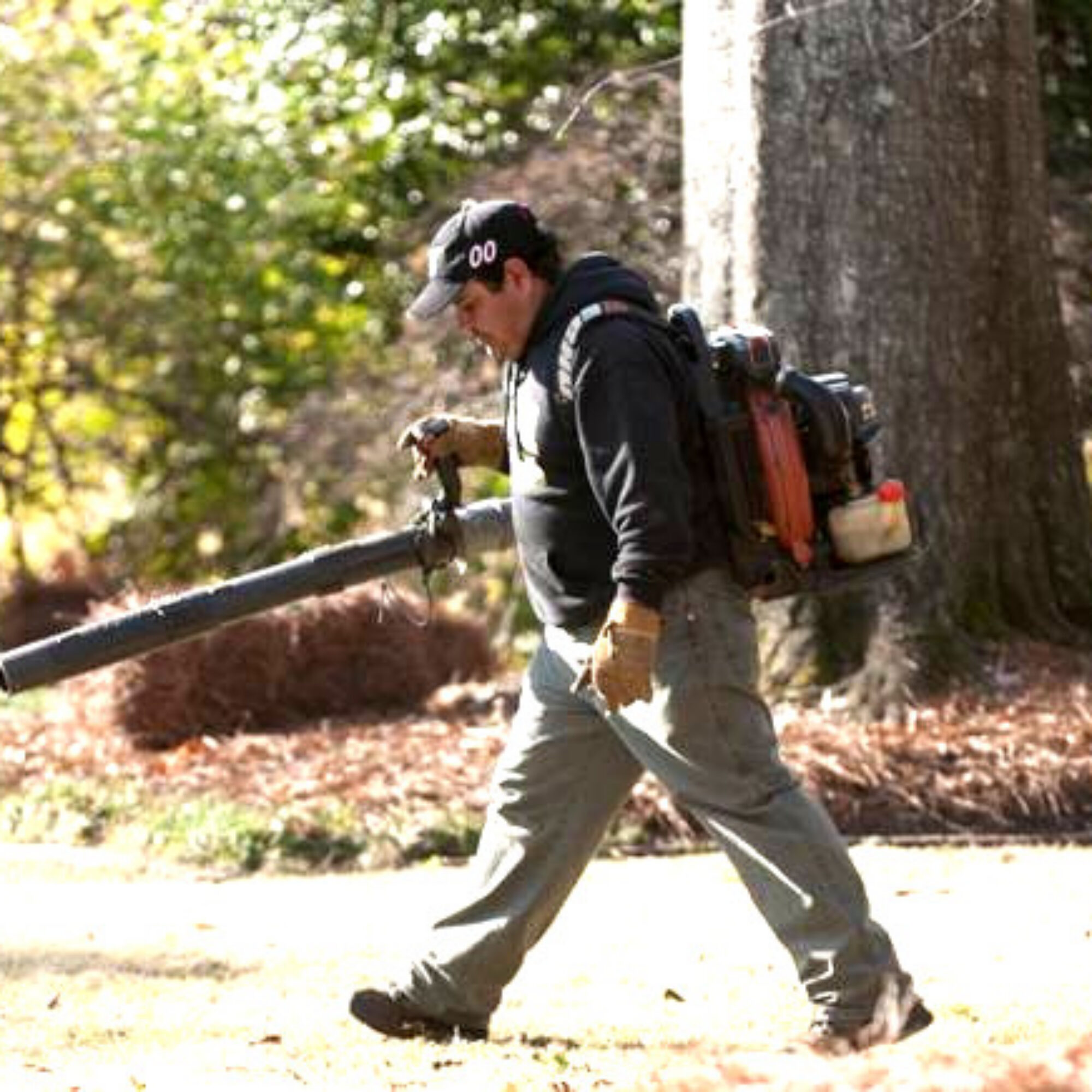
Not the guy I saw or in the park I saw, but similar.
The other day I passed a guy blowing leaves with a gasoline-powered leaf blower on a paved area in a park by City Hall. This post isn't about him. It's about us, including you. What is wrong with us? We buy oil from countries we have adversarial relations with, pollute the environment, create loud, unpleasant noise, so a fat person can work less, and cart away what would create topsoil, to fill a land-fill. What we could do instead What if we did this instead? Rake the leaves making little extra noise buying no oil from adversarial countries causing no pollution composting the leaves or using them for mulch filling no land-fills giving the guy exercise? Raking leaves on pavement isn't hard. Values What happened…
[I'm testing out something new for this page -- to comment on current events or other opinion/editorial from the perspective of this blog on Fridays. My goal is to counter the common practice that other media generate readers and viewers by promoting outrage, fear, indignation, and so forth. It gets them but it fills their lives with emotions they probably don't want. I want to help people feel more calm and capable. See my posts "A model to keep you from being manipulated by the media" and "Always remember the media wants to sell ads," for example.] Today I want to comment on an article I've seen many times, most recently here "Why women lose the dating game". The article adopts the common belief that…
Here's an anecdote from a woman named Elle Luna: I was using Uber all the time in San Francisco, even though I hated the design. And then I went to the Crunchies awards ceremony and at a post-ceremony event, where I was in a ball gown, I saw the CEO of Uber, Travis Kalanick, sitting at the bar. I was three whiskeys deep at this point and I walked up to him and said, "I use Uber all the time and I absolutely hate the app. I think you should bring me in to fix it." He replied, "Oh, yeah? What are the three things you'd fix about it?" I said, "I'd redo the logo, redo the entire app, and change the rating system." I…
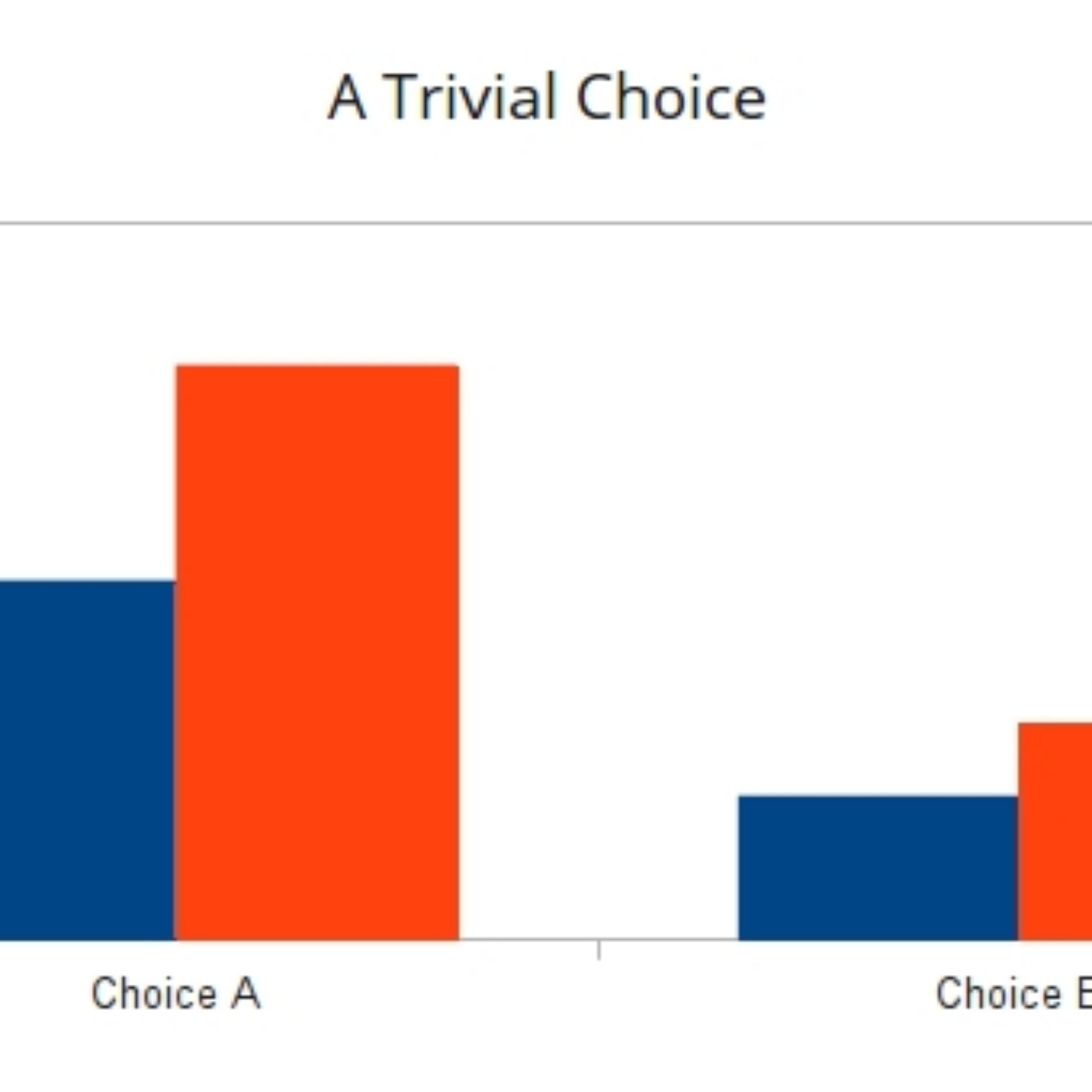
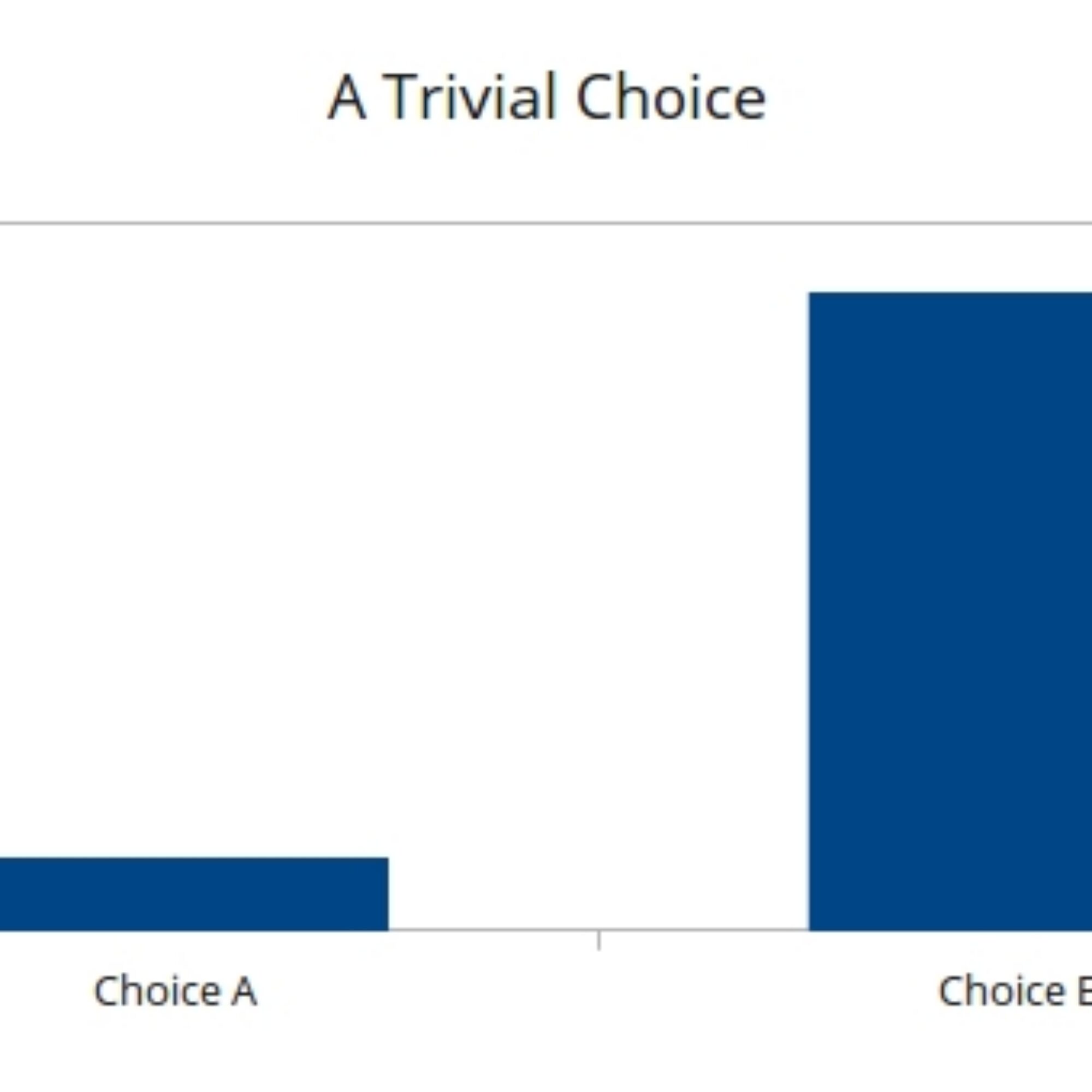
Multiple factors Not all options have only one decision factor. Many have two or more. For example, do you prefer a job with higher pay but lower chance of promotion or higher chance of promotion but lower pay? You have to look case-by-case, but let's see how our visual representation shows them. A trivial choice The easiest two-part case is when you prefer both parts of an option to both parts of the other. Consider if you had to choose between A high-paying job with great benefits and A low-paying job with no benefits. This graph illustrates such a choice. All else being equal, you'd choose the first option. Again, this illustration is simple, but we're just seeing how the visual model works with two…
You know choosing can be hard. I've written about it before from a few angles: Why are decisions hard? Difficult life decision? Here's how to look at it. How to decide among close options A belief to choose without getting mired in indecision Today I'll give you a tool to simplify decision-making more with a way of visualizing the challenge that shows the hard part. Partly I'm following up on how I visualized emotions in the Passion-Attraction Model, which I recommend looking at if you like this post. I find modeling difficult things with visual representations makes them easier. I'll start simple and build complexity, leading to the more helpful insight as I develop the ideas. A trivial choice Not all choices are hard. If…
Pick any great historical figure. We often regard them as unparalleled geniuses the likes of which we may never see again. On the other hand, they were human beings like us. They performed in some areas well beyond average. What if their abilities or traits weren't once ever but once in a generation? It's interesting to see what you conclude, as I'll show. Then we'd expect to see others of comparable abilities or skills. We could pick any figure, but let's talk about Mozart for concreteness. In his time the earth's population was about 700 million or so, roughly a tenth of today. Could that mean we should expect ten people of Mozart's ability today? In Mozart's times a smaller fraction of the population had…
I say these words to myself daily or nearly so. I've posted them before and I expect I will again. They bear repeating and deserve a post to themselves. You have to say no to a lot of good things to have a great life. I don't see declining an opportunity as giving it up so much as giving myself more time and resources for something I value more. I didn't start this way. I used to say yes to too many things, not realizing that time doing one thing meant time not doing another. I still do, but less than before. The same with relationships -- just other parts of your life that you use your resources for. What does "too many things" mean?…
As children we start defenseless. I don't mean physically, though we start physically defenseless too. I mean kids don't protect themselves from being emotionally hurt or having their identities challenged. Kids say things we adults recognize we would catch in mental filters before speaking. What mental filters? Everybody knows what I mean. As we get older we learn to protect our vulnerabilities. We learn protocol and manners. We learn how to behave in certain situations to meet social expectations. Doing so rewards us with getting the results we wanted. With a cost, though. Some examples: When we meet a girl or guy we like we play it cool and don't let on. We don't tell a friend about a shortcoming. We don't tell anyone we…
I've written before about the television show Inside the Actors Studio and how much the young field of leadership training could stand to learn from the longstanding field of acting training. Below is an interview of the host of Inside the Actors Studio, James Lipton, describing the transformation acting training went through with Constantine Stanislavsky. Leadership training stands to benefit from similar changes, and that field inspires me to help those changes. As he described it, about a century ago acting replaced impressing others with expressing yourself, the goal of perfection with authenticity, self-reference and self-reverence with a system of exercises, focus on the external with focus on the internal, making yourself up with seeking truth, well-rehearsed lines with believing what you're saying. Everybody on…
I have an easy way to tell when I've completed a deal with someone: A deal is done when the contract is signed. Or as I think of it: An unsigned contract is not a signed contract. I've found it valuable to distinguish between them. I've learned not to spend money due on an unsigned contract. Many people consider a deal done with people have agreed on terms. People often say things like, "We have approval, all we have to do is sign it," as if that means you can start acting on the deal. Sometimes they'll more clearly state the contract isn't signed by saying something like, "We have approval. It's as good as signed. All we have to do is send it to…
People are emailing about my awesome new book everyone should read, ReModel: Create mental models to improve your life and lead simply and effectively. Several people said they found a concept in the Introduction particularly meaningful, creating enthusiasm to read the rest of the book. I communicated that concept twice, first writing: I'd rather you learned to create your own beliefs and forgot mine than didn't learn the skill and adopted all my models. Later continuing: As valuable and helpful as my beliefs are to me, they are a minor part of this book. The major point is what they illustrate—that you can create and choose your beliefs. Again, I'd rather have you reject every belief in this book but learn to create better ones…
The concept of competition implies beating the other person. In sports the concept is a standard, fundamental part. In everyday use outside of sports that beating the other person often carries a tinge of accusation or wrongdoing. People accuse others of being over-competitive, which they look down on. I've never heard anyone accuse another of being under-competitive. In business, competition often carries a noble ring. Business culture holds that business should compete to win. I've found that competition has another meaning -- to strive to improve yourself, independent of beating someone else. Sometimes you see this meaning in sports when people describe someone as "a competitor," even when they aren't competing someone to win. A competitor in that sense tries to improve him or herself,…
I wanted to follow up on a recent post, "You tell me what you do best. I'll tell you what you do worst." When you have a problem to solve, only one thing determines the solution: the problem itself. If you're good at doing one thing, but another thing solves the problem, it doesn't matter how well you do the other thing. Your skill may help solve the problem, but if it needs something else, you'll need to do the other thing too. Same with what you like. If you like doing something but the problem requires something else, it doesn't matter how much you want to do what you want to do if you want to solve the problem. If you want to get…
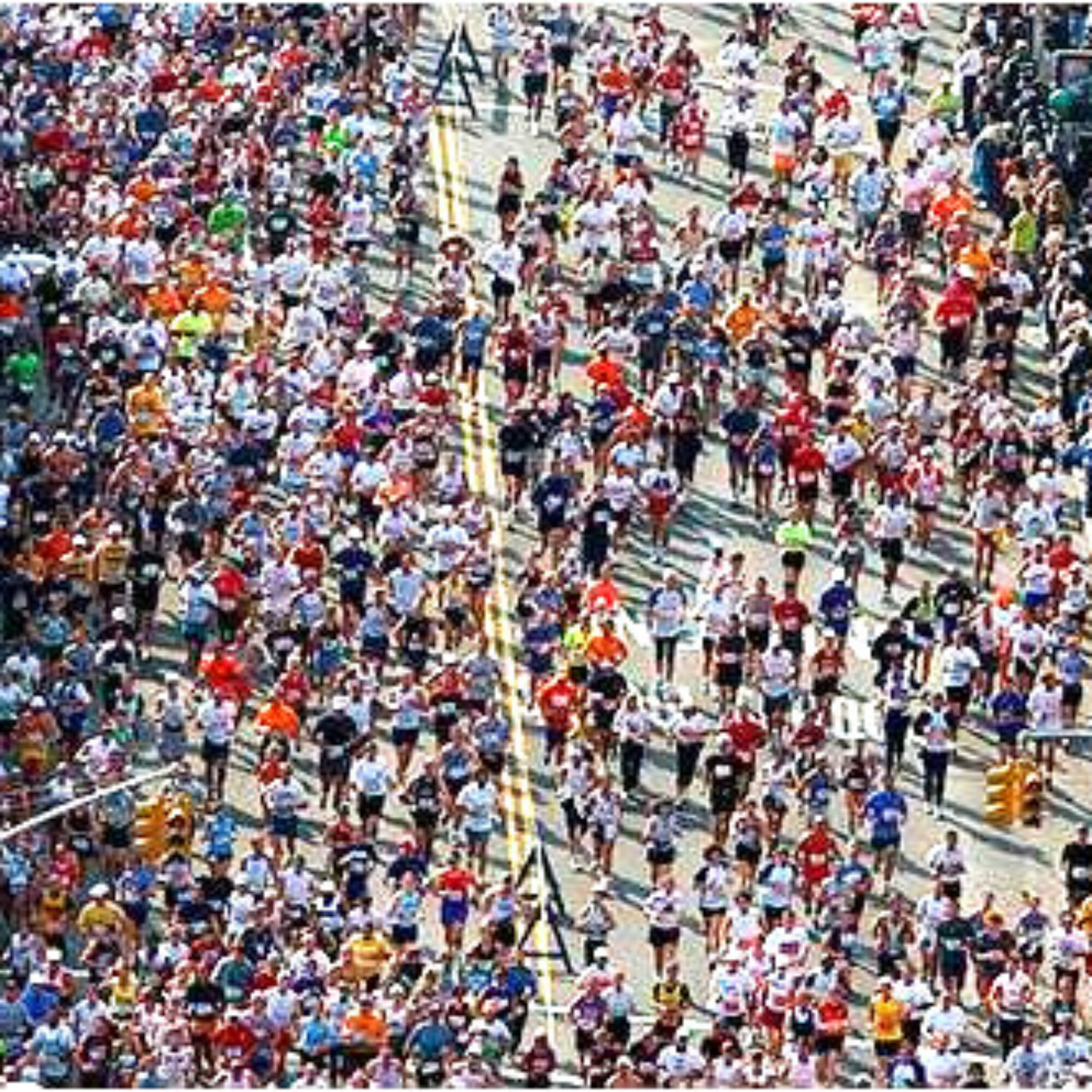
Wait, I want to lead better. Why should I care about marathons? Running a marathon takes discipline, dedication, practice, drive, determination, and many skills relevant to becoming a leader and practicing leadership. You've heard many parts of leadership described as marathons, not sprints. Whether you want to train for and complete a literal marathon or just something like one, having marathons in your life as a competitor or spectator, improves your leadership skills. Even if you don't run a marathon, interacting with them puts those skills and people with them in your environment, which increases them in your life. It motivates you to increase those skills and adopt comparable practices in your life. Besides, watching or competing in a marathon, especially the New York City…
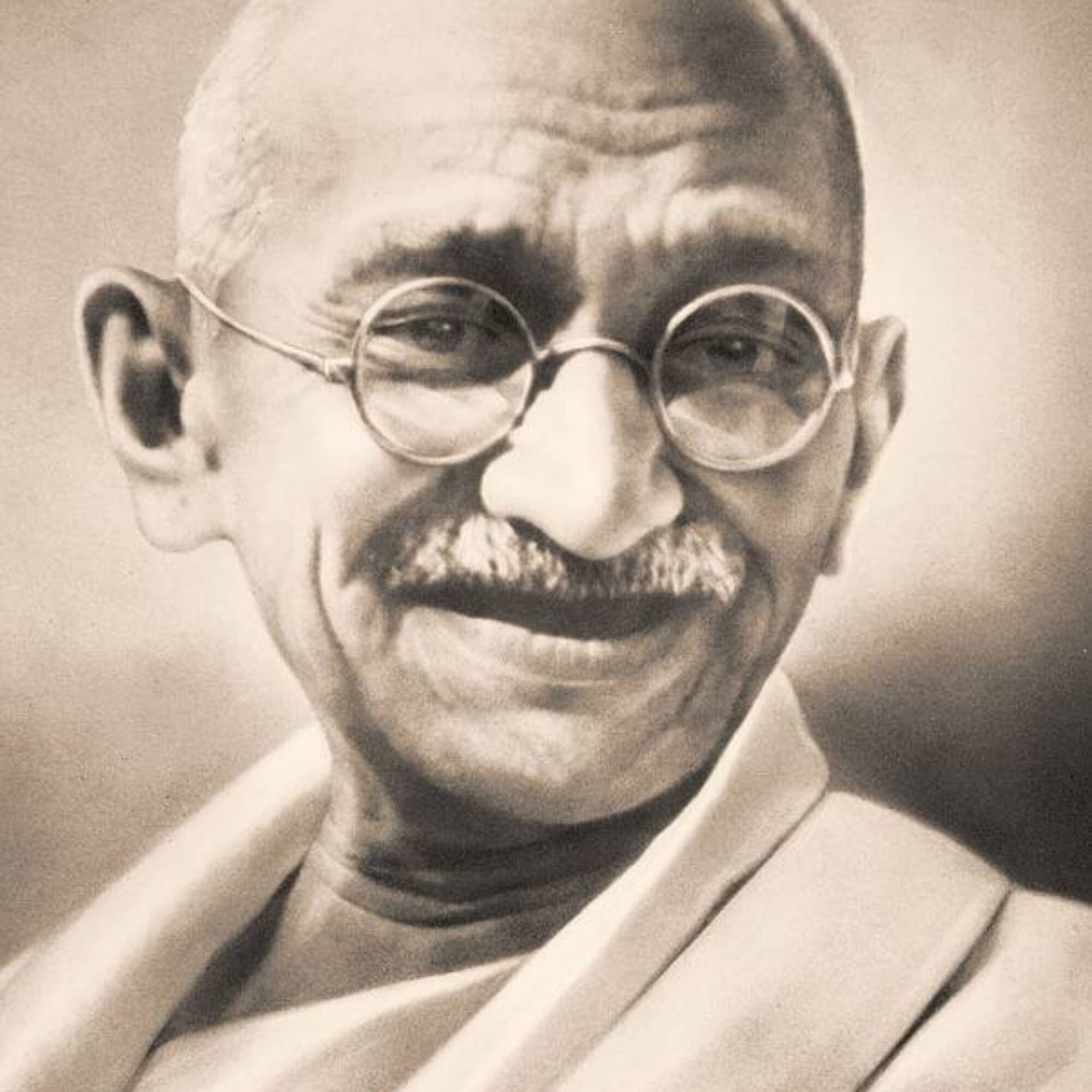
This post is about integrity and sticking with your values. A few years ago I visited my father in Ahmedabad, India, the country he has studied his professional life. We visited Gandhi's ashram, a community where people who wanted to learn about and support him went. It still exists, though mainly as a static, historical site. It's a humble place on the banks of a river, humbler than you'd expect one of the great historical world leaders to live. A sign there (sorry no picture) stated clearly that part of everyone's duties was cleaning the toilets, meaning scrubbing the buckets since I don't think they had plumbing. As I understand, Gandhi's environment in India included a very stratified caste system he opposed. He felt no…
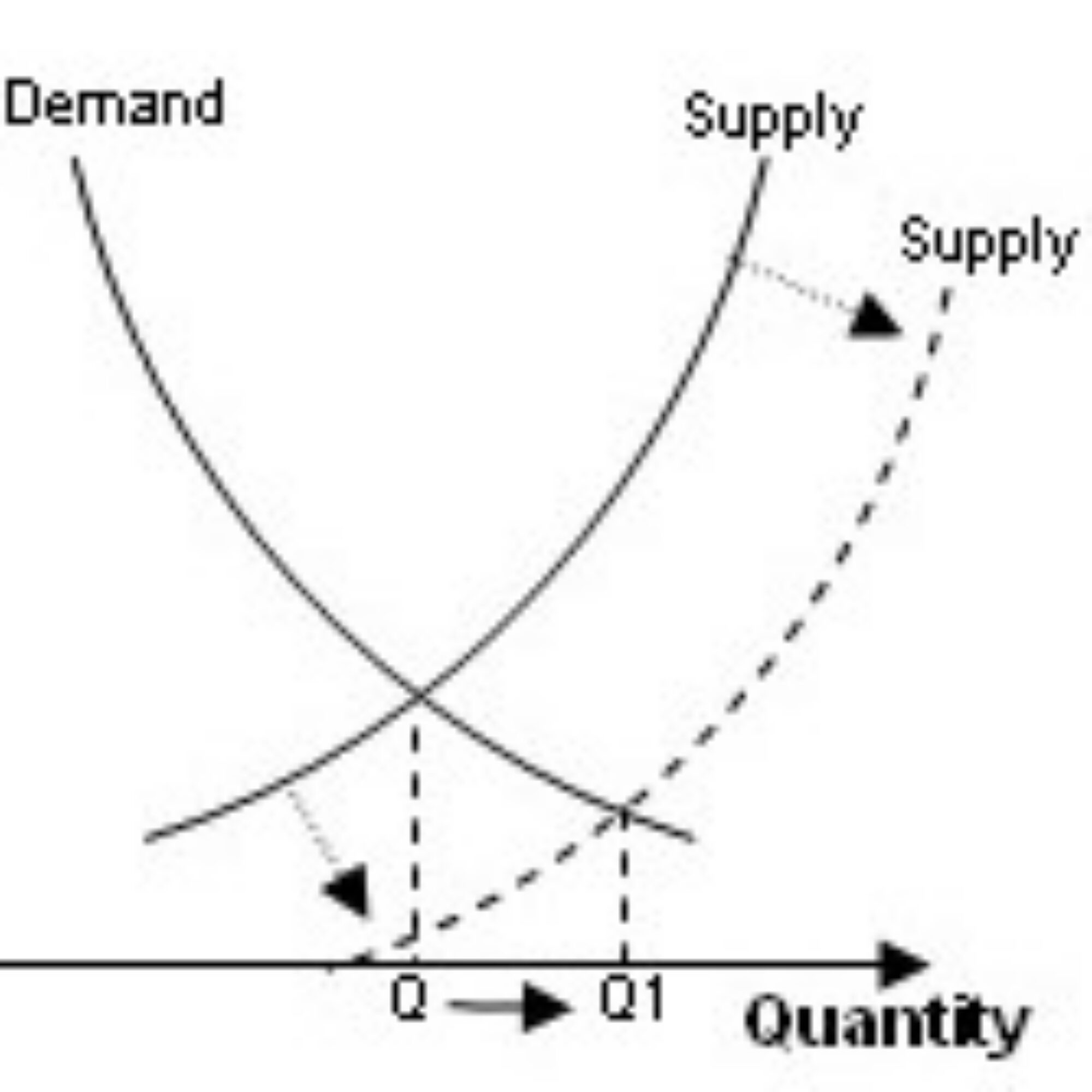
Increasing supply lowers price
The New Yorker this week has yet another article on executive pay, how high it is, how it continues to grow, and how attempts to slow it aren't working. Everybody knows the situation. We've read tons of such articles. We know executive pay is high enough that it isn't getting what shareholders are paying for, but no one can stop its growth. Want to lower executive pay? Basic economics and negotiation tell us all we need to know. Basic economics: supply and demand A CEO's wages have a price in a market. What sets prices in a market? Unless you believe the CEOs are fixing prices or the market isn't competitive, supply and demand set the price. If you want to lower prices either decrease…
Leadership creates community. I'm writing today on leadership and creating community in a specific context for clarity, but it applies to anyone's participation in any community, online or off. I expect you can translate everything below to your world easily enough. If not, comment below and I'll clarify. An effective measure of your leadership skills is how much community you create. Another is how much your community appreciates you. Online communities that track upvotes quickly tell you how your behavior influences them, which can help you improve your communications skills. I don't want to imply participating in one little online community is a big deal, but why miss an opportunity to learn and improve one's communication and leadership skills with immediate feedback at no cost?…
Today I'll cover an exercise I do in my seminar and when I address a group of professionals. You can do it while reading this post. It teaches you about Yourself Self-awareness Teamwork, especially team building I can cover it in a few minutes or can use it to discuss teamwork, self-awareness, and my experience for thirty-minutes or more. Introduction I start by telling the group "I'm going to ask you to tell me what you do best. Then I will tell you what you do worst." I say it provocatively to get a response and set expectations high. A few people respond incredulously. I point out that someone did the exercise with me. I was equally surprised -- how could someone tell a room…
This blog talks a lot about beliefs and how you can create your own. I don't always talk about the limits to what skills creating beliefs can give you. If your mind can't accept a belief, it won't work for you. For example, maybe I'd be happier if I believed I could fly, but I have too much evidence to the contrary. I just can't believe it. Sometimes a belief works great until some experience stops you from believing it any more. Then your life gets worse. Sometimes someone does something so outside your beliefs that you can't hold it any more and you lose all the reward it brought you. It sucks. When I started graduate school at the University of Pennsylvania, I found…
I first met Sebastian Marshall about five years ago in New York City through mutual friends. Though he was just over half my age at the time, I don't hesitate to say I've learned as much from him as nearly anyone -- and I've studied with Nobel Prize winners. He's been a great friend since. We've since met in Kuala Lumpur, Beijing, and often on the internet. I continue learning from him. I'm amazed and inspired how he keeps developing and producing. I mean to write about his book today, but you have to know a bit about him to give context to his book. [NOTE: I haven't actually spoken to him in a while and am writing this review independently of him. I haven't…
People resist changing themselves, even clear improvements, for many reasons. One I see a lot, and have felt, is the fear that they'll lose friends. The fear makes sense. The people in your life like you for the you they know. Changing your behavior means you may change things that attract them to you. Changing your environment risks them not leaving the old environments you shared. You could lose friendships. Even if you don't lose them, you might still offend them by changing without them. We don't like losing friends. I call this resistance to change inertia. Other people can cause inertia as much as anything else. Do your changes align with your values more? The most important question about your potential change is if…
I reader emailed me a model he uses along the lines of the models and beliefs I put in my series on beliefs and now my book on the same topic. I'm honored and flattered that he used my format. I recommend looking at your beliefs and understanding them. In his email he described how his belief evolved as he wrote it -- an effect I found too. Just writing them raises your self-awareness, editing all the more. I understood it as soon as I read his name for his model/question, which I expect to adopt and use myself. I suspect it will resonate with others as it did with me. I hope to hear from other readers about their beliefs. Here is his belief:…
Another leadership coach, Marshall Goldsmith, asked a question during a presentation: At your jobs you ask your clients and managers how you can do better. Do you ask your spouse, family members, or other people you care about if you can be a better spouse/mother/father/etc.? If not, why not? Marshall has no problem connecting your professional and personal lives. I hope you don't. This topic is as much about professional relationships as personal. As, for that matter, it is about your relationship with yourself. Before looking at the attendees' responses, consider yours. Do you want to be a better spouse/mother/father/daughter/son/etc for the people you care about? Do you ask them how you could? If not, how do you expect to? Also if not, do you…