Success through values, meaning, purpose, importance, and passion
If you've read my social skills exercises series you know I avoid asking people what they do for a living. Instead I make meaningful connections about what people care about. An interesting side-effect of creating relationships based on what people care about instead of asking the same what-do-you-do-where-are-you-from-how-many-brothers-and-sisters-do-you-have-read-any-good-books-lately questions that get the same thoughtless answers is that sometimes I develop deep friendships with people never knowing what they do for a living. Usually if someone cares anything about their job they'll tell you, but if they don't it may never come up. Or if you enjoy each other's company so much you never get around to business, you never get around to business. People who love how they earn money you don't have to ask…
Once you start putting your food scraps in a separate container from your trash, you can't go back to filling landfills with what could create topsoil and healthier food. Once you start composting, the amount you throw away decreases yet more -- after you presumably started recycling, after you presumably reduced your consumption. You become more aware of food packaging you can't compost. I've noticed that the less healthy a "food product" is the more packaging it seems to have. What is composting? Composting is using old scraps like banana peels and corn cobs for fertilizer by letting them decompose. Since plants tend to be made of materials good for other plants to make themselves out of, compost is useful for growing healthier plants. It…
I re-watched The Grand Illusion last night for the first time in a long time. My main measure for movie quality is do I like watching it more each time I watch it or less. Eternal Sunshine of the Spotless Mind I like more each time. Most romantic comedies I like less each time. (Curiously, I find I like Star Wars both more and less each time.) The Grand Illusion probably wins for how much more I like it each time I watch. Made in 1937, black-and-white, and mostly in French, it isn't the most popular movie these days. Knowing the Nazis named it their number one most banned movie might make it a bit more exciting. Why do I like it so much? Some…
Brought to you by the Distinguished Leaders committee of the Columbia Business School Alumni Club of New York (copying the following announcement from that site): Leadership Through Self-Awareness and Emotional Intelligence In a weekend, learn how to develop your personal leadership skills, self-awareness, and emotional intelligence through the latest advances in cognitive behavioral science, evolutionary psychology, and positive psychology. While business schools and corporations are increasingly focusing on personal leadership, self-awareness, and emotional intelligence as foundations for leading others, many MBAs never had the opportunity to take a formal course in personal leadership. Joshua Spodek, MBA, PhD, has developed a two-day weekend workshop in just this area. His experiential course combines advances in cognitive behavioral science, evolutionary psychology, and positive psychology with successful business leadership…
People complain about pain and exhaustion like they're bad, but I find them sometimes the best feelings I know. As you know, I'm registered for this year's marathon. A couple months ago I hurt my ankle and couldn't run for a while. Yesterday I decided to run four or five miles for the first time. I felt great. So great I decided to run along the Hudson River all the way to Central Park, a mile there, and back. Something around seven to nine miles with some good hills. I got home after dark. Today my body is sore. When I'm in shape a half-marathon doesn't leave me this sore, but I'm not in great running shape. While the soreness makes moving hard and slightly…
You probably write better emails than I do. I've been getting better and thought I'd share a process that's helped me improve. It came from experience and I thought about it writing an email just now. I wrote today's post secondarily to show how to improve emails if you write like I do before the last step, but primarily to illustrate a mindset: My mindset when communicating with others: To put the other person first when writing, and to think of them first as a human being with feelings, not as an agent to complete your task. In other words: Build a relationship. Tasks come and go. Businesses come and go. Relationships last, and they get things done. They also make doing business fun and…
New York City is having the most mild summer I can remember. We've barely hit ninety degrees and that was at least a month ago. Since then we've had cool, spring-like weather most of the summer. The other evening walking with friends, I noticed how loud the sounds of window air conditioners were in the small streets of the West Village. The temperature and humidity outside couldn't have been more comfortable. I could only think the following thoughts about their unnecessarily using their air conditioners: Air conditioners use energy. That energy comes mainly from fossil fuels. Fossil fuels pollute. Pollution makes us unhealthy. Me: With weather this perfect, the air conditioners aren't improving the air for these people. They might as well light up a…
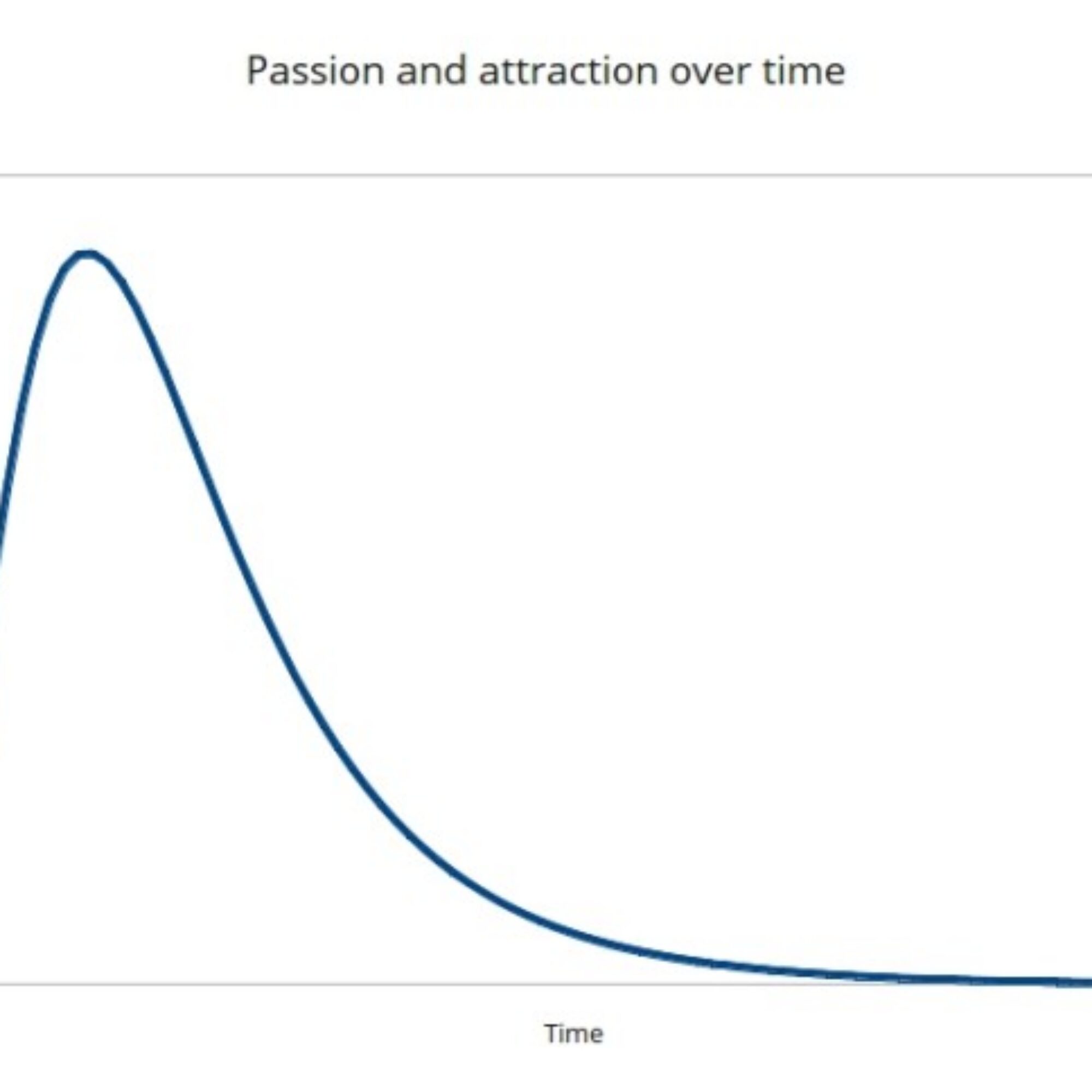
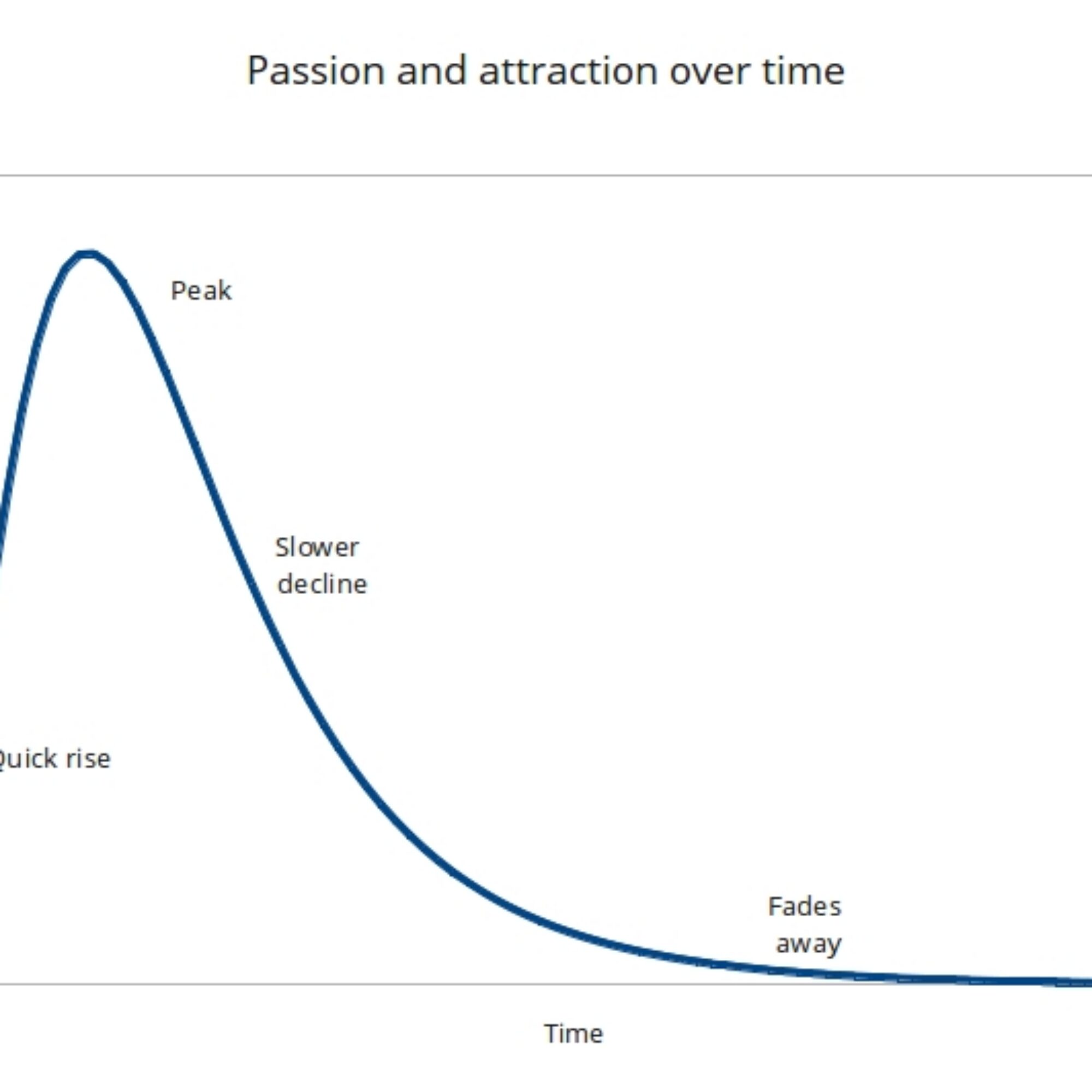
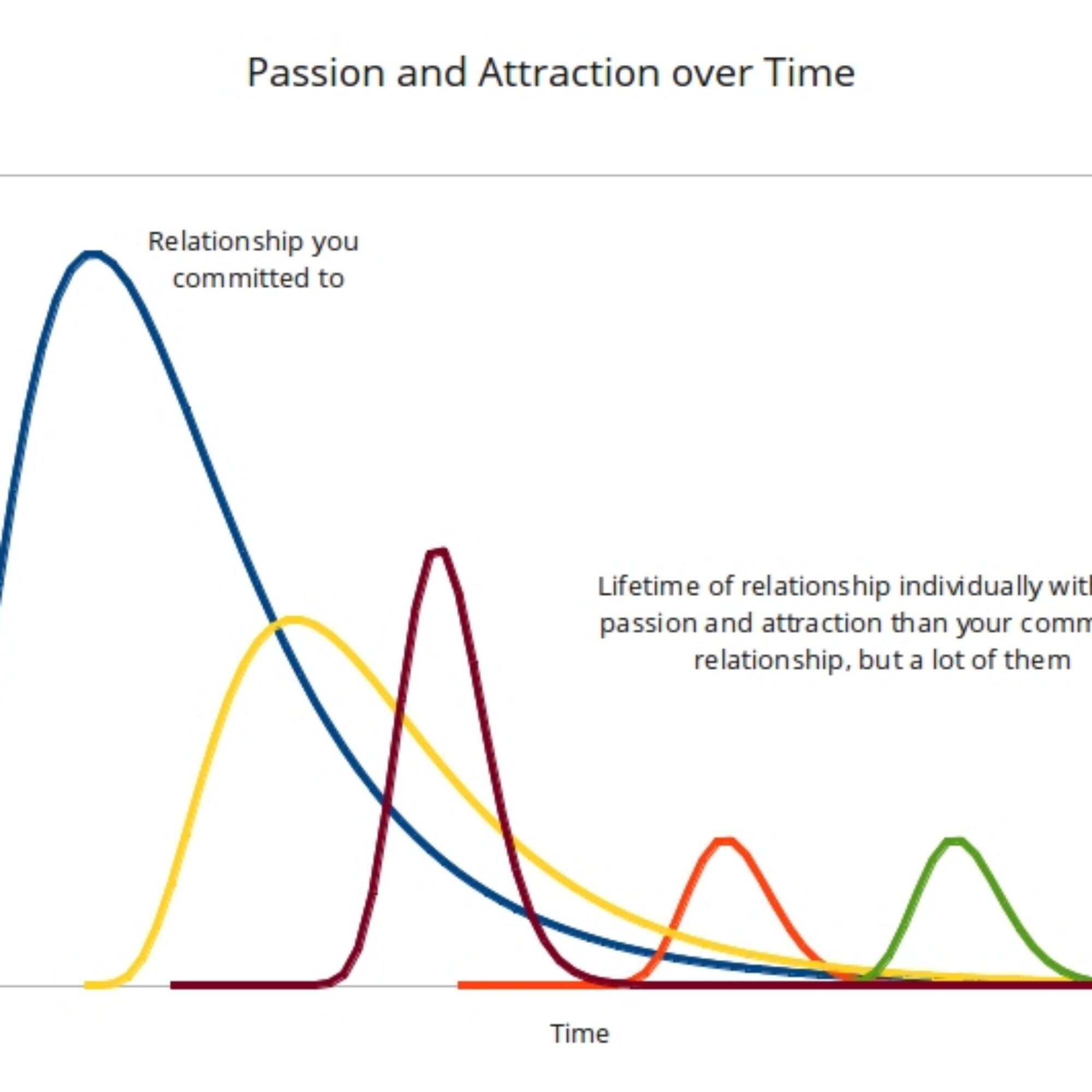
[Last week I posted a five-part series on a mental model I have for how our passion and attraction grows and wanes over time and the consequences of that pattern, according to the model. Today I'm posting them all in one post.] Day 1: Introducing a new model: Passion and Attraction I'm starting a new series today on a new model, this time on passion and attraction. Everyone I showed it to told me it gave them useful insights, so I expect you'll find value in it too. I'll apply the model mainly to intimate relationships, but you can also apply it to anything that evokes passion, attraction, or both, like hobbies, jobs, sports, and so on. So what does a science-trained, leadership-minded, self-awareness and…
Time I put a lot more time into making the graphs and writing the posts of the past week than usual -- at least a couple full days just graphing before writing a word. Why Why did I put so much time in? Not because I didn't have lots to do. Because people who saw early versions of the graphs told me it helped them better understand Their intimate relationships Their partners, and Themselves. They also enjoyed reading the graphs -- like their eyes opened wide and they looked like kids with new toys, like who would have expected something so science-and-math-like could help them understand their intimate relationships ... and work!?! My main reason for writing here is to increase self-awareness in ways that…
What can we learn from the Passion-Attraction Model? While the model can apply to everyone, we each have different values and circumstances, so we each have to choose for ourselves how to live our lives and act in relationships. Understanding the Passion-Attraction Model and its consequences can help you understand yourself and your partners, on your own and in relationships if you feel it describes you well. (If you don't, it may not help you, though it may help you understand your partners if they feel it describes them.) It can help you navigate your emotions and relationships and choose your behavior and partners. You don't have to adopt it verbatim. Like all models, it has flaws and oversimplifications, but so does any other model…
Yesterday's post considered a single alternative to a committed partner. If you plan to commit to someone for ten, twenty, thirty, or more years, you can expect you and your partner will meet people who, in the moment, attract you and excite passion more than each other. Review and discussion about One Alternative Recall, the Passion-Attraction Model doesn't tell you how to behave, though if you feel it represents your experience it may help you respond. Nor am I evaluating possible responses. I'm only using the model to understand how people will feel in relationships. The last section, "One Alternative," for example, predicted that people late in long-term relationships are susceptible to a third person exciting more passion and attraction than the long-term committed partner.…
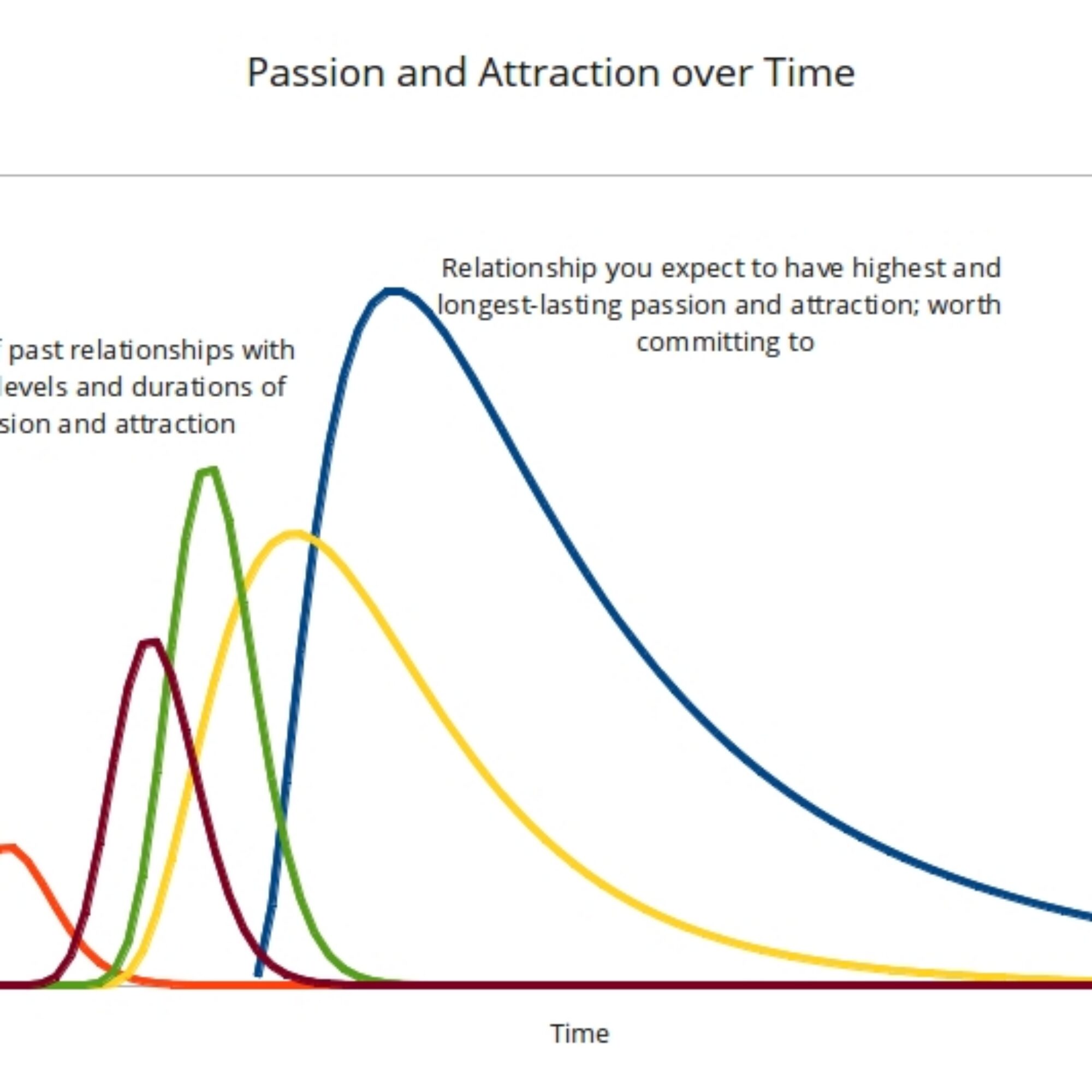
Yesterday's post ended by describing a typical goal -- what you hope to get if you want to commit to a relationship, at least concerning passion and attraction: an enduring relationship with lots of passion and attraction, smooth edges, and never fading away. When you and a partner both reach that goal, many people choose to commit to each other. In my experience, choosing to commit doesn't mean living happily ever after with no more relationship work. It means the beginning of a new type of work -- potentially deeply rewarding work, but work nonetheless. After all, you don't find passion, you create it with your behavior and beliefs. Committing to someone like the blue curve above means you get the high levels of emotional rewards…
Yesterday covered how the Passion-Attraction Model described passion and attraction in a relationship. Today we'll look at how you might grow as a person and parter. We'll end today with a typical goal you might work toward (before moving on to challenges and risks tomorrow). Despite the nice clean curves in the graphs, you don't know what curve you're on. If you feel like you're at the peak of a relationship, you don't know how long your feelings will last -- that is, you don't know if you're on the red or blue curve below, or a different curve entirely. Is your relationship about to end or will it endure? Or maybe what feels like a long-term peak is just noise that will soon fade.…
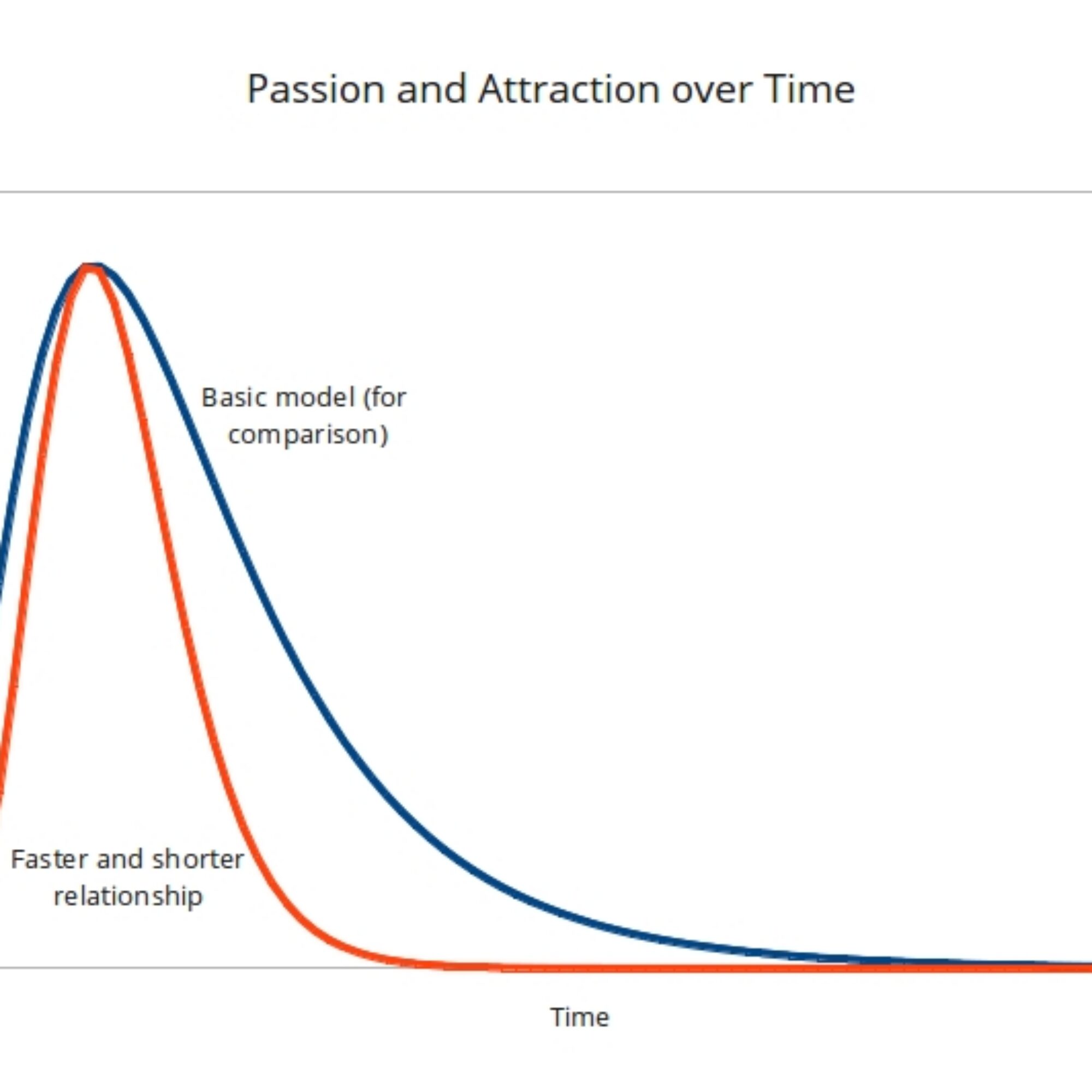
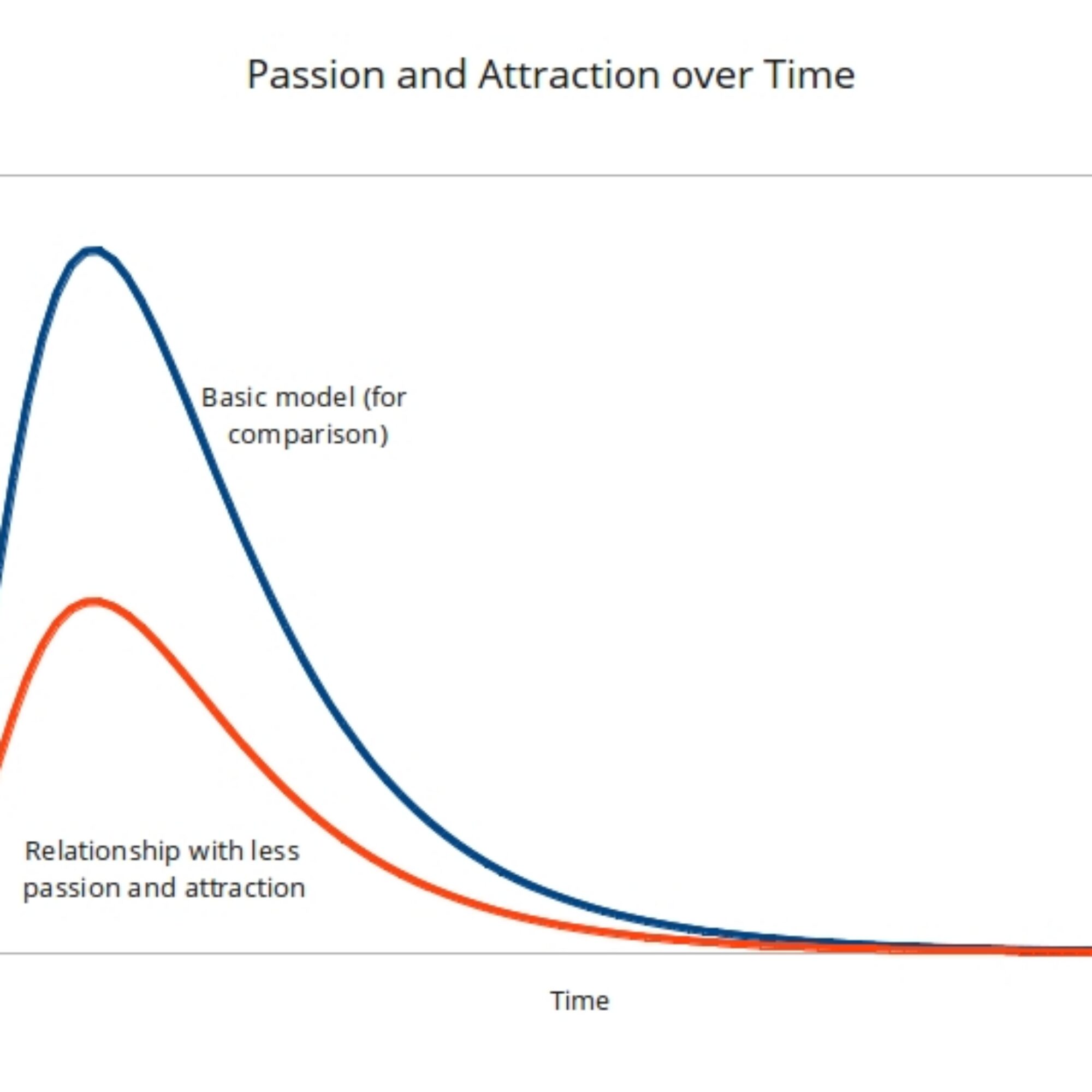
Yesterday covered the basic Passion-Attraction Model and some caveats. Today let's look at how the P-AM models passion and attraction in a single relationship. (Tomorrow we'll look at it multiple relationships). I find that the better I can visualize many ideas, the more clearly I can think about them, so this model's illustrations help me understand my feelings in a relationship. Then I can plan and act to improve myself and understand others in relationships. The Passion-Attraction Model in one relationship As we'll see, the P-AM can explain a lot of about one's feelings of passion and attraction in relationships. Less passion and attraction Some people evoke less passion and attraction in us. The P-AM represents less emotion with a lower peak, as illustrated by…
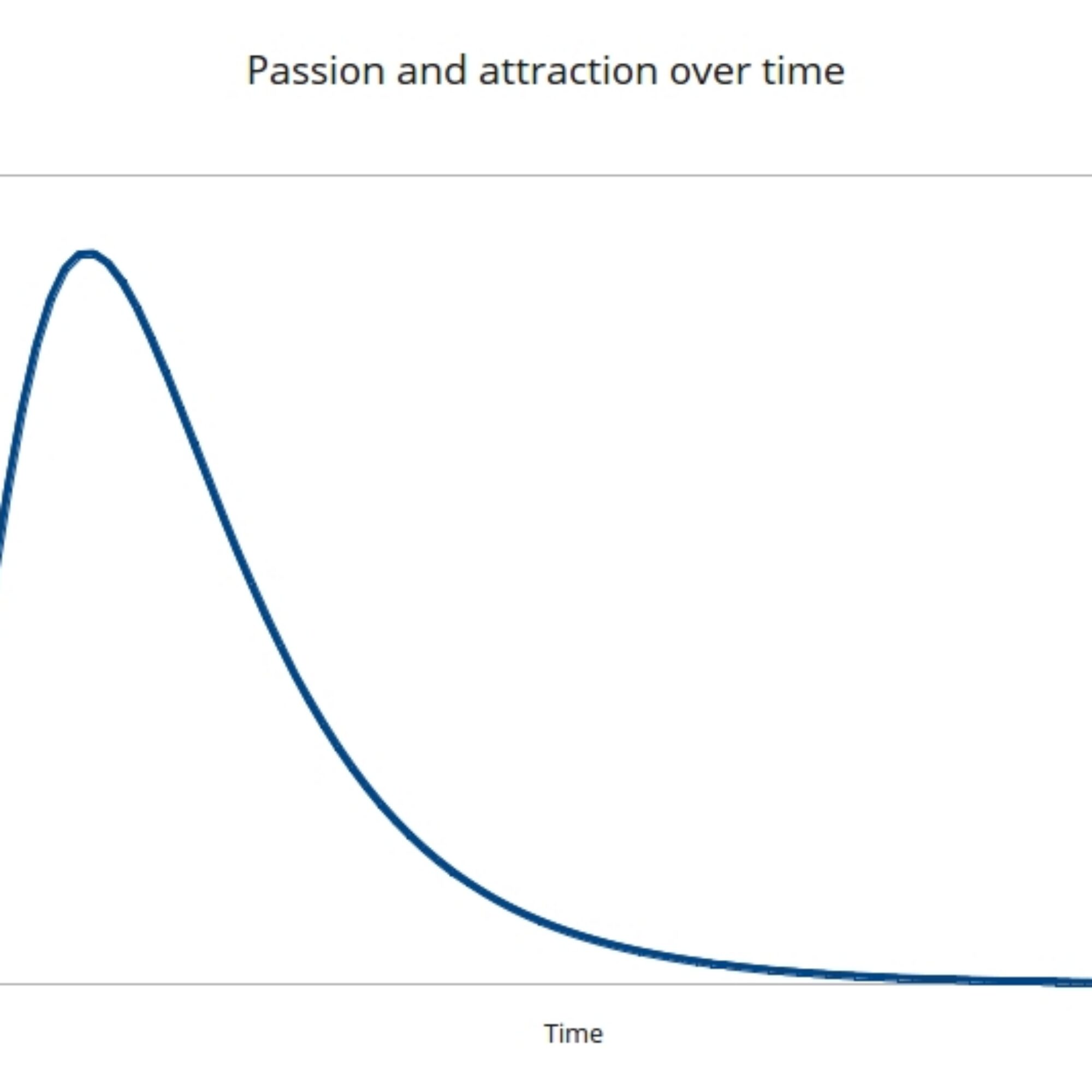
I'm starting a new series today on a new model, this time on passion and attraction. Everyone I showed it to told me it gave them useful insights, so I expect you'll find value in it too. I'll apply the model mainly to intimate relationships, but you can also apply it to anything that evokes passion, attraction, or both, like hobbies, jobs, sports, and so on. So what does a science-trained, leadership-minded, self-awareness and emotional-intelligence focused guy have to say about passion and attraction? I'll start by showing this picture of my Passion-Attraction Model as a taste of things to come, for now without explanation, except that I expect you'll find life-improving insight from a fresh and simple perspective. I find visualizing things makes understanding…
One of this blog's central focuses is self-awareness because I think to improve your life and relationships the best starting point is to know where you are. Know thyself, in other words. Today I want to give you a way to learn deeply about how your mind works. I didn't come up with the idea, but it intrigues me and I'd love to learn other people's thoughts. I think people generally believe they have a voluntary, rational part of their brain that, among its roles, makes decisions. If you're choosing what to order off a restaurant menu, for example, you probably do something like this: You read your options, eliminate those you don't want, consider the ones you do, work through some core decision-making process,…
Is everyone familiar with this pattern? It doesn't always happen, but a lot. If you want to make money, it helps to interact with other people who make money and join their community. But then when you end up making money, you have to keep interacting with them, maintaining your role in the community, which forces you to spend money. The cost of living that lifestyle eerily takes about as much material and emotional resources from your life as living your old one. As with any community, if you don't maintain your role in it, you lose your place in it. While in that community, you get more expensive stuff and status, but you have to maintain them. Instead of driving a used car you…
I've gotten encouraging feedback on my series on my daily beliefs and how to create your own. A friend wrote with an idea to involve readers to help make the series more useful and active: to offer readers suggestions for alternatives to beliefs and models that are holding them back. New ideas could come from me or other readers. I liked his idea. Today I'm opening up to people looking to change their beliefs to send old ones in for this community to help change. Even if you don't act, I expect just thinking about your beliefs, writing them out, or seeing others' beliefs will help. If you share a belief and get a better alternative, you'll improve your life and see how the process works…
I'll share today an unexpected and curious way to tell how much intimacy you have with someone and an effective way to increase it. By intimacy, I mean any kind of intimacy, which could be in a professional, friendly, romantic, or any other type of relationship. Intimacy increases trust and decreases friction between people so it's valuable to have. Knowing how much you have tells you how closely you can interact. Being able to create it can deepen and strengthen relationships and make them more productive. Intimacy has its risks too, as does today's tool. Used effectively, it will create intimacy and its benefits. Used ineffectively, it can ruin relationships. Getting close to someone always risks inviting pain or other problems. If you're easily offended…
Today's post is a new exercise I made up that I found improved my thought patterns. It's simple and takes no time, money, or other resources. Just your attention. It combines three things that work for me: changing words to change you thoughts, celebrating what you accept, and a property about truth. Ingredient 1: changing words changes your thoughts I've written about simple exercises to change a few words here and there that can change how you think. For example Avoiding starting responses with "No," "But,"or "However" (from Marshall Goldsmith) Judging people less I'm amazed at the effectiveness of such small changes in changing your thoughts. But when it works it works. Ingredient 2: what you can accept you can celebrate I also wrote a…
Let's look at two former Harvard students from now and nearly two centuries ago. 176 years ago Henry Thoreau finished Harvard in 1837, one of its best-known students of his age. Let's look at him before looking at this generation's most prominent Harvard student. Thoreau wrote Walden, his treatise on living simply, escaping petty human affairs and gossip, appreciating nature, self-reliance, and such. He lived for two years mostly on his own, growing his food, building his shelter, figuring out how to spend his time, and so on. The book opens When I wrote the following pages, or rather the bulk of them, I lived alone, in the woods, a mile from any neighbor, in a house which I had built myself, on the shore…
Last week's post The risks of someone calling you smart and how to avoid them, got reposted on another site and generated some discussion. The site, Hacker News, is a community with many entrepreneurs, geeks, and science and technology types. Here's a link to the discussion. Check it out. I like that community and its discussions.
I'm sure many people have thought and written great stuff about the Egyptian pyramids and overcoming the challenges to building them. I haven't read much on them, but I'm writing not so much about the pyramids than on how one person's thoughts developed as he learned to solve harder problems, though nowhere near the scale of a great pyramid. Stage 1: The challenges of mechanical engineering When I first thought of the challenges of building the pyramids, I looked at the challenges the way I think most people do -- from a mechanical engineering perspective. I wondered How could they cut, transport, and lift those stones? How could they measure the angles and distances accurately? Stage 2: The challenges of organizing and leading people At…
We've all heard someone say "That's not art. I could do it." Maybe you said it yourself. The comment can lead to interesting discussion on what makes art, but rarely. It can lead you to realizing that the value of art doesn't depend on how hard it was to create. The usual response is "Well, you didn't. And they did it first." I suggest a new response. If the person who says it, perhaps yourself, sees beauty or truth in the work of art, suggest that they re-create it. Seriously suggest they do what they say they can do. They could have a museum-quality work of art on their wall if they do, for only the cost of materials. When you look at art with…
A pattern I've noticed works a lot in life: When everyone is going in one direction, try going as far as you can in the opposite direction. Some examples: When car companies kept making bigger and more dominant SUVs, the Prius did well. In retrospect it seems obvious, but the car appeared nearly alone and successful in the U.S. market for years before other cars competed meaningfully. Now Smart Cars and related little cars seem to be doing well. The other day I wrote about how boxed cereal companies try to offer as many kinds of flavors, textures, and box designs. I prefer simple oats with a few toppings. When mp3 players first came out they looked technical and complex with lots of buttons. The…