Podcast


663: Nadeem Akhtar, part 2: Breaking a Doof Addiction Can Be Harder Than Expected

Nadeem committed to reducing his doof. He bravely shares the challenge. Even in Norway, he's surrounded by messages to keep consuming it. Imagine any other unhealthy addictive substance---cocaine, heroin, etc---was advertised and sold everywhere. On top of extra availability, imagine it was portrayed as like food, which it isn't. Nadeem stopped drinking alcohol long ago despite its prevalence in Norwegian culture, and compares how avoiding doof was harder. If you're struggling with getting clean from doof, you'll appreciate hearing what it's like. He also shares more about living as a Muslim in Norway.

0 Comments

662: Mark Mills, part 4: What to Do Next

I've said before and I'll say again that conversations like mine with Mark Mills are what I value and wish we had more of. We do our research, we have strong opinions, we agree on many things, we disagree on some things we care about. Most of all, I believe we learn from each other, respect different opinions, and try to understand the other's view and goals. In this conversation we talk about his book and the challenges of predictions at first, The most interesting parts are challenging each other on our understandings of our environmental problems and what we can do about them. We agree most proposed solutions that humanity is pursuing don't work and people are misguided. We differ on our expectations in…

0 Comments

661: Daniel, host of “What is Politics?”, part 1: Dominance, subjugation, hierarchy, and solutions

I can't tell you how valuable (and entertaining) I found Daniel's video series. Regular listeners and readers may know how important I find anthropology to solving our environmental problems. If we want to change our culture, we have to know why it is this way, how other structures have worked, and how we can change. I started realizing this importance when I noticed that I had read podcast guest Sebastian Junger's book Tribe the day I unplugged my apartment. It showed me what we lack in our culture that others have: freedom, equality, community, connection, and what we value when calm, not bombarded with ads and feeling guilt, shame, helplessness, and hopelessness. It gave me something to look forward to beyond being able to fly…

0 Comments

660: Martha Nussbaum: Justice for Animals: Our Collective Responsibility

Martha Nussbaum's new book, Justice for Animals: Our Collective Responsibility, looks like it's about animals, but the more I read it, I found it about us, our values, and our behavior. Regular readers and listeners will see the similarity to how I approach the environment in general. Not having eaten meat since 1990 and no animal products at all about ten years, I don't find new materials on human treatment of animals. Candidly, I thought I'd just browse the book. I also don't read much philosophy, which I find too often hard to read. Instead, I kept reading the book until I finished it. I found her writing style accessible, her material heartfelt, and her motivations genuine. She takes a few controversial points, like predation…

0 Comments

658: Rebecca and Josh Tickell, part 1: On Sacred Ground and the Dakota Pipeline

Watching environmental documentaries means having seen the Tickells' work, especially Fuel and Kiss the Ground, which they did with podcast guest Bill Benenson. Bill introduced us, though we scheduled this conversation to release the day before their new movie On Sacred Ground, on the Dakota pipeline. In this conversation, they share about the process of choosing the subject, the story and its roots in their lives at the protests, the actors performances, interacting with indigenous cultures, and the emotion the movie evokes. You'll hear some behind-the-scenes stories, but most of all, you'll feel compelled to watch the movie. The movie tells the story of an outsider coming to the protests of the Dakota pipeline and seeing the community there, particularly Native Americans, as a last…

0 Comments

656: Kate MacKenzie, part 1: Executive Director of New York City’s Mayor’s Office of Food Policy

Food touches nearly all environmental issues, as well as health, social, economic, political, and cultural. Cities like New York and their governance do too. Regular listeners know I talk about food waste, doof, packaging, and related issues. I celebrate her boss, Eric Adams's dramatic change in his diet, which tells me his motivations to bring healthier food to New York are authentic and genuine. As the top food official in New York City's government, Kate is in the middle of it all. After covering her background, we talk about what New York is doing about food and doof, some initiatives guarded, some bold and visionary. As a New Yorker since the 1980s, you'll hear I want to offer my service. I want to help make…

0 Comments

655: Donald Robertson, part 2: Seeking a Wolf

Donald committed to seeking out seeing a wolf. He shares about his experience on this commitment. He shares his deep connection and commitment to nature and how the project affected it. Donald thinks and acts in systems. We know we are a part of nature, but not all of us behave as if we understand what that means. Donald shares what it means to him, given his background in systems based especially in one of my great role models, W. Edwards Deming.

0 Comments

654: Mark Mills, part 3: The Cloud Revolution

After I've read his recent book The Cloud Revolution, Mark and I continue our conversation on sustainability and what to do based on qualitative and quantitative understanding. I've also been listening to his podcast. I came to Mark for his thoughtful research on the problems with solar and wind power, which people call clean, green, and renewable but are none of the above. I mainly want to get his views in general, which he shares. Within that frame, and trying as a host, not an investigative journalist, I've tried to focus him on exposing the larger problems with fossil fuels, nuclear, fusion, and other sources. He doesn't seem to consider their problems seriously. I hear him motivated by the view that lower energy prices and…

0 Comments

653: Mark Z. Jacobson: Roadmaps for 100% clean renewable energy

After I shared episodes on the hazards of solar and wind, as well as my experiment disconnecting my apartment from the electric grid in Manhattan (in month 8 as I type these words), a listener pointed me to Mark Jacobs. I can't believe I hadn't found him yet. I dove into Mark's prolific research and writing. He makes plenty free on his site. As a professor of engineering at Stanford with great passion, he researches what he's talking about and makes it all available. He's not just talking or hoping for the best. His research helps form the Green New Deal. He contributed to the IPCC work that won the Nobel Prize. Coincidentally, he criticized podcast guest Mark P. Mills article I linked to in…

0 Comments

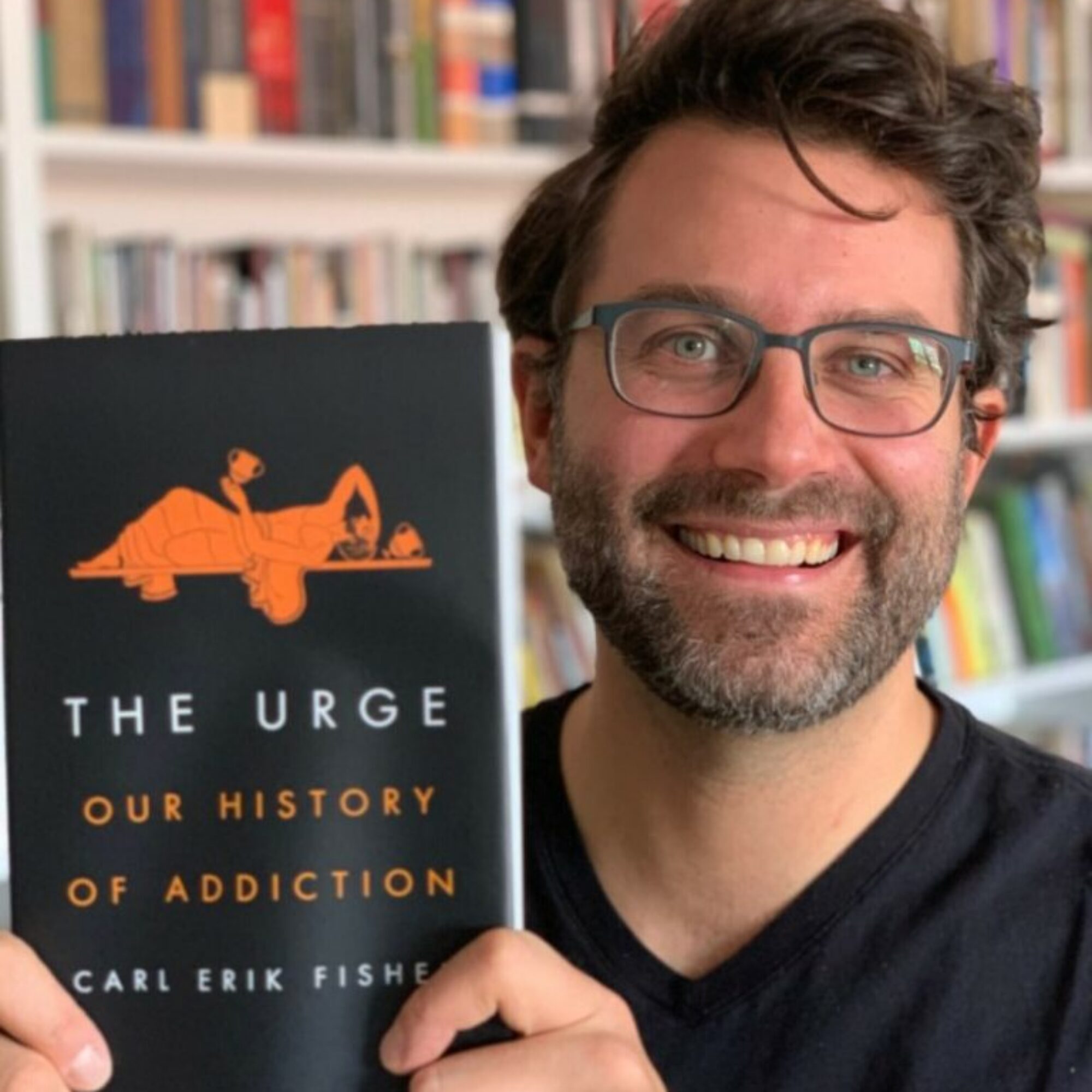
652: Carl Erik Fisher: The Urge: Our History of Addiction

I almost couldn't believe someone could write a book like Carl Erik Fisher's The Urge: Our History of Addiction. It tells the histories of addiction in human society since antiquity and of him, addicted, including in medical school, jail, and recovery. I don't know how many people could have shared such vulnerability or connected his experience to the reader's so we feel empathy. Regular listeners and readers of my blog have witnessed my increasing focus on addiction. We live in a culture of addiction. We see it in alcohol, cigarettes, doof, social media, binge TV, gambling, drugs, and so on. We also see it in what pollution brings, I believe: comfort, convenience, and travel, for instance. Medical professionals may not yet recognize these latter addictions…

0 Comments

650: Brian Merchant: your phone’s hidden environmental impact

The more I learn about electronic waste, the more disgusted I feel at how huge the problem is that we are exacerbating, often in the name of increasing efficiency or reducing waste. I've watched many documentaries, but here's a short video showing the problem in just one place in Ghana. Look at the land in the background that was once verdant and lush, now poisonous. Or read The Dark Side of Congo's Cobalt Rush in the New Yorker. If your comfort and convenience come at the price of others' suffering, wouldn't you rather know than hurt people in ignorance? The way out of that internal conflict is through action. Read Brian Merchant's The One Device, which tells the story of what goes into our devices,…

0 Comments

649: Listener Questions 04: What Started Me Acting Sustainably, Kids, and What to Do If You Don’t Have Time

In this episode, I answer a question a listener emailed: Can you share more details on what exactly prompted you to make the switch to acting more sustainably and if it was abrupt or gradual. And perhaps more practical ideas on what to do if you have kids, especially picky eaters, or if your schedule is just too busy to prepare meals 100% of the time. If you have questions on leadership, sustainability, sustainability leadership, doof, a guest, or anything I cover on the podcast, email me. Episodes with guests I mentioned, who are inspirational Bea Johnson Joshua Becker

0 Comments

648: Michael Herz, part 1: The United States Constitution, Sustainability, and Pollution

Regular listeners know I'm thinking about applying Abraham's Lincoln solution: a constitutional amendment banning pollution. Here's an earlier episode on it: 613: Our Next Constitutional Amendment. It sounds crazy, but we'd be crazy not to consider it and learn from the idea. Even if the United States takes a long time to do it, other countries would likely do it first. It turns out others are organizing for a similar amendment, for the right to a clean environment. Michael's expertise in constitutional law and environmental law make him perfect to give context in those two areas. One day even the U.S. will show overwhelming support for an amendment making pollution illegal, a modern version of the Thirteenth Amendment. Future generations will lament how we took…

0 Comments

647: Kris de Decker, part 1: Low and No Tech Magazine: We believe in progress and technology

Kris created and runs what I consider one of the top sites online. It has influenced my behavior and expectations to enjoy living more sustainably, including unplugging my fridge, which led to unplugging my apartment, and start seeing that solar and wind aren't sustainable any more, though we could make them more so. I've looked forward to connecting with Kris for years. In our conversation, he shares his transition from reporting on new technologies for others for pay to reporting on technology from the view of improving life and how we keep losing the purpose of technology helping us. He also shares how he lives by the values he writes about, or writes about the values he lives, showing integrity and credibility lacking in most…

0 Comments

646: Noah Gallagher Shannon, part 1: Uruguay is an environmental role model

I see our environmental problems and lack of effective solutions as a failure of imagination, as regular listeners of this podcast and readers of my blog know. If we can't imagine a world without pollution, we won't try. We'll resist and push back, which we do. Would-be leaders pollute as much as nearly anyone alive, more than nearly anyone who has ever lived, then say government should force them to change. Role models would help. Part of why I unplug my apartment from the electric grid and continue my process of continual improvement is to show people what's possible since nearly no one else is. Then imagine my pleasant surprise on reading an article in the New York Times, What Does Sustainable Living Look Like?…

0 Comments

This Sustainable Life turns 5 today

I posted the first episode of This Sustainable Life November 30, 2017, then called Leadership and the Environment. The old name doesn't sound as appealing, I think, but still feels more accurate. A team has formed and evolved of people helping the mission. We've tried to find a name perfectly mixing appeal, accuracy, and other virtues, but haven't found better. I've posted 645 episodes, which means 2.5 episodes per week, quite a clip to keep up for so long from one view, if you think it takes a lot of work. From my view, I'm barely starting. That view includes my mission of changing culture, in which the podcast is a strategic path to reaching and leading more influential people, in which more episodes means…

0 Comments

645: Hamilton Souther, part 1: Living Among the Matsés in the Peruvian Amazon

Suggest to people in our culture that we consider not growing the GDP nonstop and most react with fear at what they see as the inevitability of recession leading to depression leading to the tax base declining, infrastructure crumbling, hospitals closing, mothers dying in childbirth, thirty become old age, and reverting to the Stone Age. Yet there remain many cultures that don't buy into our culture at all. Despite our culture invading their lands, what many of us consider the pinnacle of human culture, they choose theirs, and not out of ignorance. They know our culture. If our culture is so great, with electric vehicles, fruit flown overnight around the world, and iPhones, why do they resist it? If we believe we have so much,…

0 Comments

644: Janet Allaker, part 1.5: Joy first

In our second conversation, Janet reveals that she did part of her commitment, but found traveling not by car took longer than she expected and didn't do it often. At one point in this conversation, she shares she felt she had to reduce pollution. I point out I didn't say she had to reduce pollution. I invited her to manifest emotions she liked. Our society burdens us with thinking we have to ACT BIG! SCALE! SOLVE GLOBAL PROBLEMS!, which create obstacles to starting and prime us to expect it takes work and sacrifice. Environmentalists create that burden as much as anyone. Yet nature is a joy! The Spodek Method aims at first at the modest effect of leading someone to act on intrinsic motivation, which…

0 Comments

643: Gaya Herrington, part 3: Five Insights for Avoiding Global Collapse

At the end of our second conversation, Gaya was finishing her book, leaving KPMG, and soon starting at Schneider Electric. The book just came out, Five Insights for Avoiding Global Collapse: What a 50-Year-Old Model of the World Taught Me About a Way Forward for Us Today (a free download), and she's worked at Schneider a while. We talk about the book, how the world has tracked two of the Limits to Growth simulations, and how working at Schneider is. The book treats how to respond to a complex, systemic problem, which is different from how to respond to a simple, linear problem. I consider the advice right on, rare to find, even among environmentalists. To change a system, some of the best levers are…

0 Comments

642: Listener Questions 03: Fermentation and my dream job

In this episode I answer: Have you tried making home made yoghurt from plant milk and friendly bacteria. I guess you'd want non packaged options like make from almonds or coconut although home made soya milk is possible with some work. (Using my yoghurt maker is one way I've tried to reduce packaging). Likewise have you tried making vegan cheese? and If you didn't work at NYU what would be your dream job?

0 Comments

The text to my answer to the listener question: What Motivates Me To Care?

A listener asked this question: Where do you think your concern and consideration for others comes from? Is it mostly nature or nurture? (E.g. influence from up bringing). I'm thinking about your social conscience about how your pollution or lack of it has an impact on those you've never met. I like to think I care about others but the truth is I continue to do things like drive to modern jive because it suits me even though it contributes to damage for others. Here is my spoken answer followed by the text: People often suggest people don't care about the environment or poverty, peace, or things they wish we had more of, but I don't think the issue is caring. It's acting. Especially the…

0 Comments

641: Listener Questions, volume 02: What Motivates Me To Care?

Here is the listener's question this time: Where do you think your concern and consideration for others comes from? Is it mostly nature or nurture? (E.g. influence from up bringing). I'm thinking about your social conscience about how your pollution or lack of it has an impact on those you've never met. I like to think I care about others but the truth is I continue to do things like drive to modern jive because it suits me even though it contributes to damage for others.

0 Comments

End of content

No more pages to load